
You should plan sealcoating and line striping together because sealer buries your old markings under a uniform black surface, forcing a restripe anyway. Bundling both services saves you 10–15% by eliminating duplicate mobilization and overhead fees. The sequence matters too: sealcoat first, then stripe within 24–48 hours after cure for maximum contrast and proper paint bonding. Timing keeps your lot safe, marked, and ADA-compliant. Understanding how these layers work together changes how you’ll schedule maintenance.
Key Takeaways
- Bundling both services reduces costs by 10–15% through a single mobilization and consolidated material purchasing that eliminates duplicate setup fees.
- Sealcoating buries all existing markings under a uniform black surface, making restriping mandatory since no partial markings remain visible.
- Sealcoating first creates a clean, uniform surface that maximizes line contrast and visibility for fresh striping.
- Restriping within 24–48 hours after sealcoat cure ensures proper paint bonding and avoids an unmarked, hazardous lot.
- Aligning the sealcoat’s 2–3-year lifespan with striping’s 12–24-month lifespan keeps maintenance cycles coordinated and ADA-compliant.
Why plan sealing and striping a parking lot together
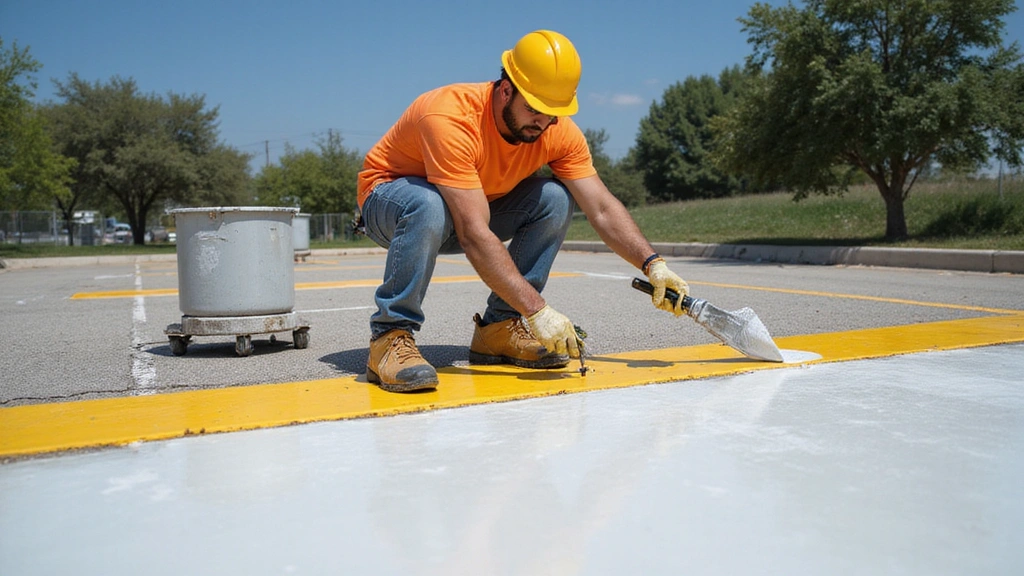
Planning sealcoating and striping together cuts costs by 10–15% compared to booking them separately. Parking lot sealing and striping share a single mobilization, so you eliminate duplicate setup fees and consolidate material purchasing. Combined quotes reduce overhead, delivering bundling discounts you won’t see with separate services.
Timing drives the decision too. Seal coating and striping follow linked lifecycles: sealcoat lasts 2–3 years, striping 12–24 months. When you sealcoat and restripe together, you apply fresh paint within 24–48 hours of cure, maximizing contrast against the uniform black surface for high-visibility lines.
Coordinating both services also keeps you ADA-compliant and prevents the safety gap that occurs when drivers face a freshly sealed lot without clear markings.
How does sealcoating erase old striping
Sealcoating erases old striping by burying every existing marking under a uniform black surface. The sealcoat layer coats over old lines completely, leaving a clean, blank canvas. Your previous stripes, arrows, ADA symbols, and fire lane markings all disappear beneath that fresh coating.
That’s why parking lot sealcoating and striping have to work together. After the sealcoat cures, you’re starting from scratch, every driving lane, crosswalk, and no-parking zone needs reapplication. There’s no partial fix here, the coating erases everything uniformly.
Plan your restriping within 24–48 hours after the seal coat cures sufficiently for paint application. Skip this step, and drivers face an unmarked lot, creating confusion and safety risks immediately.
Why does parking lot sealing and striping work best in sequence
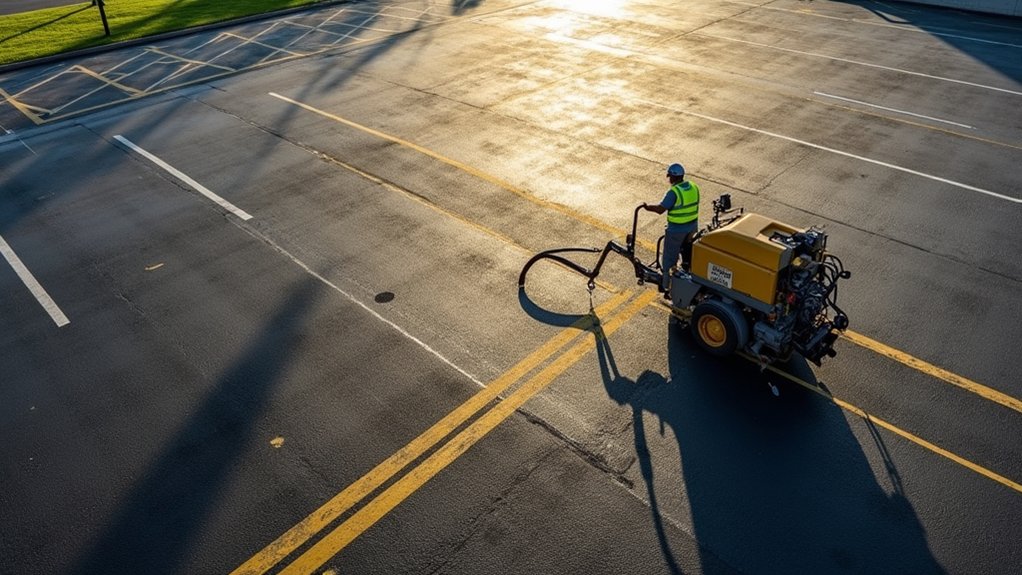
Sealing and striping work best in sequence because each step depends on the surface conditions the previous one creates. When you sealcoat first, you get a uniform black surface that maximizes contrast with your striping paint, delivering high-visibility lines. Applying stripes before sealcoating wastes your effort. The fresh coat erases those markings entirely.
Timing tightens the workflow too. You should restripe within 24–48 hours after the seal coat cures sufficiently for paint application. Move too early, and paint won’t bond to uncured sealer. Wait too long, and you invite confusion, safety risks, and obscured navigation.
Running these steps in order also cuts costs. A single mobilization and combined material purchasing reduce your total project expense by 10–15% compared to scheduling separate services. Sequence protects both budget and results.
How do separate versus combined projects compare on cost
Combined projects cost 10 to 15% less than separate projects because you pay overhead once instead of twice. When you bundle sealcoating and striping, you cover a single mobilization and combine material purchasing, cutting total project costs through operational efficiency. Splitting the work forces you to pay setup, travel, and coordination charges twice.
| Cost Factor | Impact |
|---|---|
| Combined bundle savings | 10–15% versus separate |
| Mobilization | Single trip, not two |
| Material purchasing | Combined for lower cost |
| Overhead | Reduced in itemized quotes |
| Striping-only jobs | Faster, cheaper, less disruptive |
You’ll see bundling discounts lower the total package price when itemized quotes reflect reduced overhead. If your asphalt stays smooth, a striping-only job keeps things cheap and minimizes disruption to your property. The impact of accessible parking on business success cannot be underestimated. Many customers prioritize convenience when choosing where to shop or dine.
How does proper timing protect both layers

Proper timing protects both layers by locking the paint into a fully protected surface within 24 to 48 hours after your seal coat cures, so both layers work together instead of failing independently. Paint applied too early won’t bond to uncured sealer, while waiting too long leaves your lot unmarked and hazardous. Timing your restriping to the cure cycle is what makes this coordination possible.
You’ll also want to match your paint to your maintenance cycle. If you’re planning another seal coat within 12 to 18 months, use economical water-based acrylic. There’s no point investing in premium markings you’ll cover soon. Coordinate striping with every seal coat on a 2-to-3-year schedule, and you’ll keep both layers performing at their peak without wasting material or money.
When should you sealcoat and restripe together
Sealcoat and restripe together every 2 to 3 years, aligning each seal coat with fresh striping. Timing your combined service depends on your pavement’s lifecycle, and two schedules drive that decision: seal coating lasts 2 to 3 years, while striping fades within 12 to 24 months. When your markings start fading between cycles, schedule a paint-only refresh to maintain visibility and ADA compliance without unnecessary sealcoating. If you’re planning to seal coat within 12 to 18 months, specify economical water-based acrylic paint since you’ll restripe soon anyway. After applying seal coat, restripe within 24 to 48 hours, once the surface cures enough for paint adhesion. This bundled approach saves 10 to 15% through single mobilization and combined material purchasing, cutting overhead while keeping your lot compliant and professional.
How does V&F Paving combine sealcoating and striping
V&F Paving combines sealcoating and striping into one coordinated project that runs on a single mobilization. That single mobilization and combined material purchasing cut your total project costs by 10–15% compared to booking the services separately. You’ll see those savings reflected in itemized combined quotes that reduce overhead through bundling discounts.
The crew times the work precisely: they apply your restriping within 24–48 hours after the seal coat cures sufficiently for paint. That timing maximizes contrast between the fresh black surface and your new lines, giving you crisp, high-visibility markings.
You also get layouts built for compliance, including ADA parking, fire lanes, and traffic patterns that meet local standards. When you plan for future sealcoating, they’ll recommend economical water-based acrylic paint.
Seal and Stripe in One Coordinated Visit
Doing sealcoating and striping as one planned project saves money, avoids an unmarked lot, and gives you crisp lines against a fresh black surface. V&F Paving handles both on a single mobilization, timing the striping to the sealcoat’s cure so your markings bond properly and your ADA stalls, fire lanes, and traffic layout come back correct and compliant. Serving Hamden, New Haven, Stamford, Danbury, and Fairfield County since 1994, our team can put your lot on one coordinated maintenance schedule instead of scattered fixes. To plan your sealcoat and restripe together, call (203) 624-2449 for a free quote.
Frequently Asked Questions
How long after sealcoating can you restripe and reopen the lot?
Sealcoat needs to cure before striping, generally at least 24 hours under good conditions. In cool, humid, overcast, or shaded conditions, that can stretch to 48 to 72 hours. Striping over sealer that’s still soft, tacky, or releasing moisture causes the paint to bleed or fail to bond, so the wait matters. Once the lines go down, the traffic paint typically needs about an hour to dry before that section reopens. Rushing either step tends to mean redoing the work, which erases the savings of bundling.
We just had new asphalt installed. Can we sealcoat and stripe it right away?
No, and this trips up a lot of owners. Fresh asphalt has to cure and release its oils before it can take a sealcoat, generally around 6 to 12 months depending on conditions. Sealing too early keeps the asphalt from curing properly and the coating won’t bond. New asphalt does get striped soon after installation for safety, but that’s the layout paint, not sealcoat. The full sealcoat-and-restripe cycle starts once the pavement has cured, then continues on the normal 2-to-3-year schedule after that.
How long will the whole lot be closed for a combined sealcoat and stripe?
Plan for a couple of days. The sealcoat itself needs roughly 24 to 48 hours to cure before vehicles return, and striping happens after that cure, followed by an hour or so for the paint to dry. Cool or humid weather extends the timeline. Because of this, larger lots are usually done in sections so part of the property stays open while another cures. It’s worth coordinating the schedule around your slower days, since the sealcoat cure is the part that drives the closure, not the striping.
What’s the best time of year to sealcoat and stripe together?
Warm, dry weather is ideal for both. Sealcoat and water-based striping paint cure best when pavement temperatures are up and humidity is low, generally above about 50°F with no rain in the window. That points to late spring through early fall in Connecticut. Extreme heat can cause sealcoat to cure poorly, and cold snaps stall curing for both layers, so timing within the warm season matters. Scheduling during the right stretch means faster cure times, better bonding, and crisper, longer-lasting lines.
Should cracks be filled before sealcoating and striping?
Yes, crack filling comes first, before the sealcoat goes down. It’s a waterproofing step, not a cosmetic one. Sealing structural cracks keeps water out of the base, which is what protects the pavement long term, and it typically lasts a couple of years. Doing it before sealcoating means the fresh coat goes over a properly prepped surface. Note that very fine spider cracking or alligatored areas usually can’t just be crack-filled, since those signal deeper surface failure that needs patching or repair instead.