
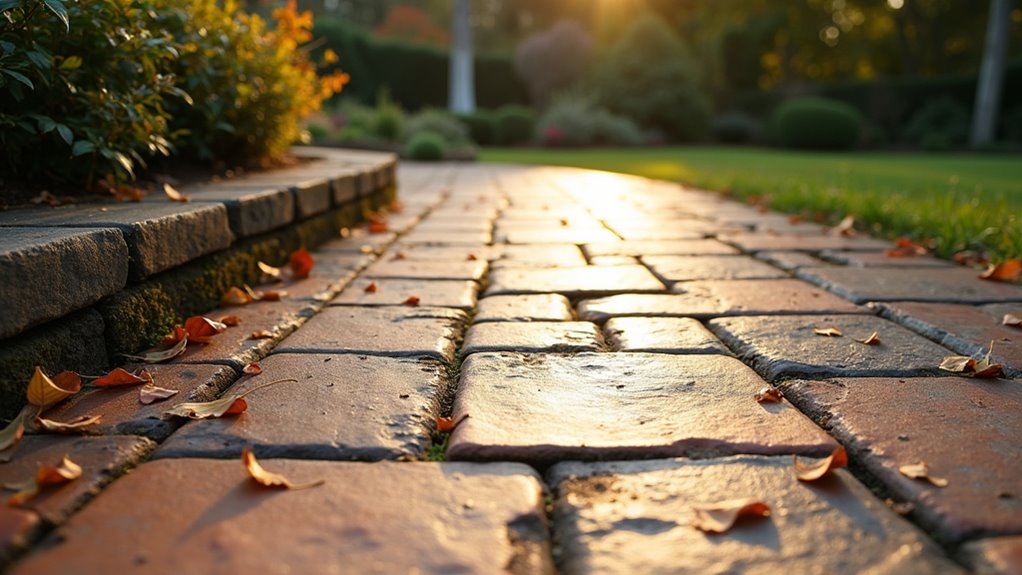
You’re pouring the same slab either way. The difference comes down to finishing. Regular concrete gets a plain broomed or troweled surface, while stamped concrete gets colored and pressed with patterned mats to mimic stone, brick, or slate. That extra skilled, timing-sensitive labor roughly doubles your cost, at about $12 to $22 per square foot versus $4 to $12. You’ll also need to reseal stamped concrete every 2 to 3 years. Here’s how each option stacks up for your specific project.
Key Takeaways
- Stamped concrete has a patterned, often colored surface imitating stone, brick, or slate, while regular concrete has a plain broomed or troweled finish.
- Both start with the same poured, leveled slab, but stamped concrete requires skilled, precisely timed stamping before the concrete hardens.
- Stamped concrete typically costs $12 to $22+ per square foot installed, compared to $4 to $12 for regular concrete.
- Stamped concrete needs resealing every 2 to 3 years to prevent fading and scaling, while regular concrete requires minimal finish-related upkeep.
- Both can crack and last about 25 to 30 years, but repairing stamped concrete is harder because pattern and color must match.
What is the difference between stamped concrete and regular concrete
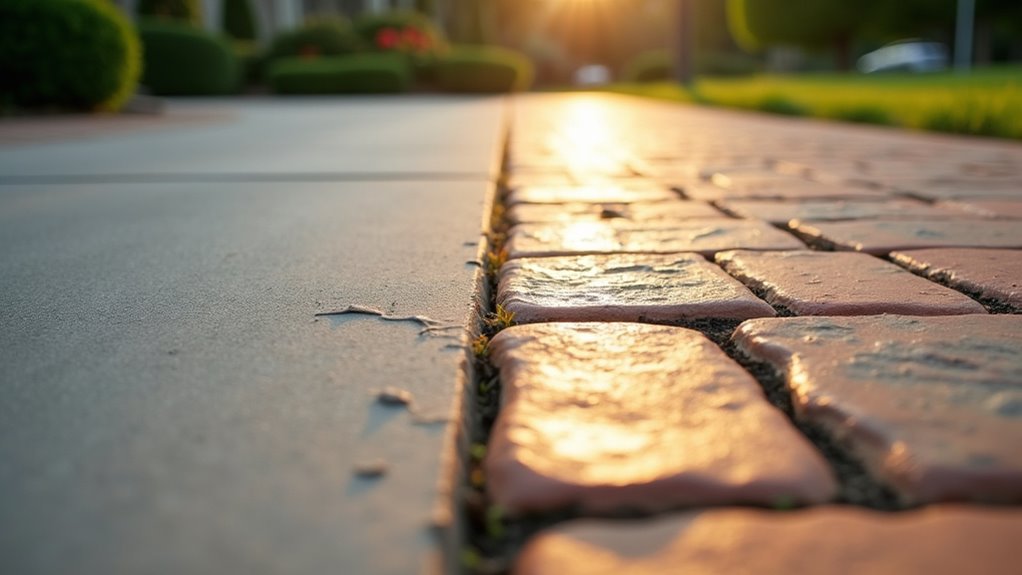
Stamped concrete has a patterned, often colored surface that imitates stone, brick, or slate, while regular concrete has a plain broomed or troweled finish. Both start with the same poured slab. With regular concrete, your installer typically leaves a broomed or troweled finish, giving you a simple, utilitarian surface. With stamped concrete, the crew presses patterned mats into the concrete while it’s still workable to create the decorative pattern. You can add integral color or a color hardener, plus contrasting accents and borders. That’s the core of stamped concrete vs regular concrete: texture and color. The stamping step demands precise timing and skilled labor before the slab hardens, so stamped concrete costs more and takes longer to finish than regular concrete. When weighing concrete vs stamped concrete, you’re trading lower upfront cost for more decorative options.
How do stamped and regular concrete compare
Stamped and regular concrete differ most in cost, maintenance, and repair, not lifespan. Both last roughly 25 to 30 years with proper base preparation, curing, and drainage, and both can crack from shrinkage, temperature swings, or ground movement.
| Stamped Concrete | Regular Concrete |
|---|---|
| $12 to $22+ per sq. ft. installed | $4 to $12 per sq. ft. installed |
| Reseal every 2 to 3 years | Minimal finish-related upkeep |
| Patterned, colored repairs are hard to match | Simpler patches, though often visible |
Stamped concrete costs more because coloring, stamping, and timing-sensitive finishing add labor and materials. Its surface also faces higher risk of fading, scaling, and sealer issues. When you budget, factor in periodic sealing and potential repairs, not just installation price, and weigh your climate and traffic.
How does the pouring and finishing differ
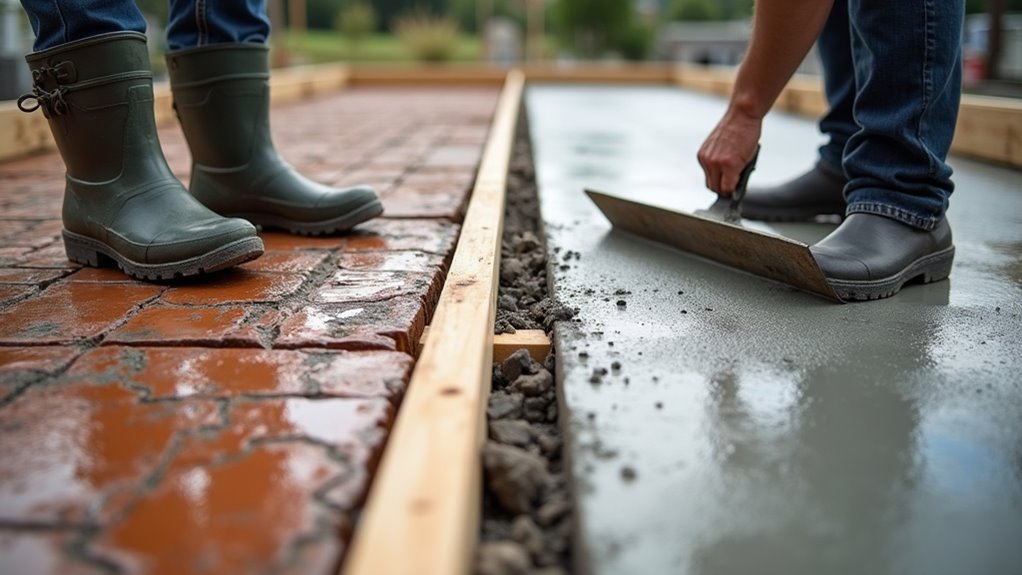
Pouring is identical for both, but finishing differs: regular concrete gets a simple broomed or troweled surface, while stamped concrete adds coloring and pattern-stamping steps. For either type, crews pour a concrete slab over a prepared base, then screed and float it level.
With regular concrete, you’ll typically get a plain broomed or troweled finish. The crew textures or smooths the surface, lets it cure, and the job’s done.
Stamped concrete adds steps. If you want color, the crew mixes integral color into the concrete or broadcasts a color hardener across the surface. Next, they press patterned mats into the concrete while it’s workable, imitating stone, brick, or slate. Many installers apply contrasting color accents. Timing is critical: stamp too early or too late and the pattern fails. That’s why you need a skilled crew and should expect a longer finishing process.
How do the looks compare
Stamped concrete looks more decorative and customizable, while regular concrete has a plain broomed or troweled surface with a simple, utilitarian look. Regular concrete is clean and functional, but it won’t add much decorative detail to your patio, driveway, or walkway.
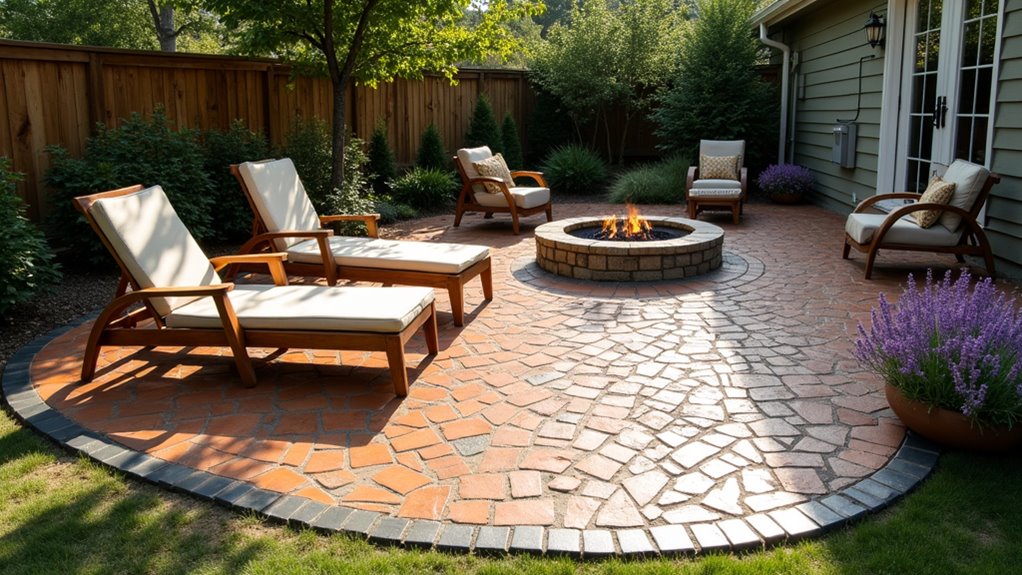
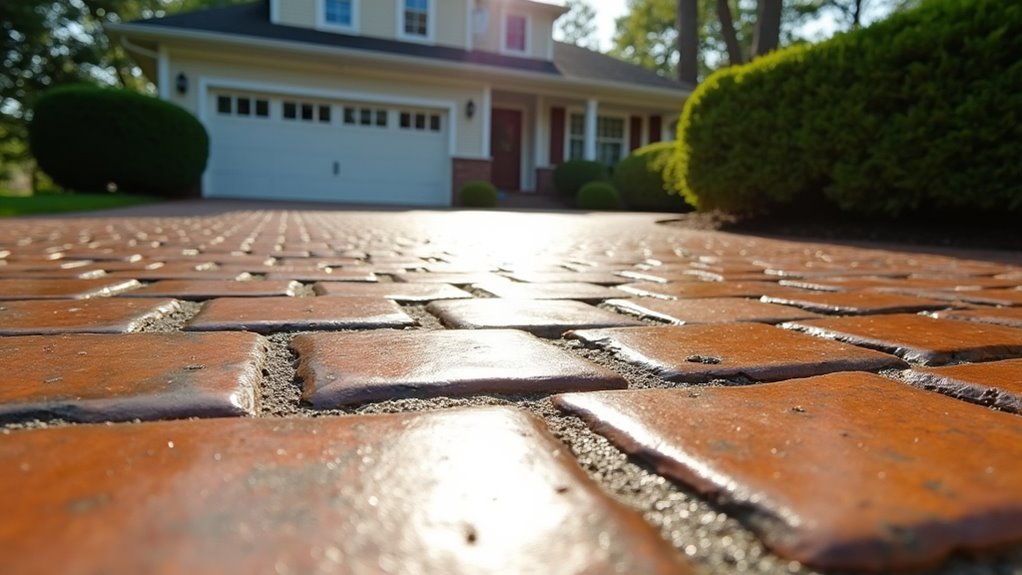
Stamped concrete gives you far more design control. You can choose patterns that imitate slate, brick, or other masonry textures, then add integral color or a surface-applied color hardener with contrasting accents. Borders, multiple colors, and custom patterns let you add visual detail. The result is a continuous slab that resembles individual paving units.
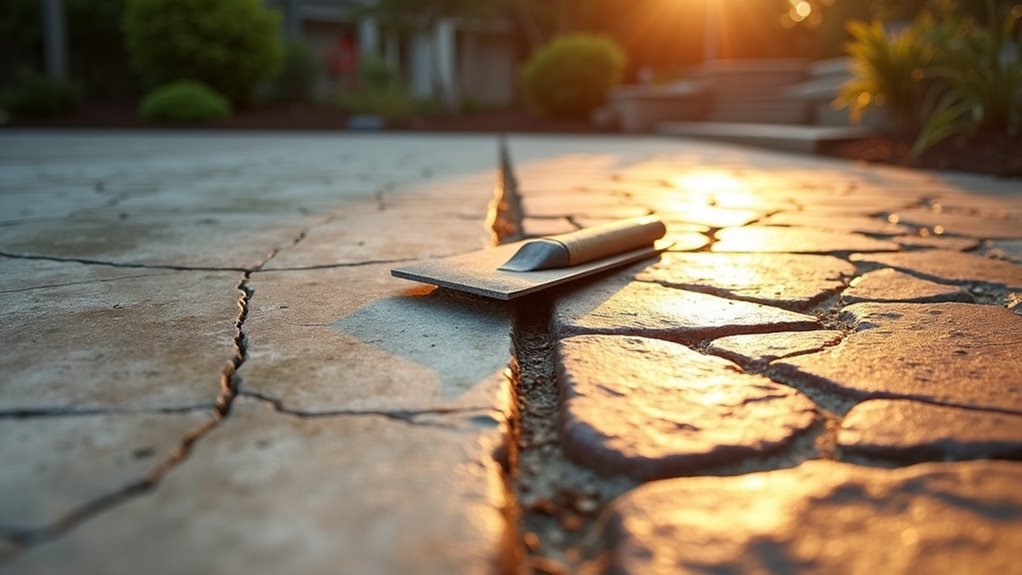
Keep repairs in mind, though. Color and pattern make patches more conspicuous because matching an existing stamped finish is difficult. Plain concrete patches can also remain visible, but they’re usually easier to complete.
How does cost differ between the two
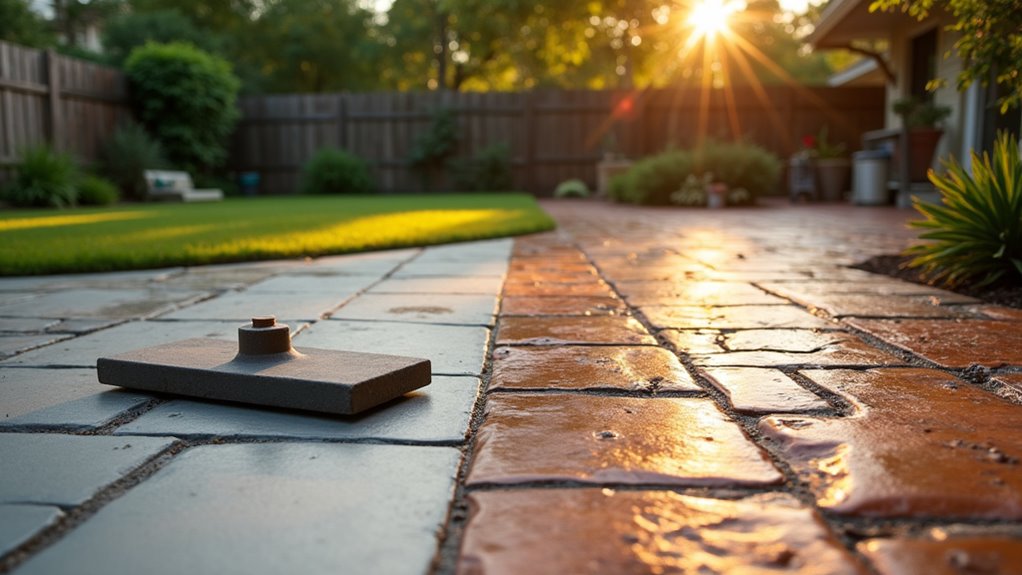
Stamped concrete costs roughly twice as much as regular concrete per square foot. One 2026 cost guide puts plain concrete at $6 to $12 per square foot and stamped at $12 to $22 or more. Another source lists $4 to $8 for plain and $12 to $20 for stamped, with complex designs reaching $20 to $25.
The higher price covers extra labor and materials. Stamping adds coloring, patterned mats, and a timing-sensitive finishing process that requires skilled crews. Borders, multiple colors, and custom patterns push prices higher.
For either option, your site preparation, slab thickness, location, and project complexity shape the final estimate. Long-term costs matter too. You’ll need to reseal stamped concrete every 2 to 3 years, and matching its pattern during repairs can quickly get expensive. Plain concrete usually keeps your long-term costs lower.
How does upkeep compare over time
Stamped concrete requires more upkeep over time than plain concrete, which needs little beyond occasional cleaning. You’ll need to clean and reseal a stamped surface every two to three years, depending on sun exposure, weather, and traffic, to keep its color and texture intact. Skip it, and you’ll likely see fading, scaling, or a dull, worn finish. Plain concrete doesn’t depend on a sealer for its appearance, so it demands less of your time and money.
Repairs also differ. You can patch plain concrete more easily, though the patch may stay visible. With stamped concrete, matching the original pattern and color is difficult, so repairs often stand out. When you compare long-term costs, factor in resealing and potential repairs, not just the initial installation price.
Which one fits your job best
Stamped concrete fits your job best if appearance matters most, while plain concrete fits best if simplicity and cost come first. Choose stamped concrete if you want a decorative patio, walkway, or driveway that resembles stone, brick, or slate. You’ll pay more up front, and you’ll need to clean and reseal it every 2 to 3 years.
Choose plain concrete if you’re prioritizing lower initial cost, a simple finish, and minimal upkeep. It’s also easier to patch, though repairs may stay visible.
Compare total costs, including installation, sealing, and potential repairs. Then weigh your climate, traffic, drainage, and how much maintenance you’ll accept. If you don’t want to maintain a sealed surface, plain concrete is the safer fit. If curb appeal justifies the extra work, stamped concrete delivers it.
Choose the Concrete Finish That Works for Your Project
Regular concrete offers a simpler finish, while stamped concrete can add pattern, color, and more decorative appeal. V&F Paving provides concrete driveway, patio, walkway, and decorative paving services and can help you compare your options based on use and appearance. Call (203) 624-2449 or request a free estimate.
Frequently Asked Questions
Is Stamped Concrete Slippery When Wet?
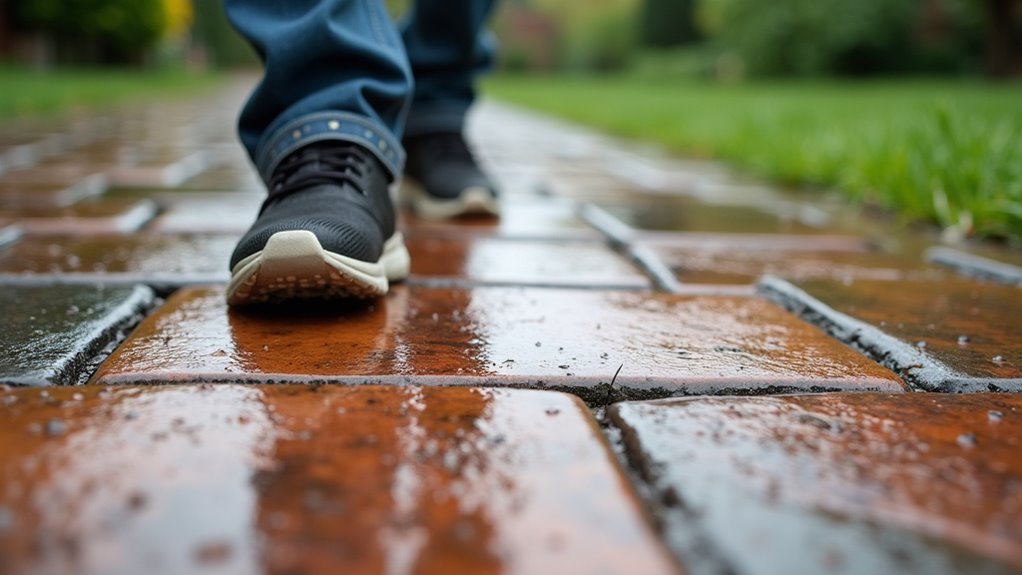
Yes, stamped concrete can get slippery when it’s wet, mainly because the glossy sealer you apply every 2 to 3 years creates a smooth film over the texture. Deeply textured patterns like slate grip better than smooth ones. You can reduce the risk by mixing an anti-slip grit additive into your sealer, choosing a matte sealer, and avoiding heavy sealer buildup. Plain broomed concrete usually offers better traction around pools and steps.
Can Existing Plain Concrete Be Stamped After It Has Cured?
No, you can’t stamp concrete that’s already cured. Stamping works only while the slab is still workable, so your installer has to press patterned mats into fresh concrete at precisely the right time, before it hardens. Once your plain slab has set, its surface won’t take an impression. If you want a decorative look on existing concrete, you’ll need to ask a contractor about resurfacing options or replacing the slab.
Does Stamped Concrete Increase a Home’s Resale Value?
It can boost curb appeal, but there’s no reliable figure showing it raises your home’s resale value. Buyers may like its decorative stone or brick look, yet faded color, worn sealer, or mismatched repairs can hurt that appeal. You’ll pay roughly $12 to $22 per square foot versus $4 to $12 for plain concrete, plus resealing every 2 to 3 years. If resale’s your main goal, weigh that premium against your local market and buyer expectations.
Can Stamped Concrete Be Installed as a DIY Project?
You can, but it’s risky unless you’ve got concrete finishing experience. Stamping demands precise timing: you must press patterned mats into the slab while it’s workable, before it hardens. If you miss that window, you can’t easily fix the result, and matching color or pattern during repairs is difficult. You’ll also need proper base preparation, control joints, curing, and sealing. For most projects, you’re better off hiring a skilled installer.
Is Stamped Concrete Safe to Use Around Swimming Pools?
Yes, you can use stamped concrete around pools, but you’ll need to plan for slip resistance. Sealers can make the surface slick when wet, so ask your installer to add a non-slip grit to the sealer and choose a textured pattern like slate. Lighter colors stay cooler underfoot. Since you’ll reseal every 2, 3 years, reapply the grit each time, and make sure drainage slopes water away from the pool deck.