
You’ll need to repave your asphalt parking lot once roughly 25 to 30% of its surface shows significant distress. Watch for alligator cracking, recurring potholes, failed patches, sinking, and broad standing water. These signs point to base failure that a 1.5 to 2 inch overlay can’t fix. Judge by condition, not age. Most lots last 15 to 20 years, but consistent maintenance can stretch that to 25 to 30. Below, you’ll see how warning signs, cost factors, and project steps shape your decision.
Key Takeaways
- Repave when roughly 25 to 30% of the parking lot surface shows significant distress, basing the decision on condition rather than age.
- Alligator cracking signals base or structural failure, which reflects through overlays and requires full repaving.
- Recurring potholes and patches that crack or settle quickly indicate subsurface deterioration that resurfacing cannot fix.
- Sinking, heaving, or broad standing water point to base movement or drainage failure, which a 1.5 to 2 inch overlay cannot correct.
- Most asphalt lots last 15 to 20 years, extending to 25 to 30 with consistent maintenance or failing in 8 to 15 when neglected.
When does an asphalt parking lot need to be repaved
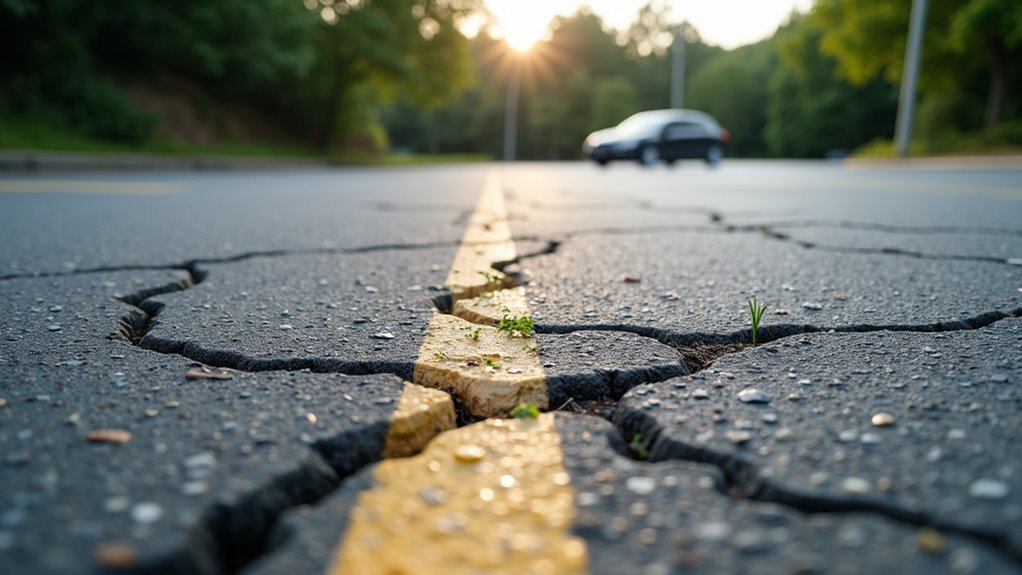
Repave parking lot sections when more than roughly 25 to 30% of the surface shows significant damage, such as alligator cracking, recurring potholes, failed patches, standing water, or sinking. Base the decision on pavement condition, not age alone. Most asphalt lots last 15 to 20 years. With consistent maintenance, yours could reach 25 to 30, while neglected pavement may fail within 8 to 15. These percentages are screening guides, so confirm the extent and cause through a professional inspection. If you’re asking how much does it cost to repave a parking lot, timing matters: an overlay around years 15 to 18, while the base remains sound, adds 8 to 15 years. Wait for base failure, and your cost to repave parking lot areas rises because full replacement becomes necessary.
What signs point to repaving over resurfacing
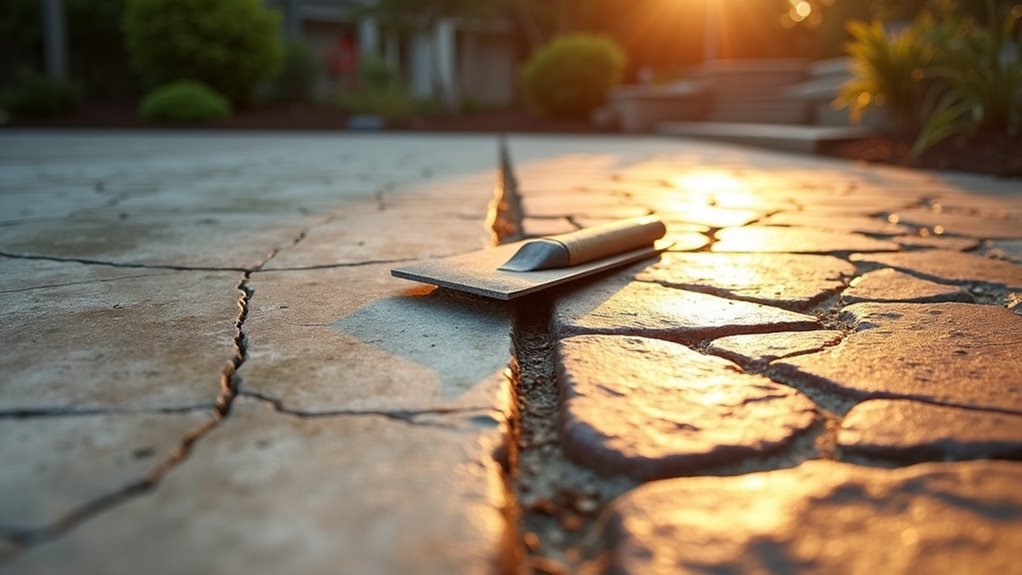
Alligator cracking, recurring potholes, failing patches, sinking or heaving, and broad standing water point to repaving over resurfacing because they signal structural distress, not surface wear. If significant damage covers more than roughly 25 to 30% of your lot, or the base has failed, an overlay won’t hold. Use these indicators to guide parking lot repaving decisions:
| Sign | What It Indicates |
|---|---|
| Alligator cracking | Base or structural failure |
| Recurring potholes | Deterioration beyond surface |
| Failing patches | Ongoing subsurface problems |
| Sinking or heaving | Base movement or erosion |
Broad standing water also signals grading or drainage failure that an overlay can’t correct. Since resurfacing suits lots with damage below 30% and a sound base, you’ll get better value from full replacement, which provides roughly 20 to 30 years of service, versus 8 to 15 from an overlay. Confirm with a professional inspection before you commit to reconstruction.
How does a failing base force a full repave
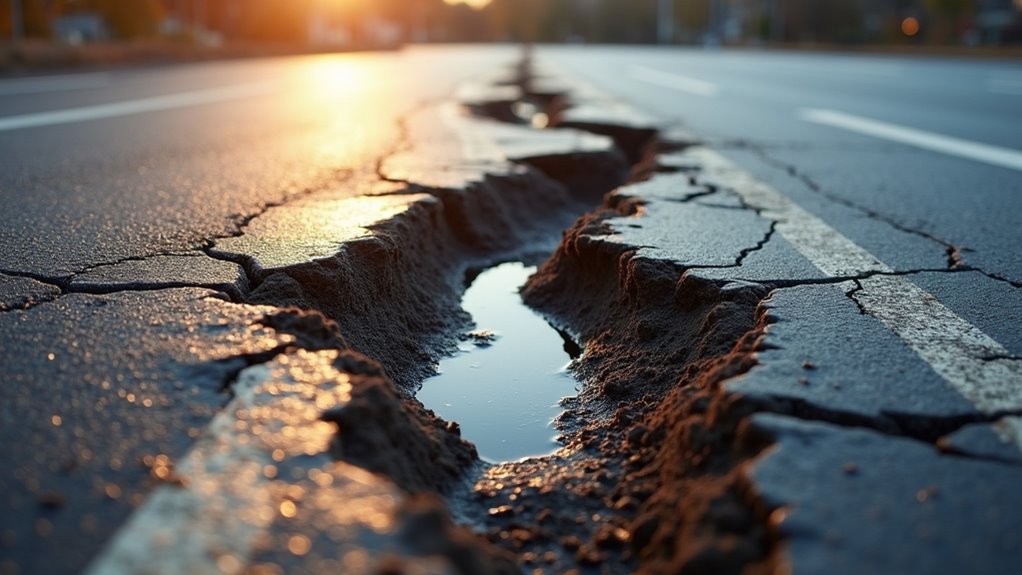
A failing base forces a full repave because an overlay only adds 1.5 to 2 inches of new asphalt over whatever’s underneath. If the base is eroded, saturated, or shifting, that new surface inherits every defect. The damage returns through these failure paths:
- Alligator cracking reflects through the overlay, signaling structural failure across large areas.
- Sinking, heaving, or buckling continues as the underlying base keeps moving or eroding.
- Standing water persists because an overlay can’t correct grading or drainage failures.
Full removal and replacement rebuilds the base, corrects grades, and delivers roughly 20 to 30 years of service, versus 8 to 15 years from an overlay. Sealcoating won’t restore structural strength either. If repairs keep failing, get a qualified professional assessment before you commit to either repair option.
How does widespread cracking signal the end of life
Widespread cracking signals the end of a lot’s service life because it shows the pavement is failing as a structure, not just wearing at the surface. Watch for alligator cracking, the interconnected, scale-like pattern that typically points to base failure. Open cracks let water reach the subgrade, which weakens support and accelerates potholes, sinking, and heaving. If you’ve patched areas that crack or settle again soon after, the problem sits beneath the surface.
Use extent as a screening guide: when roughly 25 to 30% of your lot shows significant damage, repaving is likely warranted. Isolated cracks over a stable base still respond to crack sealing or spot repairs. Sealcoating won’t restore structural strength, so have a qualified inspection confirm the damage’s extent and cause before you commit.
How do drainage and ponding problems factor in
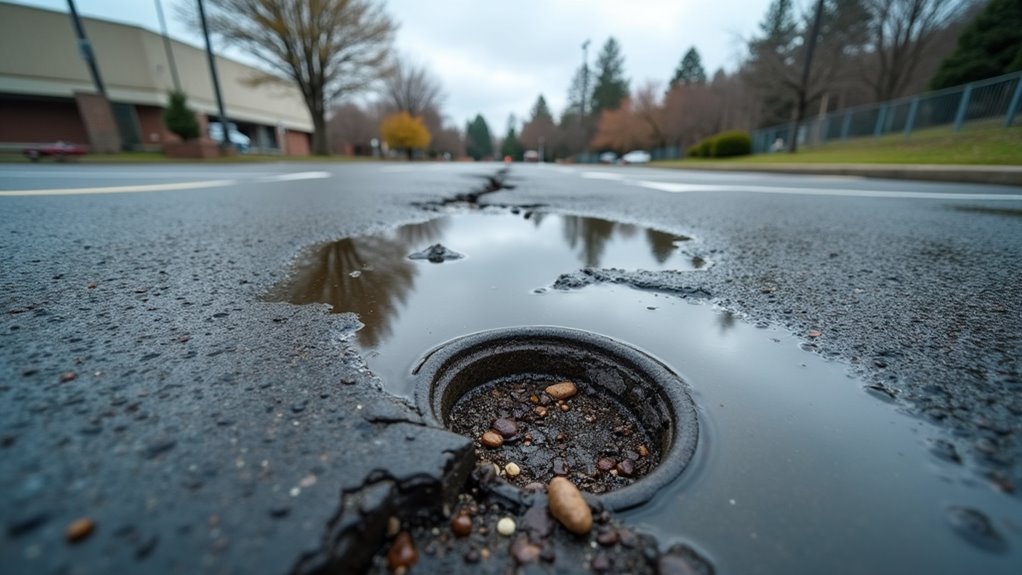
Drainage and ponding problems factor in because standing water seeps through open cracks, weakens the pavement, and erodes the subgrade that supports it. Over time, that intrusion turns surface distress into structural failure. Watch for these warning signs:
- Broad ponding after rain: This often points to grading or drainage failure that an overlay alone won’t fix.
- Sinking, heaving, or buckling: These suggest the underlying base is moving or eroding.
- Patches that crack or sink quickly: These indicate ongoing problems beneath the surface.
If you only resurface, you’ll leave the root cause in place. You’ll likely need to correct grades or drainage, and sometimes rebuild full-depth. Get a professional assessment to confirm the cause before you choose a repair.
How much does repaving cost compared with resurfacing
Resurfacing costs less upfront than repaving, which is full-depth removal and replacement. An overlay typically mills off 1.5 to 2 inches of deteriorated asphalt and installs new material over the existing base. However, it adds only about 8 to 15 years of service, while full removal and replacement delivers roughly 20 to 30 years. Divide each quote by its expected service life to compare annual cost. Timing matters. If you overlay around years 15 to 18, while the base remains sound, you avoid the more extensive, costly work that base failure forces. Confirm whether drainage or base failure is driving the damage, because overlaying failed pavement or unresolved drainage problems means you’ll pay again sooner. Get itemized contractor bids only after a professional condition assessment.
What goes into a parking lot repaving project
A parking lot repaving project includes a professional condition assessment, drainage and grade correction, base repair or removal, surface work, and ongoing maintenance. The project starts with the condition assessment, completed before a crew mobilizes, which maps cracking, potholes, failed patches, rutting, settlement, and standing water across the lot. That data tells you whether the base is sound or whether you’re facing reconstruction. The scope typically includes:
A professional condition assessment comes first, revealing whether your lot’s base is sound or whether you’re facing full reconstruction.
- Drainage and grade correction: Your contractor fixes ponding areas, since an overlay alone won’t solve water problems.
- Base repair or removal: Where alligator cracking, sinking, or heaving signals base failure, crews excavate and rebuild the supporting layers.
- Surface work: Crews mill roughly 1.5 to 2 inches of deteriorated asphalt for an overlay, or remove the full depth for replacement.
You’ll protect the investment after paving with crack sealing as cracks appear and sealcoating every 2 to 5 years afterward.
Get Your Parking Lot Ready for Repaving
V&F Paving provides commercial asphalt paving services for parking lots showing widespread deterioration, recurring failures, and structural problems. If repairs or resurfacing are no longer enough, full repaving can address the pavement and underlying base instead of repeatedly treating the same failures. Call (203) 624-2449 to discuss your parking lot and get an estimate.
Frequently Asked Questions
How Often Should a Parking Lot Be Sealcoated to Extend Its Life?
You should sealcoat your parking lot every 2 to 5 years, adjusting the interval for traffic volume, climate exposure, and the product manufacturer’s guidance. If you manage a heavy-use lot, which can wear up to 20% faster, you’ll likely need the shorter end. Seal cracks as they appear to block water intrusion. Remember, sealcoating won’t restore structural strength or fix a failed base, so you’ll still need routine inspections and timely repairs.
Can Crack Sealing Delay the Need for Repaving?
Yes. When you seal cracks as they appear, you limit water intrusion into the pavement structure and subgrade, a primary driver of structural failure. Pair it with sealcoating every 2 to 5 years, and you can push a lot’s 15 to 20-year lifespan toward 25 to 30 years. It won’t fix a failed base, though. If alligator cracking or significant damage covers more than roughly 25 to 30% of your lot’s surface, you’ll likely need full repaving instead.
How Long Does a Full Parking Lot Replacement Typically Last?
A full removal and replacement typically gives you roughly 20 to 30 years of service, compared with about 8 to 15 years from an overlay. You’ll reach the upper end only if you sealcoat every 2 to 5 years, seal cracks promptly, and keep drainage functioning. Heavy traffic can accelerate wear by up to 20%, while climate, subgrade quality, asphalt mix, and construction workmanship also shift your lot’s lifespan, so don’t rely on pavement age alone.
Does Heavy Truck Traffic Shorten an Asphalt Parking Lot’s Lifespan?
Yes. Heavy truck traffic shortens your lot’s lifespan through repeated loading, and one source notes heavy-use lots may wear up to 20% faster. With proper care, you’d typically expect 15 to 20 years of service. If cracks open, water can reach your subgrade and accelerate structural failure. Seal cracks promptly, sealcoat every 2 to 5 years, and inspect for rutting and alligator cracking. Once your base fails, sealcoating won’t restore its strength.
How Often Should a Parking Lot Be Professionally Inspected?
There’s no fixed interval in the data, but you should run routine inspections and bring in a qualified pavement assessor when distress becomes widespread, patches keep failing, or you can’t decide between overlay and reconstruction. Each time, track cracking, rutting, potholes, drainage, failed patches, and surface deterioration. Align checks with your 2 to 5-year sealcoating cycle, and schedule a formal assessment near years 15 to 18, while your base remains sound for an overlay.