

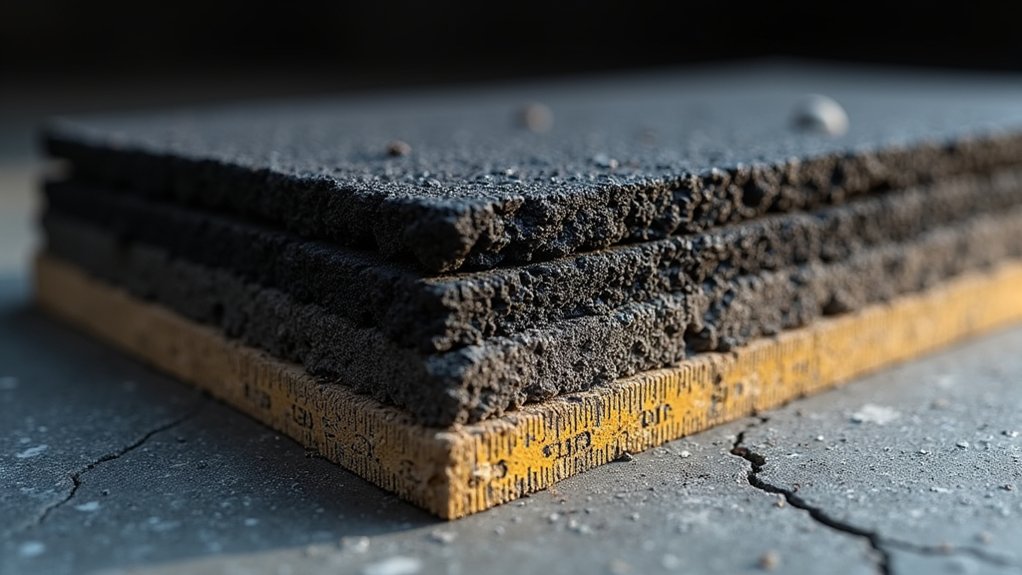


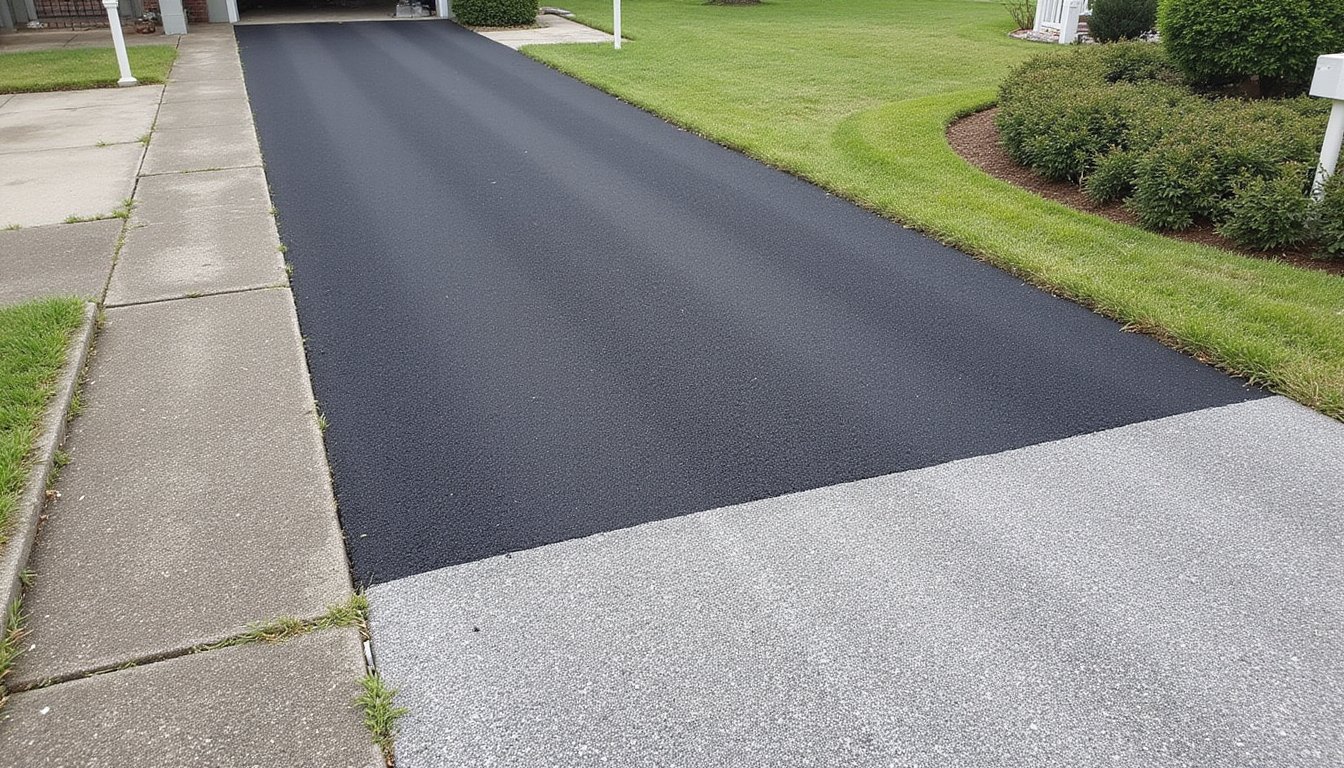
Hot mix asphalt requires heating aggregates to 300-350°F, achieving 96% compaction density and 15-20 year service life for highways and high-traffic infrastructure. Cold mix uses emulsified asphalt that’s workable at ambient temperatures, making it ideal for emergency repairs and low-traffic areas like driveways. You’ll find hot mix delivers superior Marshall stability, while cold mix costs 5-6% less but sacrifices structural performance. Understanding each type’s applications will help you choose the right solution. Hot mix asphalt requires heating aggregates to 300, 350°F, achieving 96% compaction density and 15, 20 year service life for highways and high-traffic infrastructure. Understanding what is cold mix asphalt helps clarify why it performs differently in the field. Cold mix uses emulsified asphalt that’s workable at ambient temperatures, making it ideal for emergency repairs and low-traffic areas like driveways. You’ll find hot mix delivers superior Marshall stability, while cold mix costs 5, 6% less but sacrifices structural performance. Understanding each type’s applications will help you choose the right solution.
Hot Mix vs Cold Mix Asphalt: Key Differences Explained
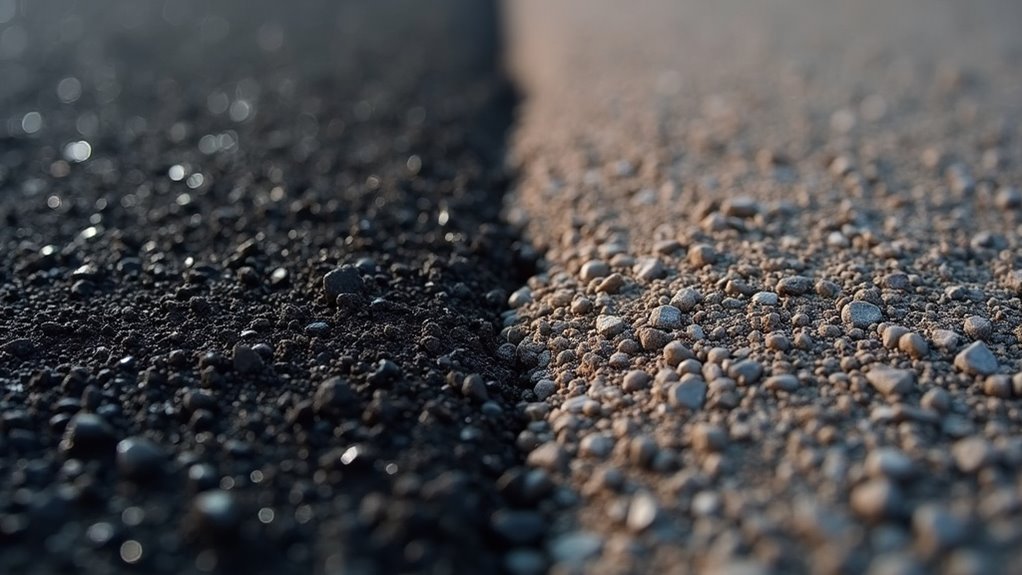
When comparing hot mix and cold mix asphalt, temperature requirements represent the most fundamental difference between these two paving materials. Hot mix demands elevated temperatures during production, allowing binder to fully coat aggregates and achieve ideal density. Cold mix uses emulsified asphalt with water and chemical agents, enabling workability at ambient temperatures without heating equipment.
When evaluating cold mix vs hot mix asphalt, you’ll find distinct performance characteristics. Hot and cold patch applications serve different purposes, hot mix delivers superior durability for heavy traffic conditions, while cold patch asphalt vs hot asphalt comparisons show cold mix flexes under vehicle loads but suits only low-traffic areas. Cold mix is susceptible to wear and tear when exposed to constant heavy vehicle traffic over extended periods. Cold mix emulsion breaks as water evaporates, gradually developing properties similar to hot mix over time.
When to Use Hot Mix Asphalt
Nearly all major road construction projects specify hot mix asphalt as the primary paving material due its proven performance characteristics. When comparing cold mix vs hot mix asphalt, you’ll find hot mix dominates in highway construction, airport runways, and high-traffic commercial areas. The material’s production at 300-350°F guarantees thorough aggregate coating and superior load-bearing capacity. Hot mix asphalt combines approximately 95% stone, sand, or gravel bound together by bitumen binder to create its durable composition.
Understanding cold patch asphalt vs hot asphalt helps you select correctly. In the asphalt cold mix vs hot mix comparison, hot mix delivers 15-20 year service life with proper maintenance.
- You’re investing in infrastructure that withstands heavy aircraft and truck traffic daily
- Your pavement achieves 96% compaction density for maximum durability
- You’re choosing cold patch vs hot patch asphalt based on permanent versus temporary needs
When Cold Mix Asphalt Makes More Sense

When you’re facing emergency repair situations, cold mix asphalt delivers immediate functionality without the temperature constraints and curing delays that hot mix requires. You can deploy it in freezing conditions, wet environments, and during winter months when hot mix installation isn’t feasible. For low-traffic area projects, cold mix provides a cost-efficient solution that you can purchase in single bags and apply without specialized equipment or pre-heating requirements. Beyond roads, cold mix is suitable for parking lots, driveways, bike paths, and pedestrian walkways, making it a versatile surfacing solution for diverse infrastructure needs.
Emergency Repair Situations
Why does cold mix asphalt outperform hot mix in emergency scenarios? When unexpected pavement failures occur, you need immediate solutions, not delays waiting for hot mix plants to produce materials. Cold mix delivers 24-hour availability from inventory, requiring no heating equipment or specialized mixing.
You can deploy cold mix for critical repairs including:
- Airfield damage requiring aircraft-ready surfaces within 2-4 hours
- Utility trench restoration that can’t wait for scheduled hot mix delivery
- Remote road failures where transporting heated materials isn’t feasible
The three-step process, prepare, apply, compact, gets traffic moving almost immediately after compaction. You’ll achieve full strength supporting heavy loads in just 2-4 hours. For potholes, bridge decks, and infrastructure emergencies, cold mix functions as your reliable temporary or permanent solution until conditions allow conventional repairs.
Low-Traffic Area Projects
For low-traffic applications like residential driveways, parking lots, bike paths, and rural roads, cold mix asphalt delivers cost-effective performance without the infrastructure demands of hot mix production. You’ll benefit from reduced labor costs, minimal equipment requirements, and year-round application capability.
| Factor | Cold Mix Advantage | Application |
|---|---|---|
| Cost | No heating equipment needed | Small-scale projects |
| Installation | Ambient temperature application | Remote locations |
| Storage | Extended shelf stability | On-demand repairs |
Cold mix’s emulsifier-based formulation maintains workability at lower temperatures, enabling flexible compaction without specialized machinery. You can purchase precise quantities in bags, eliminating bulk waste. The material accommodates utility cuts, surface patching, and temporary surfacing where load-bearing demands remain minimal. This approach reduces project timelines while supporting recycled material integration for environmental compliance.
Durability and Strength: Hot Mix vs Cold Mix
When you’re evaluating pavement options, hot mix asphalt delivers Marshall stability values and load-bearing capacities that far exceed cold mix alternatives. You’ll find that HMA’s dense, impermeable structure withstands heavy vehicular traffic and resists deformation, while CMA’s reduced compaction densities limit its structural performance to low-traffic applications. Understanding these fundamental strength differences helps you select the right material for your project’s specific load requirements and expected service life.
Hot Mix Strength Benefits
Hot mix asphalt achieves superior durability through tighter molecular bonding that cold mix alternatives can’t replicate. You’ll benefit from enhanced aggregate-binder adhesion that reduces crack likelihood and minimizes raveling. The 95% aggregate composition with 5% bitumen delivers a fitting strength-to-flexibility ratio designed for heavy traffic loads.
When you choose hot mix, you’re investing in proven longevity:
- 25-year lifespan potential protects your investment with minimal deterioration rates
- Climate-specific formulation guarantees your pavement withstands regional temperature extremes
- Moisture infiltration resistance prevents costly pothole formation and water damage
Performance Graded binders allow engineers to customize your pavement for specific environmental demands. Whether you’re paving in desert heat or Midwest freeze-thaw cycles, hot mix’s load-bearing capacity increases throughout curing, delivering structural integrity that lasts decades.
Cold Mix Durability Limitations
Cold mix asphalt falls short in durability due to its fundamental composition, a mixture of gravel, sand, and crushed stones bound with bitumen emulsion and water rather than heated binder. This lower aggregates-to-binder ratio reduces structural integrity and load-bearing capacity, making it unsuitable for high-traffic areas or heavy loads.
You’ll find cold mix typically lasts one to three seasons under standard conditions. Its compressed density prevents adequate weight distribution, while poor adhesion to existing pavement causes premature failures. Temperature fluctuations trigger expansion and contraction cycles that weaken the material, increasing susceptibility to cracking and pothole development.
You should restrict cold mix applications to temporary repairs, rural roads, and low-traffic parking lots. Heavy vehicular stress accelerates degradation considerably faster than hot mix alternatives.
Long-Term Performance Comparison
Although cold mix asphalt serves adequately for temporary repairs, it can’t match hot mix’s long-term performance metrics. When you’re evaluating pavement investments, hot mix delivers 15-20 years of service life compared to cold mix’s one to two seasons. The higher aggregate-to-binder ratio in hot mix creates dense, impermeable surfaces that resist moisture penetration and deformation under heavy traffic loads.
- You’ll face repeated repair costs with cold mix, while hot mix provides lasting return on investment
- Your pavement will withstand extreme weather conditions, from intense heat to flooding
- You’ll minimize traffic disruptions since hot mix sets within hours, not days
Hot mix’s superior strength makes it the industry standard for highways, commercial parking lots, and high-traffic roads requiring reliable, long-term performance.
Cost, Energy Use, and Environmental Impact Compared
Both cold mix and hot mix asphalt differ substantially in cost, energy consumption, and environmental footprint. You’ll find cold mix costs 5-6% less than hot mix when using emulsion versus conventional bitumen. Hot mix requires heating aggregates to 300-350°F, while cold mix production occurs at 10-25°C, eliminating intensive heating demands.
| Factor | Cold Mix | Hot Mix |
|---|---|---|
| Production Temperature | 10-25°C | 150-165°C |
| Energy Impact | Minimal heating required | 13-15% increase per 1% aggregate moisture |
Hot mix generates a higher carbon footprint due to fossil fuel consumption during production. Cold mix reduces environmental impact through lower energy requirements and recycled materials integration. You should consider that warm mix alternatives operate at 200-250°F, offering a middle-ground solution with reduced emissions compared to traditional hot mix methods.
Hot Mix or Cold Mix: Which Fits Your Project?
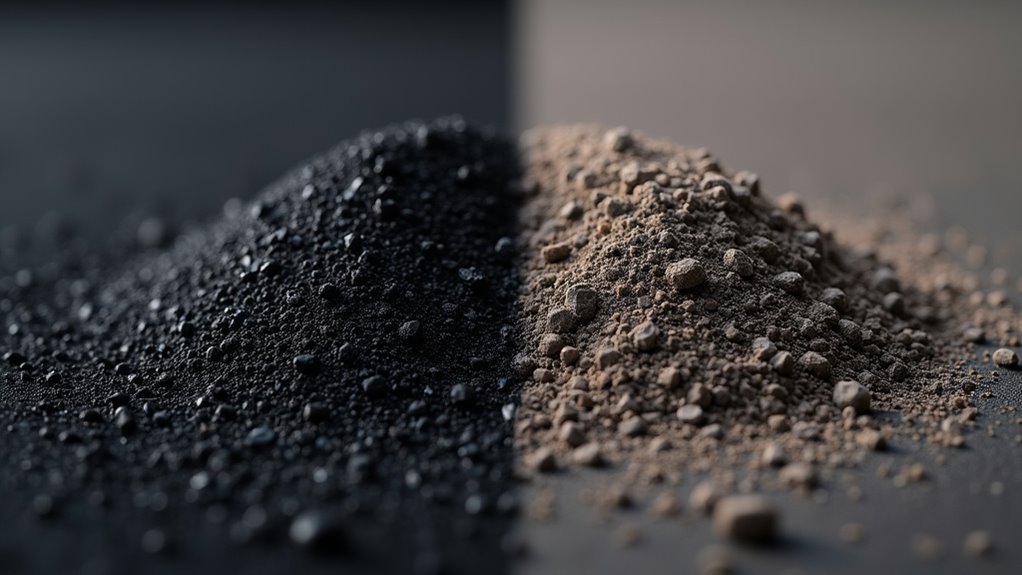
Selecting between hot mix and cold mix asphalt depends on your project’s traffic demands, installation timeline, and environmental conditions. Hot mix delivers maximum durability for high-traffic roads, parking lots, and permanent construction, handling heavy loads without failure. You’ll need ambient temperatures above 40-60°F and professional equipment for installation.
Cold mix works best for emergency repairs, utility cuts, and temporary fixes when heating isn’t practical. It applies in cold or damp conditions, making it ideal for winter potholes or shoulder-season work.
- Choose hot mix when you need permanent, load-bearing surfaces that withstand repeated traffic
- Choose cold mix when you’re patching low-traffic areas or need immediate, temporary repairs
- Consider high-performance cold patch when winter conditions demand freeze-thaw resistance
Match your material choice to project-specific performance requirements.
Frequently Asked Questions
Can Cold Mix Asphalt Be Converted to Hot Mix Asphalt Later?
You can’t convert cold mix asphalt to hot mix asphalt after placement. Cold mix uses emulsified asphalt that breaks down differently than heated binder, and the emulsion’s volatility prevents reheating. While you can heat cold patching asphalt to 135°C to prepare the binder, you won’t repurpose the laid material as hot mix. Instead, cold mix typically serves as a base course requiring a hot mix overlay or surface treatment for long-term performance.
How Long Can Cold Mix Asphalt Be Stored Before It Expires?
You can store cold mix asphalt for varying durations depending on packaging and conditions. Sealed 50 lb bags offer a minimum 18-month shelf life, while bags, pails, or drums provide indefinite storage. Bulk stockpiles of 100+ tons maintain quality for 1 year, and uncovered outdoor stockpiles last up to 2 years. For ideal results, you’ll want to store material in cool, dry conditions away from direct sunlight in original sealed containers.
Does Hot Mix Asphalt Require Special Equipment for DIY Home Repairs?
Yes, hot mix asphalt requires specialized equipment you won’t have for DIY repairs. You’d need access to heated storage tanks maintaining 275°F to 311°F, drum mixers, and proper hauling trucks with insulated beds. Compaction demands steel wheel or pneumatic rollers weighing 7-11 metric tons. For home repairs, you’re better off using cold mix asphalt, which doesn’t require heating equipment or industrial compaction machinery.
Can You Apply Sealcoat Over Cold Mix Asphalt Repairs?
Yes, you can apply sealcoat over cold mix asphalt repairs once they’ve fully cured. You’ll need to wait 24-48 hours minimum before application, though complete curing delivers ideal adhesion. Apply two thin coats using a squeegee or sprayer, allowing 12 hours between layers. Don’t sealcoat if temperatures will drop below 50°F within 24 hours or if rain’s expected. This process waterproofs your repair and maintains flexibility against temperature fluctuations.
What Happens if Hot Mix Asphalt Cools Before Installation Is Complete?
If hot mix asphalt cools before you complete installation, you’ll face serious compaction failures. Once temperatures drop below 290°F at mid-depth, you can’t achieve proper aggregate repositioning. Below 280°F, maximum compaction becomes nearly impossible, and at 175°F, compaction is completely ineffective. You’ll experience weak layer bonding, air pocket formation, and accelerated cracking. The pavement’s structural integrity suffers, shortening its service life and increasing your future maintenance costs.