

You should restripe your parking lot when markings drop to roughly 25 percent of their original clarity. Watch for grey, dull tones from UV oxidation, chipping, peeling, or lines narrowing below three inches. Most commercial lots need restriping every 18 to 24 months, while high-traffic facilities demand repainting every 6 to 12 months. Don’t wait for faded boundaries to invite crooked parking, ADA violations, or fender benders. Here’s what every wear stage really signals.
Key Takeaways
- Restripe most commercial lots every 18 to 24 months, or every 6 to 12 months for high-traffic facilities.
- Repaint immediately after sealcoating (24 to 72 hours) or asphalt overlay (48 to 96 hours) to ensure proper adhesion.
- Act when striping fades to grey tones, shows chipping, cracking, peeling, or drops below 25 percent visibility.
- Restripe when line width narrows below three inches or gaps appear at turn points and high-traffic lanes.
- Repaint promptly to correct ADA non-compliance, faded fire lanes, or accessibility markings that trigger inspection violations.
When should you restripe a parking lot
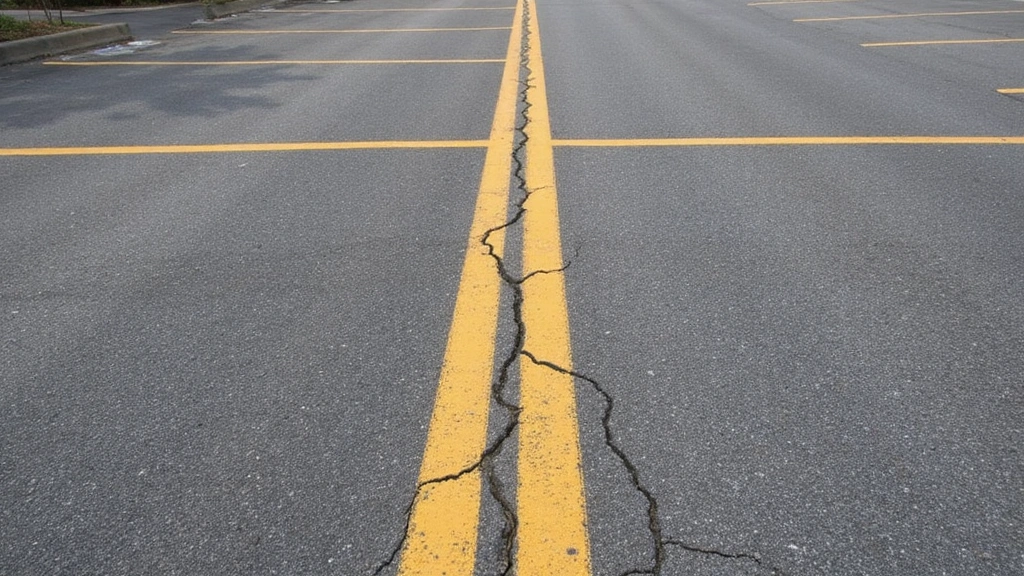
You’ll typically need to restripe most commercial parking lots every 18 to 24 months, because traffic volume and weather exposure directly dictate wear. High-traffic facilities like grocery stores and hospitals demand parking lot repainting every 6 to 12 months, while low-traffic industrial or warehouse sites can extend cycles to 24 to 30 months. Your paint type matters too: traffic paint on asphalt lasts 1 to 3 years, but epoxy coatings stretch longevity to 5 to 8 years. You’ll also need to restripe your parking lot immediately after sealcoating or resurfacing. Schedule parking lot painting 24 to 72 hours after seal coat and 48 to 96 hours after asphalt overlay. Operational changes, such as new entrances or added EV charging zones, similarly require prompt layout reconfiguration.
How does faded striping create safety and liability risks
Faded striping creates safety and liability risks the moment markings degrade. When you delay to repaint parking lot lines, drivers park crookedly, crowd adjacent spaces, and fail to stay within faded boundaries. Minor collisions and fender benders increase as drivers guess parking locations without clear guidance. The risks escalate with accessibility markings: faded ADA symbols, access aisles, and blue curb paint trigger non-compliance findings and liability exposure. Degraded fire lane markings impede emergency vehicle access and invite fire marshal violations. Each of these creates documented negligence you can’t defend in court. When you paint parking lot surfaces on schedule, you mitigate these hazards. Painting parking lots proactively protects both pedestrians and your organization from costly incidents and regulatory penalties. Improving accessibility is essential for ensuring that all users can navigate the space safely and effectively.
How does parking lot painting fade and wear over time
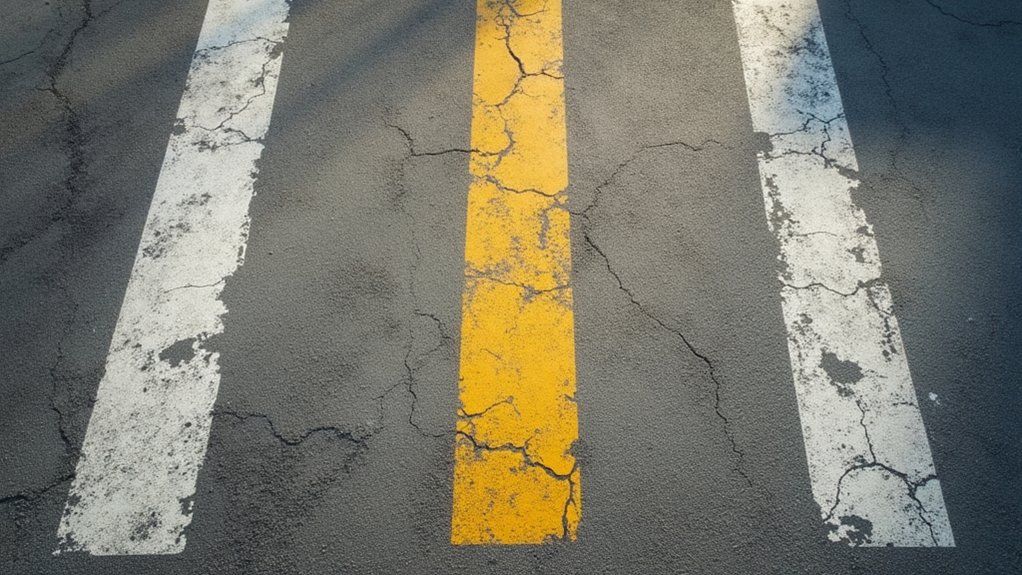
Parking lot paint fades and wears through predictable stages you can track under constant exposure to traffic and weather. On asphalt, traffic paint lasts one to three years, while epoxy coatings extend longevity to five to eight years. As vehicles, sunlight, and moisture attack the surface, you’ll notice clear visual indicators marking each phase of deterioration:
Parking lot paint deteriorates through predictable stages you can track under constant exposure to traffic and weather.
- Vibrant white or yellow striping shifts to grey or dull tones through UV oxidation.
- Physical breakdown appears as chipping, cracking, peeling, or bubbling across the coating.
- Line width narrows below three inches from the original four-inch standard due to abrasion.
- Visible gaps emerge where paint wears away completely at turn points and high-traffic lanes.
Once visibility drops to roughly 25 percent of original clarity, you’ve reached the restriping threshold.
Which wear signs signal fresh markings, ranked by urgency
Wear signs signal the need for fresh markings in this order of urgency: faded safety and compliance features first, then missing traffic guides, then narrowed or peeling lines, then general discoloration. Safety and compliance failures demand immediate action, while cosmetic fading allows scheduled remediation. Rank each indicator against its liability exposure and correct the most hazardous first.
| Urgency Level | Wear Sign | Required Response |
|---|---|---|
| Critical | Faded fire lanes, ADA symbols, access aisles | Restripe immediately to avoid violations |
| High | Missing directional arrows, stop bars, crosswalk gaps | Touch up within days |
| Moderate | Lines narrowed below 3 inches, chipping or peeling | Schedule full restripe |
| Low | Discoloration to grey, general dullness | Plan next refresh cycle |
Address critical items first, then work downward. This sequencing protects occupants, limits liability, and keeps your lot compliant.
How do compliance changes force new lines
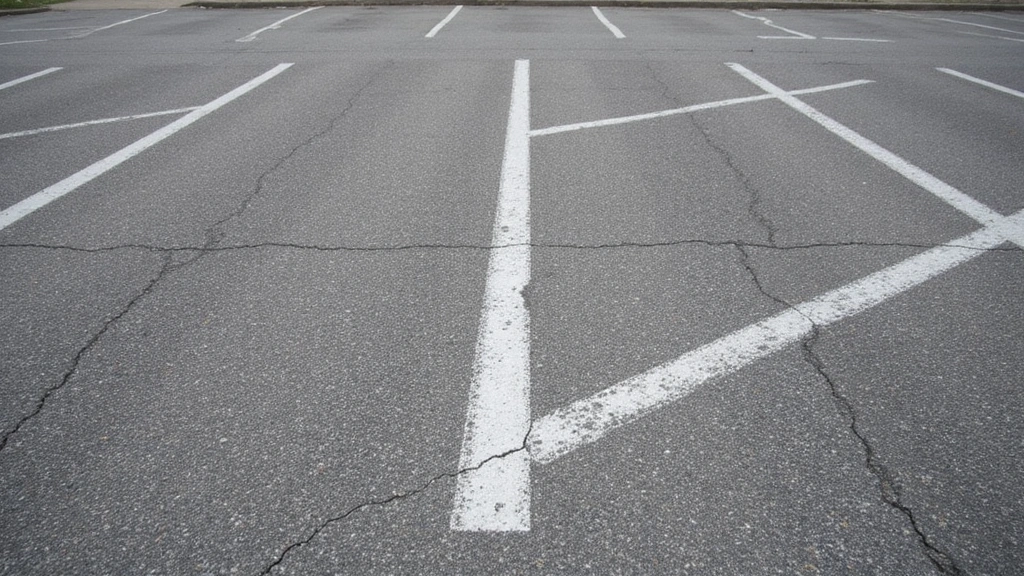
Compliance changes force new lines when updated standards make your existing markings non-compliant, requiring you to repaint whether your current lines look fine or not. ADA non-compliance findings regarding stall dimensions or aisle width trigger immediate restriping requirements, and you can’t defer them. Fire marshal inspections add another layer of enforcement pressure that demands compliant markings.
Watch for these compliance triggers that mandate fresh lines:
- ADA violations involving stall dimensions or access aisle width falling below required standards
- Faded accessible parking symbols, access aisles, or blue curb paint dropping to reduced visibility
- Degraded fire lane markings that impede emergency vehicle access
- Regulatory updates altering required layouts or dimensional specifications
You’ll need to address these findings immediately, since penalties and liability accumulate until you restripe to current code specifications.
Why does painting parking lots require the right timing
Painting parking lots requires the right timing because timing dictates whether your fresh lines bond properly or fail prematurely after you seal coat or resurface. You can’t rush the process. Apply striping too soon, and the paint won’t adhere to a curing surface, leading to peeling, bubbling, or discoloration. Wait too long, and you leave your lot unmarked, exposing drivers to confusion and collision risk.
Follow precise windows: restripe 24 to 72 hours after seal coating and 48 to 96 hours after an asphalt overlay. These intervals let the surface cure fully while preventing prolonged downtime. You also need to account for weather. Moisture and low temperatures compromise adhesion regardless of elapsed time. When you hit the right window, your markings bond tightly, resist wear, and deliver the longevity you’re paying for.
How does V&F Paving refresh worn markings
V&F Paving refreshes worn markings by matching the refresh method to your surface and traffic volume after a visual inspection under varying light conditions to pinpoint exactly where your markings have degraded. We assess line width against the 4-inch standard, check for discoloration, and identify chipping, cracking, or peeling. Our crews then apply:
Under varying light, we pinpoint degraded markings, measure against the 4-inch standard, and identify chipping, cracking, or peeling.
- Full restriping when visibility drops to roughly 25 percent of original clarity across your lot
- Targeted touch-ups for high-wear zones like directional arrows, crosswalks, and stop bars
- Post-sealcoat striping applied 24 to 72 hours after seal coat, 48 to 96 hours after overlay
- ADA reconfiguration to correct stall dimensions, access aisles, and faded accessibility symbols
We select paint or epoxy based on your longevity requirements, ensuring compliant, durable results.
Keep Your Lot Sharp, Safe, and Compliant
Faded lines don’t just look neglected. They invite crooked parking, fender benders, and ADA and fire-code violations that land on you. V&F Paving keeps commercial lots across Connecticut clearly marked with durable, high-contrast striping, matching the material to your traffic and prepping the surface so the lines actually last. Serving Hamden, New Haven, Stamford, Danbury, and Fairfield County since 1994, our team handles everything from a quick refresh of worn markings to a full restripe with ADA stalls, fire lanes, and directional markings after sealcoating or resurfacing. When your lines start fading, call (203) 624-2449 for a free restriping quote.
Frequently Asked Questions
Should I restripe the lot myself or hire a professional?
You can restripe a small lot yourself, but there’s a real learning curve, and the result usually shows it. Professionals bring the equipment for consistent line width and clean layout, and more importantly, they know how to keep your accessible spaces and fire lanes compliant with ADA and fire codes. Getting those wrong is where a DIY job turns costly, since a non-compliant stall or fire lane can trigger violations. For anything beyond a very small lot, or any layout involving ADA or fire markings, professional striping is the safer call.
How long does restriping take, and how long is the lot out of use?
Less time than most owners expect. A small lot can often be striped in a few hours, with larger lots taking longer depending on size and layout complexity. Once the lines are down, standard water-based paint is typically drivable within about an hour or two in good weather, though cooler or damp conditions extend that. If you’ve sealcoated first, the bigger delay is the sealcoat’s cure time before striping can even begin, not the striping itself.
Can you stripe over the old lines, or do they have to be removed first?
You can usually stripe directly over existing lines, as long as they’re clean, dry, and not peeling or flaking. Painting fresh lines over flaking paint causes the new coat to fail early, so prep matters. This works well when your existing layout still meets current requirements and the geometry isn’t changing. If the lines have shifted, the layout needs reconfiguring, or you’re bringing an older lot up to ADA standards, then a proper re-layout is the better route rather than simply tracing the old lines.
Is one coat of paint enough, or do I need two?
For asphalt, two coats are the standard for lasting results. A single coat tends to be too thin to hold up against UV exposure and constant traffic, partly because some of the paint soaks into the asphalt and leaves the line looking thinner than applied. A second coat builds the visibility and durability back up, which matters most in high-traffic lots and on key markings like accessible symbols, arrows, and crosswalks. For a low-traffic lot a single quality coat may suffice, but two is the safer bet for longevity.
Do you have to close the entire lot to restripe it?
Not usually. Striping is often done in sections, which lets part of the lot stay open while another area is painted and dries. This is especially helpful for retail centers, medical offices, and multi-tenant properties that can’t shut down entirely. It takes some coordination around your peak hours and traffic patterns, but phasing the work keeps your business accessible throughout. It’s worth mentioning when you schedule, so the crew can sequence the job around keeping you open.