
Hot patch asphalt outlasts cold patch by a significant margin—you’re looking at 15-20 years of service life versus just weeks to months. The difference comes down to application temperature: hot mix reaches 300°F, creating molecular bonds with existing pavement, while cold patch only achieves surface-level adhesion. Your traffic volume and climate conditions can widen this performance gap even further, which we’ll break down section by section below. Hot patch asphalt outlasts cold patch by a significant margin—you’re looking at 15–20 years of service life versus just weeks to months. If you’re wondering how hot is asphalt, the performance difference becomes clear: hot mix reaches around 300°F, creating molecular bonds with existing pavement, while cold patch only achieves surface-level adhesion. Your traffic volume and climate conditions can widen this performance gap even further, which we’ll break down section by section below.
Which Lasts Longer: Hot Patch or Cold Patch Asphalt?
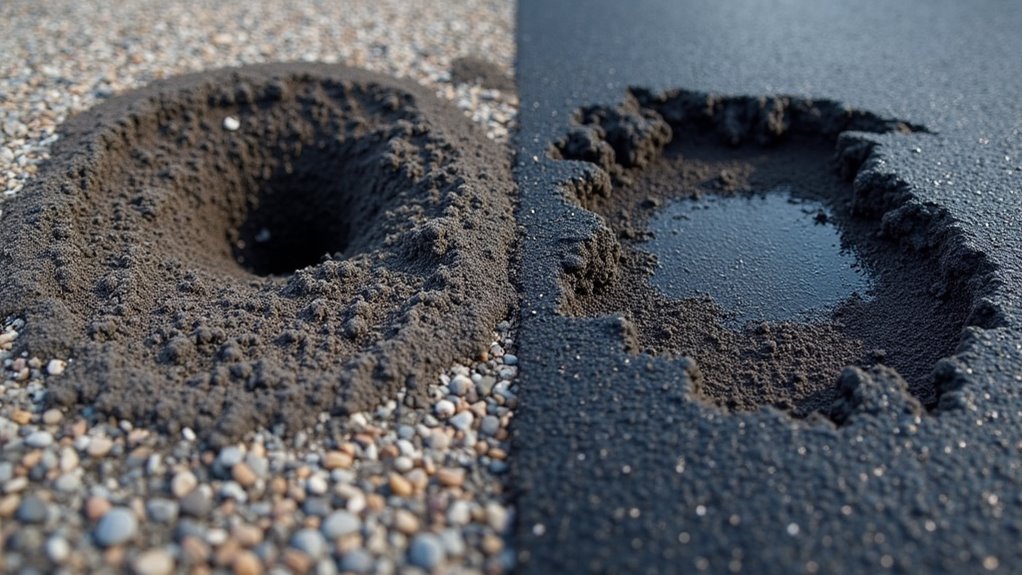
Longevity separates hot patch asphalt from cold patch asphalt in measurable ways. When comparing hot and cold patch performance, you’ll find significant durability differences. Hot mix asphalt delivers 15-20 years of service life with proper maintenance, while cold patch provides only weeks to months of functionality.
Hot patch creates full bonding with existing pavement surfaces, establishing seamless structural integration. Cold patch offers surface-level adhesion only, making it suitable primarily for temporary asphalt repair scenarios. Cold patch doesn’t fully bond with existing asphalt, which explains its limited lifespan compared to hot mix alternatives.
Hot patch bonds completely with existing pavement while cold patch delivers only surface-level adhesion for temporary fixes.
Among asphalt patching methods, hot mix demonstrates superior resistance to wear, cracking, and pothole recurrence. It handles heavy traffic loads without frequent replacement needs. Cold patch lacks the structural integrity required for long-term endurance under vehicular stress. cold mix asphalt benefits explained have gained attention for their ease of use and faster application compared to traditional methods. This type of asphalt can be a practical solution for temporary repairs and smaller projects, providing a quick fix that minimizes road closure times. Additionally, its environmental benefits, such as reduced greenhouse gas emissions during production, make it an attractive option for sustainable road maintenance.
You’ll achieve better return on investment choosing hot patch for permanent repairs despite higher upfront costs.
Why Hot Asphalt Outlasts Cold Patch by Years
When hot mix asphalt reaches 300°F during application, it creates molecular bonds with existing pavement that cold patch simply can’t match. This temperature-driven fusion produces dense, uniform material structure with superior compaction density.
In the cold patch vs hot patch asphalt comparison, the performance gap stems from fundamental material differences. Hot patch delivers 10-15+ years of durability, while cold patch provides temporary fixes lasting weeks to months. You’ll find hot mix achieves complete integration with the pavement base, whereas cold patch exhibits surface-level adhesion that fails to bond structurally. Cold patch is ready-to-use material that can be applied straight out of the container, making it convenient but sacrificing the durability that comes from heated application.
When evaluating cold patch vs hot patch, consider that hot mix’s weather resistance prevents moisture infiltration and surface degradation. This eliminates the frequent replacements cold patch necessitates, reducing your long-term maintenance costs considerably.
How Traffic Loads Affect Hot Patch vs Cold Patch Lifespan
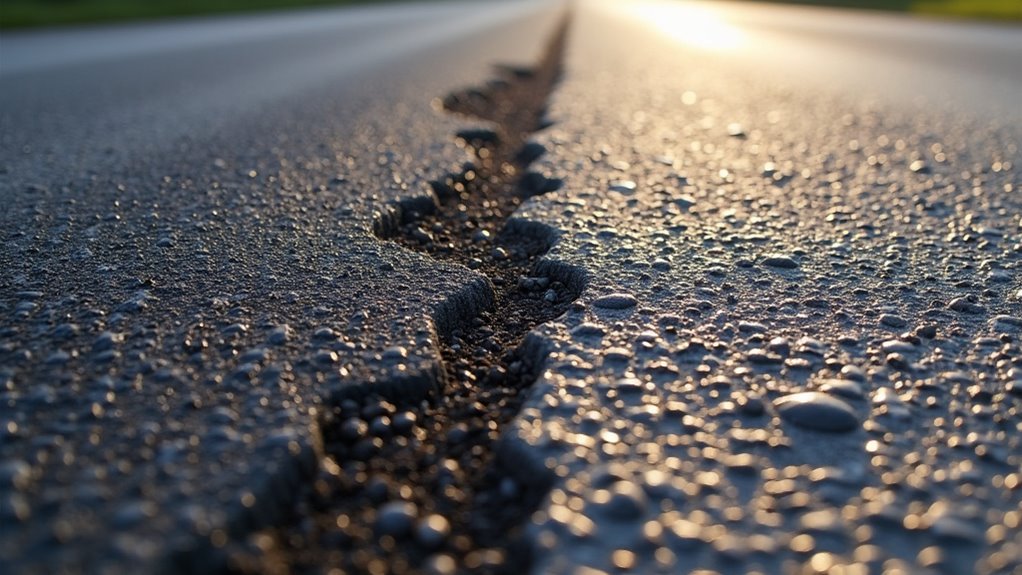
When you’re evaluating patch materials for high-traffic areas, you need to understand how vehicle loads directly impact longevity. Hot mix asphalt handles heavy traffic loads comparable to major throughways, distributing weight across structural pavement systems, while conventional cold patch lacks the binder strength to endure these conditions and fails rapidly. Traffic volume accelerates this performance gap—hot mix maintains its 15-30 year service life under constant vehicle compaction, whereas standard cold patch typically deteriorates within one season in high-traffic environments. However, high-performance cold mixes can offer permanent repair solutions with modern formulations that cure through compaction and actually strengthen as traffic continues to drive over them.
Heavy Load Performance Differences
Heavy traffic loads create distinct performance gaps between hot patch and cold patch asphalt repairs. Hot mix asphalt achieves higher compaction densities, delivering superior structural strength and resistance to deformation under intense vehicular stress. You’ll find hot patch maintains full bonding with the base layer, ensuring long-term integrity through repeated heavy load cycles.
Conventional cold patch lacks the binder strength necessary for heavy load applications, typically failing within one season in high-traffic zones. Its lower compaction densities result in faster deterioration under sustained pressure. However, high-performance polymer-modified cold patch offers improved adhesion and flexibility, making it suitable for emergency pothole repairs in heavy-traffic areas.
For structural pavement restoration requiring heavy load endurance, you’ll need hot mix asphalt’s dense, impermeable composition to resist moisture penetration and wear.
Traffic Volume Impact
Traffic volume directly determines whether cold patch or hot mix asphalt delivers acceptable service life for your repair project. In low-traffic residential areas, cold patch lasts up to 2 years with proper installation, while conventional formulations hold for a single season. High-performance cold patch actually strengthens over time through light traffic compaction.
High-traffic environments accelerate cold patch failure dramatically. Expect 6-12 months of service on commercial lots before material loosens and displaces. Conventional cold patch lacks the binder strength for sustained traffic wear, softening under summer heat and cracking under repetitive loading.
Hot mix asphalt performs consistently across all traffic volumes. You’ll achieve 15-30 years of service life regardless of throughway demands. The material distributes heavy loads effectively and withstands fluctuating traffic conditions without requiring frequent replacement.
Weather Conditions That Shorten Cold Patch Durability
Cold patch asphalt’s durability decreases markedly under specific weather conditions that compromise its chemical composition and structural bond. You’ll find freeze-thaw cycles particularly destructive—water infiltrates patched areas, freezes, expands, and pushes material out of position. Charlotte’s 43 inches of annual rainfall accelerates this degradation through repeated moisture exposure.
| Weather Condition | Primary Failure Mechanism | Durability Impact |
|---|---|---|
| Freeze-thaw cycles | Water expansion weakens structural bond | Rapid deterioration |
| Summer heat (90°F+) | Material softening reduces cohesion | Early cracking |
| Heavy rainfall | Chemical binder breakdown | Months-only lifespan |
Heat exposure softens inadequately compacted cold patch, reducing adhesion properties. Excessive moisture breaks down chemical binders, while UV radiation degrades surface integrity. You’ll experience the shortest cold patch lifespans in high-traffic zones combining these weather stressors.
The Hidden Cost of Choosing Cold Patch Over Hot Mix
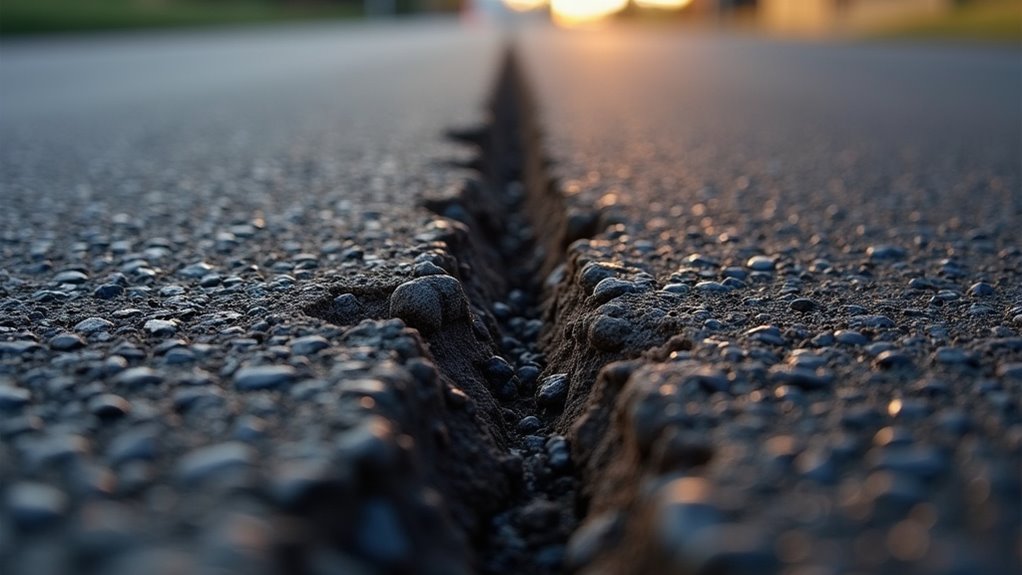
Why does cold patch asphalt’s lower price tag deceive so many property owners? At $2 to $4 per square foot versus hot patch‘s $2 to $5 range, initial savings appear significant. DIY application eliminates contractor fees, and bagged materials seem economical for small repairs.
However, cold patch’s one-year average lifespan triggers costly reapplication cycles. You’ll face seasonal repairs as patches crumble or dislodge, especially through freeze-thaw cycles. Bagged pricing accumulates rapidly for larger areas, often exceeding hot mix per-ton economics.
The durability deficit compounds expenses further. Cold patch lacks structural bonding with existing pavement, making it unsuitable for high-traffic zones. You’re fundamentally paying repeatedly for temporary fixes while hot asphalt’s 20-year lifespan delivers superior ROI through minimized maintenance cycles and fewer operational disruptions.
When Cold Patch Asphalt Is Still the Right Choice
Despite hot patch asphalt’s superior long-term performance, you’ll find cold patch remains the ideal solution in specific scenarios where immediate action outweighs permanence. When you’re facing emergency repair situations—such as sudden pothole formation during peak traffic hours—cold patch’s rapid deployment capability allows you to restore road safety within minutes without specialized heating equipment. You’ll also benefit from cold patch technology in remote location applications where transporting hot mix isn’t feasible, since the material’s ambient-temperature workability and extended shelf life eliminate logistical constraints that would otherwise delay critical repairs.
Emergency Repair Situations
When emergency repairs demand immediate action, cold patch asphalt delivers critical advantages that hot mix simply can’t match. In addition to quick results, the ability to cold patch a driveway allows homeowners to take control of their property maintenance. This method is not only cost-effective but also minimizes inconvenience, as it can be applied in varying weather conditions. Ultimately, choosing to cold patch a driveway ensures a reliable solution that helps prevent further damage.
You’ll find cold patch performs effectively in wet or dry conditions, functioning on cold and damp pavements where hot mix fails to bond. Heavy rain scenarios don’t compromise its performance, making it your go-to solution for year-round emergency pothole fixes.
You won’t need specialized heating equipment—cold patch comes ready-to-use straight from the bag or container. This eliminates setup delays, allowing quick deployment when hazardous road conditions require immediate attention.
Traffic reopens almost immediately after compaction. You’ll achieve light-use readiness within 24 hours, minimizing downtime on critical roadways. With storage capability extending up to two years, you maintain on-hand readiness for unexpected pavement failures without frequent reordering concerns.
Remote Location Applications
How effectively can you execute pavement repairs when the nearest hot mix plant sits 100+ kilometers away? Cold patch asphalt becomes your ideal solution. You can produce and apply it on-site without specialized equipment, eliminating transportation constraints that make hot mix impractical for isolated rural roads in India.
You’ll achieve workable applications at ambient temperatures above 10°C, even in wet conditions or during freeze-thaw cycles. This weather flexibility removes seasonal laying restrictions that hot mix demands.
Your cost analysis favors cold patch for remote projects: no heating energy consumption, reduced hauling expenses, and minimal heavy machinery transport. Stockpiled mixes maintain year-round functionality, ensuring you’re prepared for emergency repairs regardless of season. Water-based formulations deliver environmental benefits while cutting your carbon footprint compared to conventional hot mix alternatives.
Hot Patch vs Cold Patch: Matching the Fix to Your Repair Type
Selecting between cold patch and hot patch asphalt depends on your repair timeline, traffic volume, and performance requirements. For emergency repairs in freezing conditions or remote locations, cold patch offers immediate application at ambient temperatures. However, conventional cold patch fails within 3-12 months under heavy traffic loads.
You’ll achieve ideal results by matching the repair method to your specific scenario. Use cold patch for temporary fixes, light commercial areas, or as a stopgap until permanent repair is possible. Reserve hot patch for high-traffic zones requiring full structural bonding and 8-15+ year durability.
Consider high-performance cold patch with polymer binders when you need winter application combined with 5-10+ year lifespan. This option bridges the gap between emergency accessibility and long-term performance at moderate cost.
Can You Extend Cold Patch Lifespan to Match Hot Mix?
Can cold patch truly achieve hot mix longevity? You’ll extend performance considerably through proper installation protocols. Clear all debris before application, compact thoroughly with a tamper, and maintain temperature ranges between 0°F and 105°F. Never torch cold patch—direct heat breaks down the binder compound.
Your maintenance schedule determines durability outcomes. Apply sealcoat over cured cold patch every two to three years to shield against UV degradation and water infiltration. Seal adjacent cracks immediately to prevent moisture penetration that undermines patch adhesion.
For maximum lifespan extension, consider hybrid approaches. Infrared patching creates seamless bonds with existing asphalt. Hot mix overlay applied over cold patch delivers robust, extended durability. These advanced techniques can delay full resurfacing by several years, though cold patch alone won’t match hot mix’s permanent structural integration.
Signs Your Cold Patch Failed and Needs Hot Mix Replacement
Even with ideal maintenance protocols, cold patch repairs eventually fail—recognizing these failure indicators early prevents costly structural damage and liability exposure.
You’ll notice distinct warning signs when cold patch integrity deteriorates:
- Edge separation: Material pulls away from surrounding pavement, allowing water infiltration that softens the sub-base
- Surface raveling: Loose aggregate disperses under traffic loads, indicating binder breakdown and oxidation
- Depression formation: Bowl-shaped settling reveals compaction failure and base erosion beneath the patch
When you observe alligator cracking patterns developing within patched areas, you’re witnessing structural fatigue that surface treatments can’t address. Soft spots or spongy responses under foot pressure confirm sub-base saturation. The Federal Highway Administration classifies these symptoms as structural distress requiring full-depth intervention. Hot mix replacement restores load-bearing capacity that failed cold patches cannot provide.
Frequently Asked Questions
Can Hot Patch Asphalt Be Applied During Winter Months?
You shouldn’t apply hot patch asphalt during winter months. Hot mix requires temperatures above 50°F for proper bonding, and you can’t lay it on frozen or wet ground. Heating asphalt binders to 150-180°C becomes difficult in low ambient temperatures, and asphalt plants typically shut down in winter. If you apply hot asphalt below freezing, you’ll experience rapid cooling, poor compaction, and premature deterioration—resulting in potholes and cracks upon thawing.
What Equipment Is Needed to Apply Hot Patch Asphalt Properly?
You’ll need several key pieces of equipment for proper hot patch asphalt application. Start with heating equipment like hot boxes that maintain asphalt at 275-325°F for up to 72 hours. Use an asphalt rake or lute rake for spreading, and deploy plate compactors or steel drum rollers for bonding—compacting in lifts no greater than 3 inches. Don’t forget safety gear: calibrated temperature gauges, fire extinguishers, gloves, and safety goggles.
Is Cold Patch Asphalt Safe for DIY Homeowner Repairs?
Yes, cold patch asphalt is safe for your DIY repairs. You won’t encounter harmful fumes like you would with hot mix applications, eliminating inhalation risks. You’ll need basic protective gear—gloves and safety goggles—along with a broom for cleanup. The polymer-modified formulation allows you to work safely on water-filled potholes. Compaction using a tamper or 2×4 wood presents minimal injury risk, making it ideal for non-commercial homeowner applications.
How Long Must Vehicles Wait Before Driving on Fresh Hot Patch?
You’ll need to wait 48-72 hours before driving passenger vehicles on fresh hot patch asphalt. This timeline assumes ideal conditions of 70-80°F temperatures and low humidity. For heavy vehicles like trucks, RVs, or trailers, you’re looking at 14+ days minimum to prevent structural damage and indentations. The asphalt cools from 250-325°F to ambient temperature during this period, with full curing taking 6-12 months for maximum strength.
Does Cold Patch Asphalt Release Harmful Fumes During Application?
Yes, cold patch asphalt releases harmful fumes during application. You’re exposed to volatile organic compounds and potential hydrogen sulfide emissions that produce a characteristic “rotten egg” odor. These fumes can cause headaches, dizziness, nausea, and throat irritation. You should apply cold patch only outdoors or in well-ventilated areas. Use fans to direct fumes away from your work zone, and wash your hands, forearms, and face thoroughly after handling.