
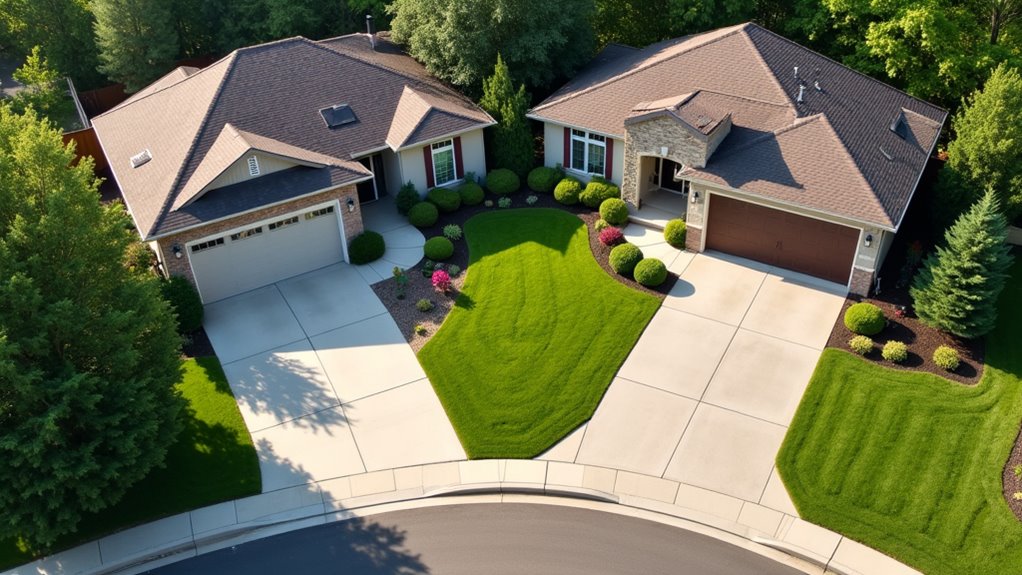
Your driveway paving costs depend on seven critical factors: material selection ($3–$22/sq ft based on asphalt, concrete, or pavers), total square footage (200–1,000 sq ft for typical residential projects), labor rates (comprising 50% of total investment), site preparation requirements (grading and excavation adding $1–$3/sq ft), drainage infrastructure ($500–$4,000+), geographic location (urban areas commanding 20–40% premiums), and long-term maintenance needs. These interconnected variables can shift your project from $1,800 to $30,000+, making thorough understanding essential for accurate budgeting and contractor evaluation.
Material Selection and Quality Grade
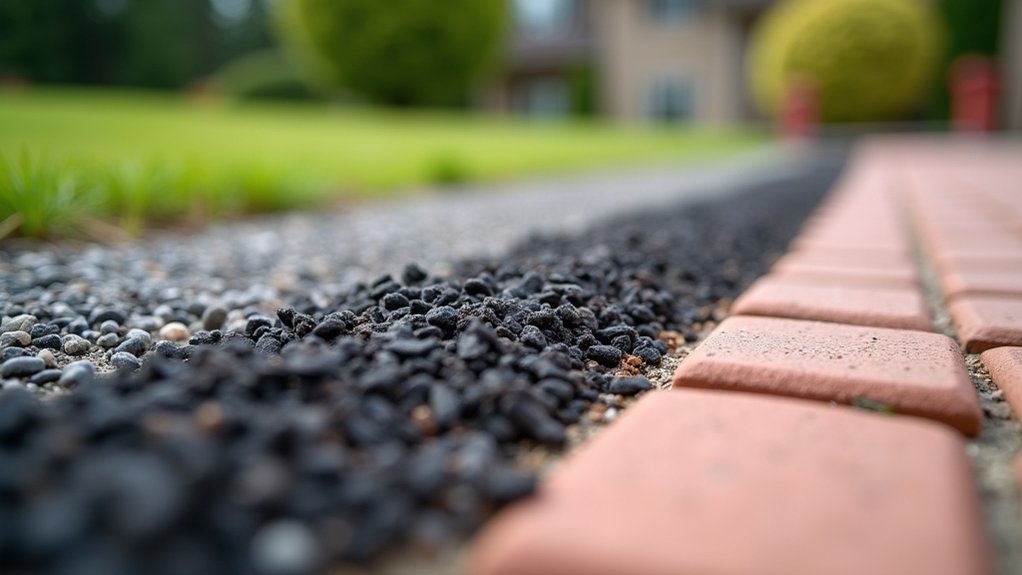
Customized finishes add $2–$8 per square foot for stamped or colored concrete, while decorative pavers can double your base expenditure. You’ll find efficient product sourcing reduces expenses considerably; locally sourced gravel cuts costs compared to imported varieties. Material longevity also affects long-term value; pavers lasting 30–50 years justify higher upfront costs versus gravel’s 5–10 year lifespan. Higher compressive strength concrete and premium interlocking pavers command top-tier pricing but deliver superior durability. Concrete slab thickness directly impacts structural integrity and pricing, with enhanced driveways requiring thicker installations for optimal load-bearing capacity. Recycled asphalt millings offer an eco-friendly alternative at $2–$4 per square foot while providing reliable compactability for budget-conscious homeowners. Permeable paver options introduce additional upfront investment but provide long-term savings through superior drainage management and reduced stormwater infrastructure needs.
Driveway Size and Square Footage
You’ll find that accurately measuring your driveway’s total square footage is essential for obtaining realistic cost estimates, as contractors universally price paving projects on a per-square-foot basis. Most residential driveways range from 200 to 1,000 square feet, with costs typically falling between $3 and $22 per square foot depending on your material selection and regional labor rates. Larger projects often qualify for bulk pricing advantages, potentially reducing your per-foot rate when you’re paving expansive areas exceeding standard single-car or two-car dimensions. A single-car driveway typically measures 200 to 300 square feet and costs between $1,400 and $6,600, making it an ideal choice for first-time homeowners, urban properties with limited space, or secondary driveways. Standard rectangular driveways are the most cost-effective option, while curved or circular designs require more materials and labor, increasing costs by 10-30%. Whether you’re a homeowner planning a residential project or a property manager overseeing multiple locations, understanding how driveway size impacts your overall investment helps you budget appropriately for your paving needs.
Total Area Measurements Matter
When planning your driveway paving project, square footage stands as the primary cost determinant that’ll shape your entire budget. Residential paving typically ranges from $1 to $30 per square foot, with material selection dramatically scaling costs across larger areas. A 600 sq ft asphalt installation runs $1,800–$4,200, while expanding to 1,000 sq ft pushes expenditure to $3,000–$7,000.
Measurement accuracy implications directly affect your final invoice; miscalculations create significant budget variances. Driveway layout complexities, including curves, turnarounds, and non-rectangular configurations, increase material waste and labor hours beyond standard rectangular designs. Site preparation requirements like grading, excavation, and drainage systems add substantial costs to your base square footage calculations. Asphalt overlay installations can reduce expenses by 20-30% compared to complete replacements when existing surfaces remain structurally sound.
| Area (sq ft) | Asphalt Cost | Concrete Cost |
|---|---|---|
| 600 | $1,800–$4,200 | $3,000–$9,000 |
| 1,000 | $3,000–$7,000 | $5,000–$15,000 |
| 1,200 | $3,600–$8,400 | $6,000–$18,000 |
Accurate area calculation including all extensions guarantees precise budget forecasting and prevents costly mid-project adjustments.
Bulk Pricing and Discounts
Beyond calculating your driveway’s total square footage, understanding bulk pricing structures opens up significant cost savings that directly impact your project’s bottom line. Most suppliers implement tiered discount schedules starting at minimum order quantities, typically $2,500 or specific tonnage thresholds, where you’ll see 5-10% reductions in per-unit costs. Your purchase frequency matters: contractors and repeat customers often negotiate preferential rates beyond standard bulk tiers. Wholesale suppliers consistently offer lower square-foot pricing than retail outlets, with pavers ranging from $2.43 to $6.99 per piece depending on volume. High-volume orders frequently include free delivery, effectively reducing your total project cost per square foot. Premium materials may carry smaller bulk discounts, while clearance stock offers deepest savings for buyers meeting minimum order quantities. Direct manufacturer purchases eliminate retail markups entirely. Materials are typically shipped on pallets and usually arrive within 24 to 48 hours, streamlining your project timeline and reducing storage complications. Many services now offer free local delivery through their trusted supplier networks, particularly for orders meeting minimum thresholds. Budget-friendly options like Marseilles Harvest pavers start at $1.99 per piece, making them accessible for cost-conscious projects requiring substantial quantities.
Labor Rates and Installation Expertise
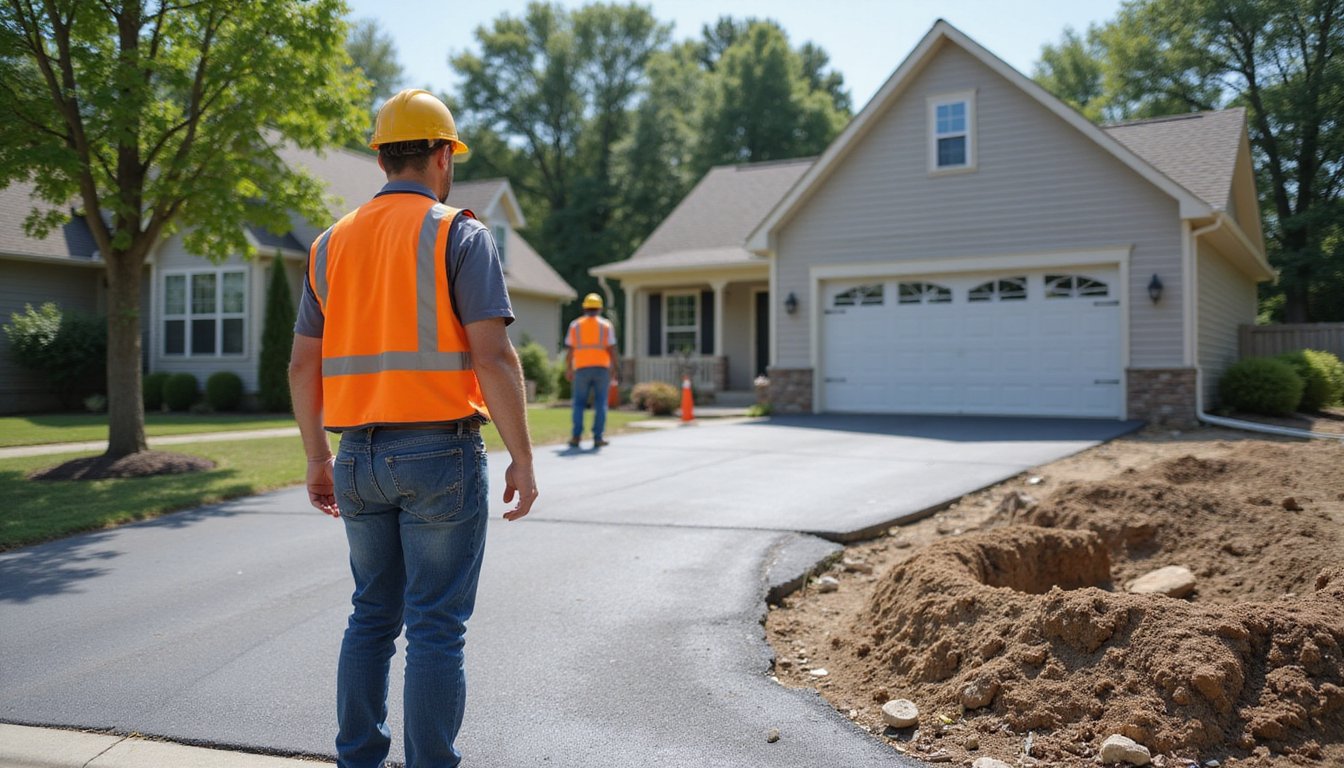
Labor costs represent approximately 50% of your total driveway paving investment, making contractor rates a critical budget factor. Regional variations greatly impact pricing; urban and coastal areas command 20–40% premiums over rural markets, with rates ranging from $3–$15 per square foot depending on location and complexity.
Installer expertise directly correlates with project durability and aesthetics. Experienced crews charge premium rates but deliver superior base preparation, grading, and drainage solutions that extend pavement lifespan. Weather conditions and equipment usage affect installation efficiency; skilled professionals adapt techniques for ideal results across varying site challenges.
Complex designs involving curves, patterns, or slopes increase labor demands by 20–50%. Demolition of existing surfaces adds $1–$3 per square foot, while limited site access necessitates manual methods that elevate costs substantially. The material choice significantly influences installation requirements, as pavers offer more design flexibility than traditional asphalt or concrete options.
Site Preparation and Ground Conditions
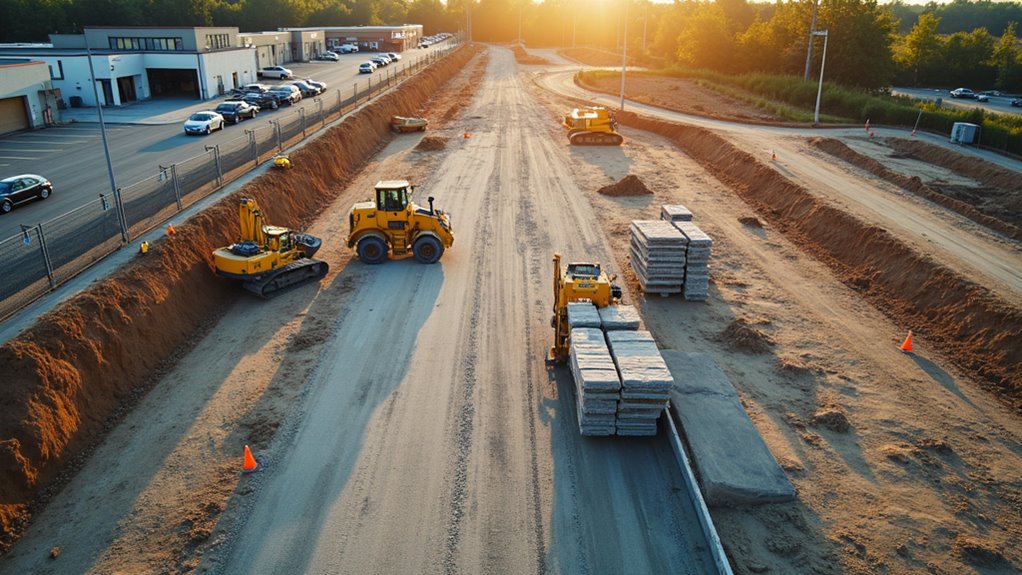
Ground conditions determine the foundation quality of your driveway and vastly influence total project costs, often accounting for 15–30% of your budget before any paving material is installed. Site clearing typically adds $500–$1,500 for debris removal, increasing when trees, rocks, or old pavement require specialized equipment. Grading and soil stabilization range from $1–$3 per square foot, ensuring proper drainage and preventing future failures. Unstable subgrade soils necessitate undercutting and engineered fill replacement, while clay-heavy conditions may require geotextile fabrics or additional gravel layers. Excavation depth impacts costs enormously; removing unsuitable topsoil or reaching stable subsoil can increase project expenses by 10–20%. Complex demolition may involve environmental considerations and permitting requirements. Sites with poor access or challenging terrain require specialized machinery, extending labor hours and equipment fees extensively. Removal and disposal of old pavement can add significantly to your upfront site preparation budget, particularly when dealing with deteriorated or contaminated materials.
Drainage Systems and Climate Requirements
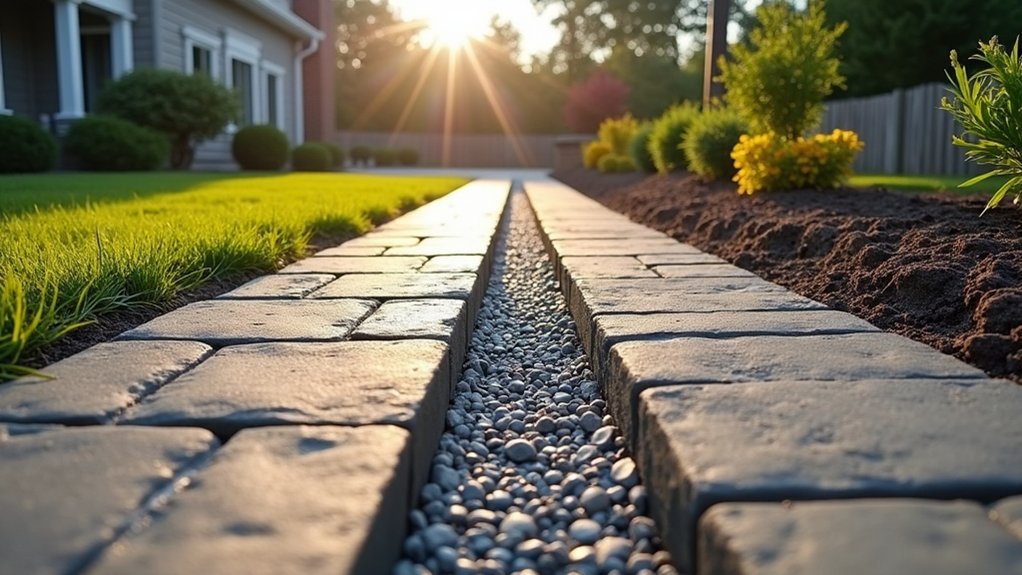
Water management directly determines whether your foundation work survives its first winter or deteriorates within months of installation. You’ll face $500–$4,000+ for drainage infrastructure, French drains, catch basins, or trench systems, depending on material permeability requirements and site complexity. Concrete and asphalt demand engineered slopes and subsurface conduits, while permeable pavers reduce traditional drainage needs in moderate climates.
Freeze-thaw regions require robust engineered erosion control and deeper excavation to prevent frost heaving, adding $5–$10 per square foot for grading modifications. Heavy rainfall zones necessitate stormwater compliance infrastructure, potentially costing $500–$10,000 for culverts or retention systems. Steep properties compound expenses through specialized retention walls and reinforced slopes. Climate-specific adaptations, thicker slabs, enhanced drainage capacity, represent non-negotiable code requirements that directly impact your project budget and long-term pavement performance.
Geographic Location and Regional Market Rates
Your project’s total cost swings dramatically based on ZIP code, with identical 600-square-foot driveways ranging from $3,600 in rural Midwest markets to $9,000+ in coastal metropolitan areas. Labor rates in the Northeast and West Coast regions run 10–20% above national averages, while California metros command 30–50% premiums. Regulatory requirements impose stricter permitting and eco-compliance mandates in urban zones, adding administrative costs and material upgrades. Transport logistics profoundly impact material pricing in remote locations lacking local quarries.
| Cost Factor | Urban Markets | Rural Markets |
|---|---|---|
| Labor rates | 30–50% premium | Baseline to -15% |
| Material delivery | Standard sourcing | +10–15% transport |
| Permit complexity | High oversight | Minimal requirements |
Urban contractor scarcity and insurance costs elevate baseline bids, while rural projects benefit from simplified permitting and lower overhead expenses.
Long-Term Maintenance and Additional Features
While upfront installation costs dominate most budgeting discussions, lifecycle expenses and value-added enhancements ultimately determine your project’s true financial impact. Lifespan and durability vary dramatically: well-maintained pavers last 30 years, concrete 20-40 years, and asphalt 15-30 years. You’ll face resealing costs of $200-$400 every 3-5 years for pavers, while asphalt requires periodic seal coating. Repair and replacement expenses differ noticeably, individual paver replacement costs $10-$50 per square foot versus asphalt repairs averaging $2,464. Customization features like permeable pavers ($8-$30/sq ft), stamped concrete ($12-$18/sq ft), or integrated lighting substantially increase project costs but enhance property value and curb appeal. Professional edging and drainage systems add $4-$10 per square foot while improving functionality and marketability.
Frequently Asked Questions
Do I Need a Permit for Driveway Paving?
You’ll likely need a permit for driveway paving, depending on your project’s scope and local regulations. New installations almost always require permits due to grading and drainage impacts, while simple resurfacing with identical materials typically doesn’t. Permitting requirements vary considerably by municipality, so you should contact your local building department before starting work. Projects affecting public right-of-way, property boundaries, or drainage systems mandate advance approval. HOA communities may impose additional restrictions beyond standard municipal codes.
How Long Does Driveway Installation Typically Take?
Your driveway installation typically takes 1–2 weeks for asphalt, 5–7 days for concrete or pavers, and 1–2 days for gravel. Paving timeline factors include site preparation, base installation, and material-specific curing requirements. You’ll need to account for seasonal installation considerations, extreme temperatures and precipitation can delay asphalt and concrete projects greatly. Weather conditions, permit acquisition, existing surface removal, and design complexity all impact your project schedule. Plan for additional curing time before full vehicle use.
Can I Finance My Driveway Paving Project?
Yes, you’ll find multiple financing options available for your driveway paving project. Personal loans typically offer fixed rates between 8-36% APR with terms from 1-7 years. Home equity loans provide lower rates if you’re a homeowner with sufficient equity. Many contractors offer payment plans, including “same-as-cash” promotions with 0% interest for 3-12 months. Credit cards work for smaller projects, though rates are higher. Compare lenders and contractor financing to secure the best terms for your budget.
Will Driveway Paving Disrupt My Daily Routine or Parking?
Yes, driveway paving will temporarily disrupt your routine and parking. You’ll need to relocate all vehicles for 3–7 days, depending on material choice and weather conditions. Asphalt typically allows access after 72 hours, while concrete requires 5–7 days. Weather conditions can extend curing times considerably. During construction, you’ll experience restricted access to property, requiring alternative parking arrangements. Plan your project during low-activity periods and coordinate street parking to minimize inconvenience throughout the installation and initial curing phase.
Should I Get Multiple Contractor Quotes Before Deciding?
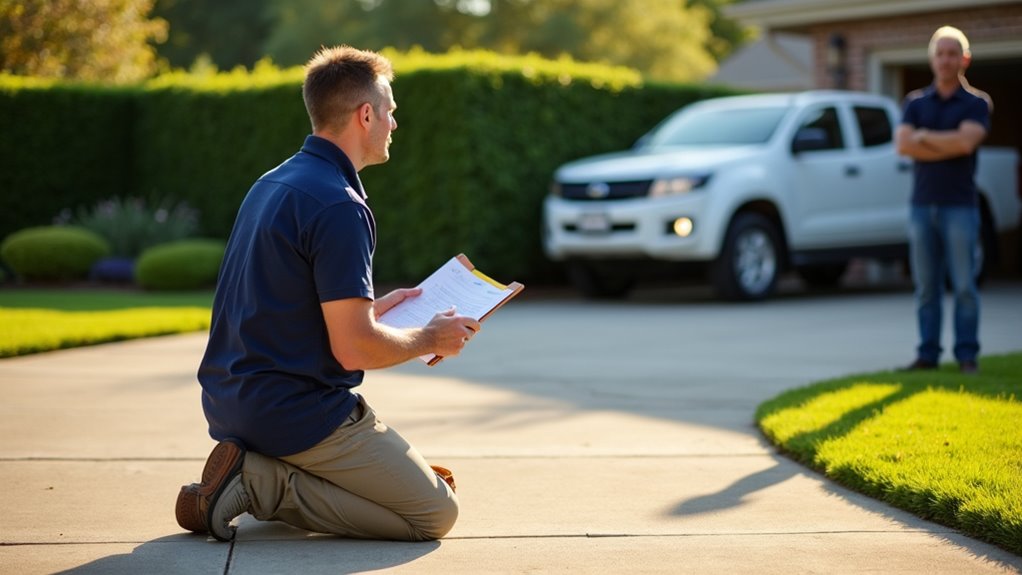
Yes, you should obtain 2–3 quotes to research quality and compare contractor reputations effectively. Multiple estimates reveal market rates, material specifications, and scope variations that impact long-term performance. You’ll identify discrepancies in base preparation methods, asphalt thickness, and warranty terms. However, avoid excessive quoting, it delays scheduling and complicates comparisons. Focus on licensed contractors with verifiable project portfolios and itemized bids reflecting identical specs, ensuring you’re evaluating value and workmanship, not just price.