



A heated driveway warms your pavement above freezing, so snow and ice melt from below and drain away before refreezing. You can choose electric resistance cables or mats rated at 36 to 50 watts per square foot. You can also choose hydronic PEX tubing delivering 100 to 170 Btu per square foot. Installed costs run $8 to $18 per square foot for electric and $10 to $25 for hydronic. Sensors, sidewalk extensions, and seasonal operating costs also shape your system’s true value.
Key Takeaways
- Heated driveways warm pavement above freezing from below, melting snow and ice so meltwater drains away before it can refreeze.
- Electric systems use resistance cables or mats producing 36 to 50 watts per square foot, costing $8 to $18 per square foot installed.
- Hydronic systems circulate water-glycol through PEX tubing from a boiler or heat pump, costing $10 to $25 per square foot installed.
- Operating a 1,000-square-foot electric driveway costs roughly $276 per season in light-snowfall areas and $692 in average-snowfall areas.
- Automatic sensor controls, adding $250 to $600, cut unnecessary run time, while heated sidewalk extensions create a cleared path from street to door.
What is a heated driveway and how does it melt snow

A heated driveway system embeds heat sources beneath concrete, asphalt, or pavers, warming the surface above freezing so snow and ice melt from below and meltwater drains away. You’ll choose between two designs. Electric systems use resistance cables or mats that draw 36 to 50 watts per square foot. Hydronic systems circulate a water-glycol fluid through PEX tubing, heated by a boiler or heat pump, and often target 100 to 170 Btu per square foot. A driveway snow melt system can run manually, or you can add sensors that detect temperature and moisture and activate heating automatically. You don’t have to heat everything. A snow melting driveway can cover only tire tracks or key walkways, shrinking the heated footprint.
How do the main snow-melt systems compare
Electric systems win on upfront cost and simplicity, while hydronic systems offer more capacity for larger surfaces.
| Factor | Electric | Hydronic |
|---|---|---|
| Heat source | Resistance cables or mats | Boiler or heat pump, PEX tubing |
| Output | 36 to 50 W/sq ft | 100 to 170 Btu/sq ft |
| Installed cost | $8 to $18/sq ft | $10 to $25/sq ft |
| Maintenance | Virtually maintenance-free | Boiler service, fluid checks |
Choose electric when you’re heating sidewalks, stairs, or a small heated driveway zone. You skip the boiler, pump, manifold, and expansion tank. Hydronic heated driveways suit larger, high-load surfaces or homes with a compatible heat source, running on natural gas, electricity, oil, wood, or solar thermal. Either snow melting system’s performance depends on snowfall, outdoor temperature, surface material, drainage, controls, and operating hours, so size it precisely to your site’s conditions.
What are the benefits of a heated driveway
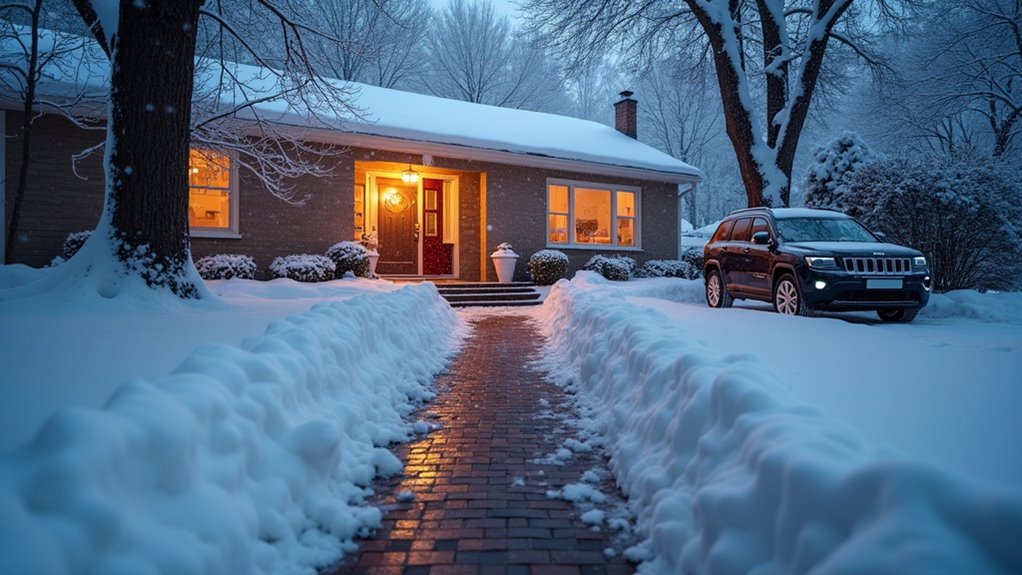
A heated driveway melts snow and ice on contact, cuts the time you spend shoveling and de-icing, and lets you target heat where it matters most. It warms the pavement above freezing, so the meltwater drains away before it can refreeze. The heated driveway function can be automated with a thermostat, ensuring optimal performance throughout the winter months. Homeowners can enjoy the convenience of a clear driveway without the backbreaking labor typically associated with winter weather.
You can focus coverage on tire tracks, walkways, entry steps, and stairs. Limiting coverage to key travel paths shrinks the heated footprint, cutting both installed cost and seasonal energy use.
Automatic controls add value. In-ground or aerial sensors start the system only when temperature and moisture indicate snow or ice, so you don’t pay to run it unnecessarily. Expect roughly $250–$600 more than manual controls.
Electric systems have few mechanical parts and are described as virtually maintenance-free. Hydronic systems need periodic boiler service and fluid checks.
How is a snow-melting system built into the pavement
A snow-melting system is built into the pavement by laying electric cable, mats, or PEX tubing at the designed spacing over a prepared, compacted base, with insulation or drainage layers added where the site requires them. With an electric system, you’re embedding resistance elements sized for roughly 38 to 50 watts per square foot, so you avoid boilers and circulation plumbing. A hydronic system needs more hardware: embedded tubing connected to a boiler, pump, manifold, and expansion tank. Test heating elements before and after you place concrete, asphalt, or set pavers, and have qualified professionals handle electrical connections and system design. If you’re retrofitting, expect pavement removal, which can add $1 to $2 per square foot, or installation methods that can affect your existing surface and its warranty.
What does running the system add to your energy bill

Running the system typically adds about $276 per season in light-snowfall areas and $692 in average-snowfall areas for a 1,000-square-foot electric driveway, according to one cited estimate. Treat these as source-specific figures, not universal rates. Your actual cost depends mainly on your energy prices, local snowfall, heated area, operating hours, and controls.
Load drives consumption. Electric systems commonly draw 36 to 50 watts per square foot, so a 1,000-square-foot slab can demand 36 to 50 kilowatts while running. Hydronic designs typically target 100 to 170 Btu per square foot, with costs tied to your fuel: natural gas, electricity, oil, wood, or solar thermal.
To cut costs, heat only key travel paths instead of the full driveway. Automatic temperature and moisture sensors add about $250 to $600 upfront, but they prevent unnecessary run time on dry days.
How do heated sidewalks extend the system
Heated sidewalks extend the system by carrying snow-melting coverage from your driveway to sidewalks, entryways, and steps, creating a continuous cleared path from the street to your door. These surfaces face the same snow and ice exposure as your driveway, and how you configure the extension shapes both cost and performance:
Extending snow-melting coverage to sidewalks, entryways, and steps creates a continuous cleared path from the street to your door.
- Electric for small zones: Resistance cables or mats drawing 36 to 50 watts per square foot suit sidewalks, stairs, and entryways, and you won’t need a boiler or circulation plumbing.
- Hydronic for shared heat sources: If your driveway already runs PEX tubing, you can extend loops to adjacent walkways from the same boiler, pump, and manifold.
- Targeted coverage: Heating only key travel paths shrinks the heated footprint, cutting installed cost at $8 to $25 per square foot and reducing seasonal energy use and runtime.
Is a heated driveway worth it for your home
A heated driveway is worth it if you face frequent heavy snow, steep slopes, or limited mobility, because the safety and labor savings often justify the expense, but in mild climates you’ll rarely recoup it. The payoff depends on your snowfall, your driveway’s size, and how much you value eliminating manual clearing. Installed cost runs $8 to $18 per square foot for electric and $10 to $25 for hydronic, plus $1 to $2 per square foot if you’re removing existing pavement. Operating cost matters too. One estimate puts seasonal electric operation for a 1,000-square-foot driveway at about $276 in light-snowfall areas and $692 in average-snowfall areas. You can cut both figures by heating only tire tracks and walkways instead of the full surface. Automatic sensors add roughly $250 to $600 but prevent unnecessary runtime.
Plan the Right Surface for Your Driveway
If a heated driveway is part of your plans, the pavement around the system still needs the right base, grading, and finished surface. V&F Paving provides professional residential driveway paving in asphalt and concrete for Connecticut properties. Call (203) 624-2449 or contact the team to discuss your driveway project.
Frequently Asked Questions
Can a Snow-Melting System Be Installed Under an Existing Driveway?
Yes, but you’ll usually need to remove the existing pavement first, which can add $1 to $2 per square foot to typical installed costs of $12 to $25 per square foot. Alternative retrofit approaches can affect your existing surface or its warranty. You’ll then prepare the base, add insulation or drainage, and lay cables, mats, or tubing at designed spacing. Have qualified professionals design the electrical connections and test heating elements before and after paving.
What Is the Difference Between In-Ground and Aerial Snow Sensors?
In-ground sensors sit within your paved area and detect surface conditions directly, while aerial sensors mount above ground and monitor overhead weather conditions. Either type lets your automatic controller use temperature and moisture data to trigger heating only when snow or ice is likely, so you won’t run the system unnecessarily. Expect automatic controls to add roughly $250 to $600 over manual switching, depending on your site, installation, and chosen sensor configuration.
What Maintenance Does a Hydronic Snow-Melt System Require Each Year?
You’ll need to schedule annual boiler service and check your water-glycol fluid, typically propylene glycol, for proper concentration and condition. Inspect the closed loop for leaks and corrosion, and verify your pump, manifold, and expansion tank operate correctly. You should also confirm drainage paths stay clear, since meltwater carries salt and debris. Unlike electric systems, which one manufacturer describes as virtually maintenance-free, hydronic setups demand this mechanical attention each year.
Where Should Meltwater Carrying Road Salt and Debris Be Drained?
Direct meltwater to an appropriate drainage location, since it can carry road salt and debris off your heated surface. You’ll get the best results when you plan drainage into the system specification alongside surface material, pavement design, snowfall, and outdoor temperature. Your system warms pavement above freezing so meltwater drains away. If you don’t route it properly, you’re compromising performance. Confirm the specific discharge point with your qualified installation professional.
Is the Propylene Glycol in Hydronic Systems Safe if It Leaks?
The cited sources don’t confirm that leaked propylene glycol is safe; they only identify it as a common hydronic fluid mixed with water. It’s generally considered less toxic than ethylene glycol, but you shouldn’t treat a leak as harmless. Since closed loops require attention to leaks and corrosion, you’ll want to schedule regular fluid checks, monitor loop pressure, service the boiler, and route any leaked runoff to an appropriate drainage location.