


A permeable asphalt driveway lets rainwater pass straight through its surface instead of shedding it across the top. You get a porous asphalt mix with fewer fine aggregates, creating connected voids that channel water downward. Below sits a washed, crushed stone base—minimum 6 inches—that stores stormwater temporarily. From there, water infiltrates into native soil or exits through an optional underdrain. This delays peak flow during storms. Below, you’ll find how each layer performs.
Key Takeaways
- Permeable asphalt is a porous surface with interconnected voids that lets rainwater pass straight through instead of running off.
- Its mix contains fewer fine aggregates, creating connected voids that enable water infiltration rather than surface runoff.
- Water flows through the porous surface into a washed, crushed stone base layer that temporarily stores stormwater.
- Stored water then infiltrates into native subgrade soil or discharges slowly through an optional underdrain when soil drainage is poor.
- Regular sweeping or vacuum cleaning prevents sediment from clogging the voids and maintains the surface’s infiltration capacity.
What is a permeable asphalt driveway and how does it work
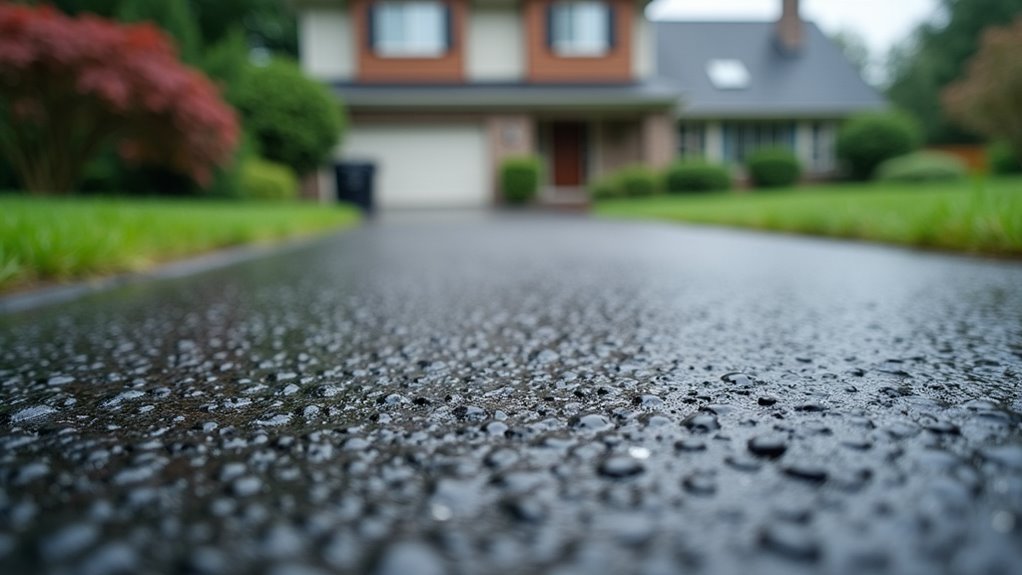
A permeable asphalt driveway is a stormwater management surface that lets water pass straight through it rather than shedding rainwater across its surface like conventional asphalt. The porous asphalt mix contains fewer fine aggregates, creating connected voids that let rainwater infiltrate rather than run off. Beneath the surface, a washed, crushed stone base, at least 6 inches per one city guidance document, stores stormwater temporarily. From there, water either infiltrates the native subgrade or exits through an optional underdrain.
You’re looking at a stormwater management surface, not a fully impervious pavement. This permeable pavement driveway moves water downward through its layered structure, reducing direct surface runoff. A porous asphalt driveway creates short-term detention and slow drainage instead of immediate discharge, making it an approved pervious paving system for residential applications.
How does water move through permeable asphalt
Water moves through permeable asphalt by falling through the connected voids in the porous surface layer instead of running off the top. From the porous asphalt, water moves downward into a base layer of washed, crushed stone or gravel. This base, typically a minimum of 6 inches beneath the surface, acts as a reservoir, temporarily storing the stormwater.
From there, water follows one of two paths. It either infiltrates into the native subgrade soil below, recharging groundwater, or it exits through an optional underdrain connected to a stormwater system.
This layered structure creates short-term detention and slow drainage rather than immediate discharge. By moving water vertically through the pavement, your permeable driveway reduces surface runoff volume and delays peak flow during storms.
What materials make up a permeable driveway system
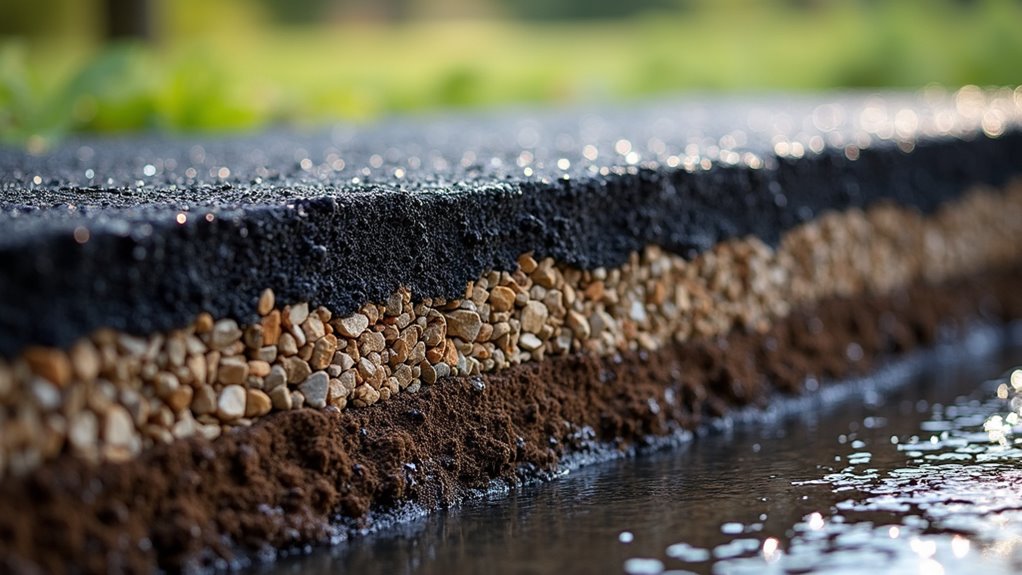
A permeable driveway system is made up of four core materials working together as an integrated structure. You start with a porous asphalt surface engineered with fewer fine aggregates, creating connected voids that let water pass straight through. Below that sits a base layer of washed, crushed stone or gravel, at least 6 inches per one city’s guidance, that stores stormwater temporarily. Beneath the reservoir, native subgrade soil handles infiltration into the ground.
The three critical performance layers you’ll depend on are:
- Porous asphalt top layer with interconnected voids for surface infiltration.
- Washed crushed stone base serving as the storage reservoir.
- Native subgrade soil enabling downward infiltration.
You’ll add an optional underdrain to discharge excess water and edge support to maintain structural stability under vehicle loads.
Where does permeable asphalt work best
Permeable asphalt works best on sites where the underlying soils have adequate infiltration capacity to move stored water into the subgrade. You’ll get proper performance when you pair the porous surface with a properly sized stone reservoir, a minimum of 6 inches of washed, crushed rock under the asphalt, per one city guidance document.
Limit the contributing drainage area: the system shouldn’t receive runoff from adjoining areas larger than the permeable pavement itself. If your soil’s infiltration rate is too low, you’ll need an underdrain to control water movement instead of relying on infiltration.
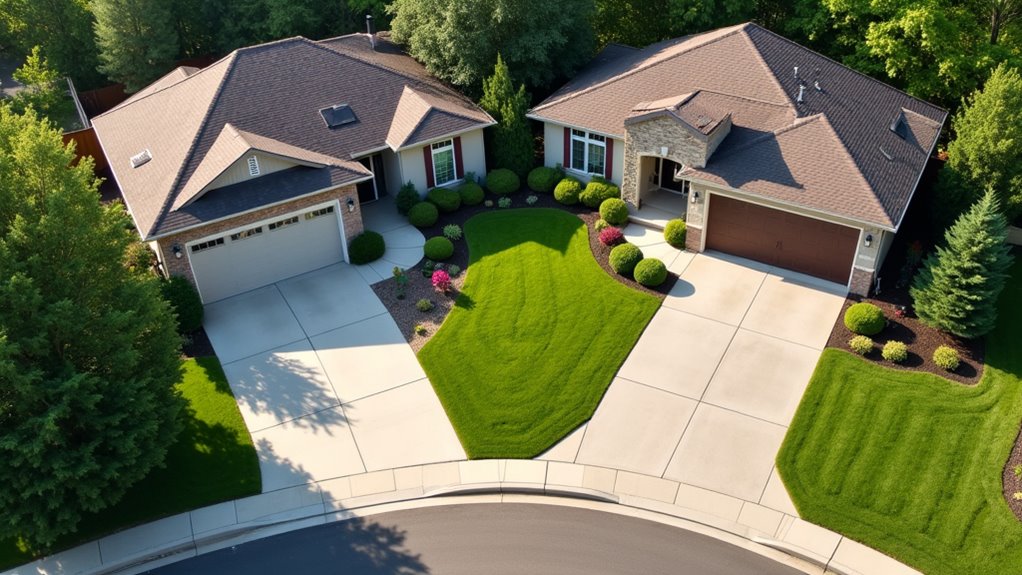
Residential driveways are approved uses for porous asphalt. Just confirm your soil conditions, drainage design, and structural support before installation to guarantee long-term runoff reduction. Asphalt millings cost can vary based on local suppliers and the quality of materials. It is essential to obtain multiple quotes to ensure you are getting a fair price.
How does permeable asphalt compare with standard asphalt

Permeable asphalt differs from standard asphalt primarily in how each surface handles water: standard asphalt sheds rainwater across the top as surface runoff, while permeable asphalt lets it pass straight through. That distinction changes the mix design, base structure, and drainage performance you get from each surface.
| Attribute | Standard Asphalt | Permeable Asphalt |
|---|---|---|
| Fine aggregate content | High | Reduced |
| Surface voids | Minimal | Connected, open |
| Water handling | Surface runoff | Infiltration downward |
| Base layer | Compacted subgrade | Washed crushed stone reservoir |
| Stormwater role | Impervious pavement | Detention and slow drainage |
Permeable asphalt requires a stone reservoir base and periodic vacuum cleaning to prevent clogging, while standard asphalt relies on separate collection infrastructure to move runoff off-site.
What maintenance does a permeable asphalt driveway need
A permeable asphalt driveway needs regular surface cleaning to keep its voids open, since clogging is the primary threat to its function. Sediment buildup blocks the connected pores, reducing infiltration capacity and forcing water to shed across the top like standard pavement. You’ll need to remove accumulated fines before they compact into the void structure.
Follow these core maintenance actions:
- Sweep or vacuum the surface regularly to clear sediment and debris from the open voids.
- Inspect for reduced infiltration and clogged areas, then apply vacuum cleaning to restore permeability.
- Prevent runoff from adjoining areas from depositing additional sediment onto the pavement.
Your driveway’s long-term runoff reduction depends on this upkeep. Neglecting it lets performance degrade as pores fill and permeability drops.
Frequently Asked Questions
How Much Does a Permeable Asphalt Driveway Cost to Install?
The provided knowledge base doesn’t include installation cost data for permeable asphalt driveways, so I can’t give you a precise figure. Cost drivers you’ll need to price include the porous asphalt surface layer, a minimum 6-inch washed crushed-stone reservoir base, subgrade preparation, optional underdrain piping, and edge structural support. Your final quote depends on site infiltration capacity, drainage design, and load requirements. Contact a local contractor for accurate, specification-based pricing estimates.
How Long Does a Permeable Asphalt Driveway Typically Last?
Your permeable asphalt driveway’s lifespan depends on installation quality, soil conditions, and maintenance, though the provided knowledge doesn’t specify exact durability figures. What’s clear: you’ll maximize longevity by preventing pore clogging through regular sweeping or vacuum cleaning. Neglecting sediment removal reduces infiltration and shortens effective service life. You’ll also need correct construction, adequate subgrade infiltration capacity, and a properly sized stone reservoir. Consistent upkeep directly determines how long your pavement performs.
Can Permeable Asphalt Handle Heavy Vehicles or Trucks?
Yes, you can run heavy vehicles or trucks on permeable asphalt, but you’ll need proper structural design to handle those loads. Specify edge and structural support elements that keep the pavement stable under vehicle weight. Pair the porous surface with an adequately sized stone reservoir—at least 6 inches of washed, crushed rock—and a stable subgrade. Correct installation and load-rated design are critical, so you’ll want engineering that matches your expected traffic.
Does Permeable Asphalt Perform Well in Cold or Freezing Climates?
You’ll get solid cold-weather performance if you build the system correctly. Your porous surface drains water into the stone reservoir before it can pool and freeze, reducing surface ice and heaving risk. You’ll need a properly sized, washed crushed-stone base—minimum 6 inches—for drainage and frost protection. Keep infiltration rates adequate and maintain the pores through regular sweeping. If sediment clogs the voids, you’ll lose that freeze-resistant drainage advantage fast.
Are Permits or Special Approvals Required for Permeable Driveways?
The provided knowledge doesn’t specify permit or approval requirements for permeable driveways, so you’ll need to verify local regulations directly. What’s documented is that your site drainage design must account for infiltration or underdrain discharge, and one city guidance document specifies a minimum of 6 inches of washed, crushed rock beneath the asphalt. Check with your municipality, since jurisdictions reference these systems as approved stormwater management surfaces with specific construction and sizing standards.