
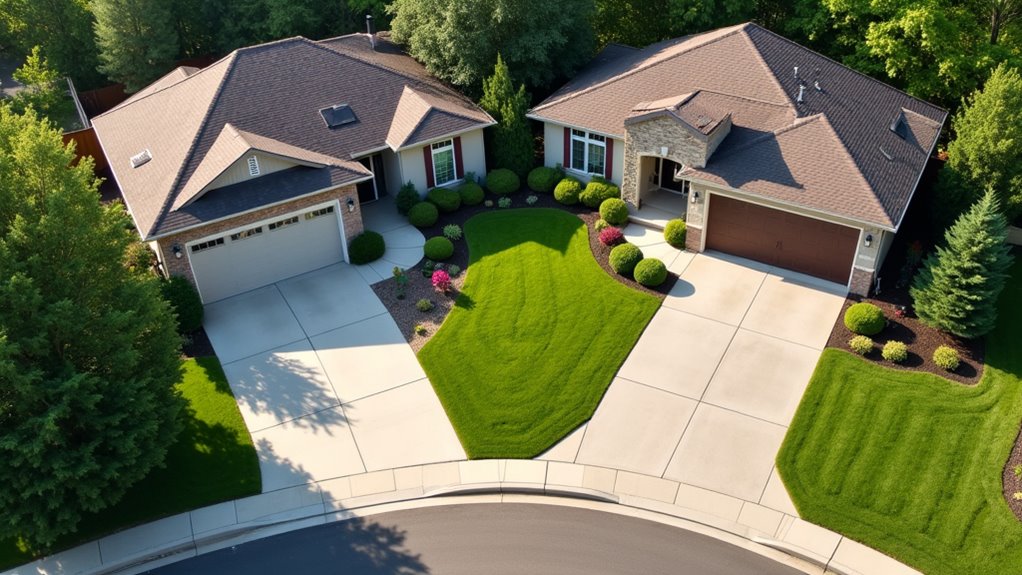
An asphalt millings driveway costs you $1 to $5 per square foot installed, with millings priced at $10 to $20 per ton. You’ll get a firm, dust-controlled surface made from reclaimed asphalt pavement that knits together under compaction. Expect final pricing to shift with grading, base prep, drainage, and haul distance. It’s cheaper than hot-mix but rougher and shorter-lived. Below, you’ll find the exact factors, tradeoffs, and installation steps that shape your project.
Key Takeaways
- Professional installation typically costs $1 to $5 per square foot, with a 600-square-foot driveway running $600 to $1,500.
- Asphalt millings are reclaimed asphalt pavement (RAP) whose residual binder helps them re-bond under compaction into a firm surface.
- Key benefits include lower upfront price, dust and mud control, decent drainage, and less stone scatter than loose gravel.
- Main drawbacks are a rougher finish than hot-mix, shorter lifespan, and possible rutting without adequate thickness.
- Installation involves clearing debris, grading for slope, preparing a firm base, spreading 3–4 inches, then compacting with light watering.
What does an asphalt millings driveway cost
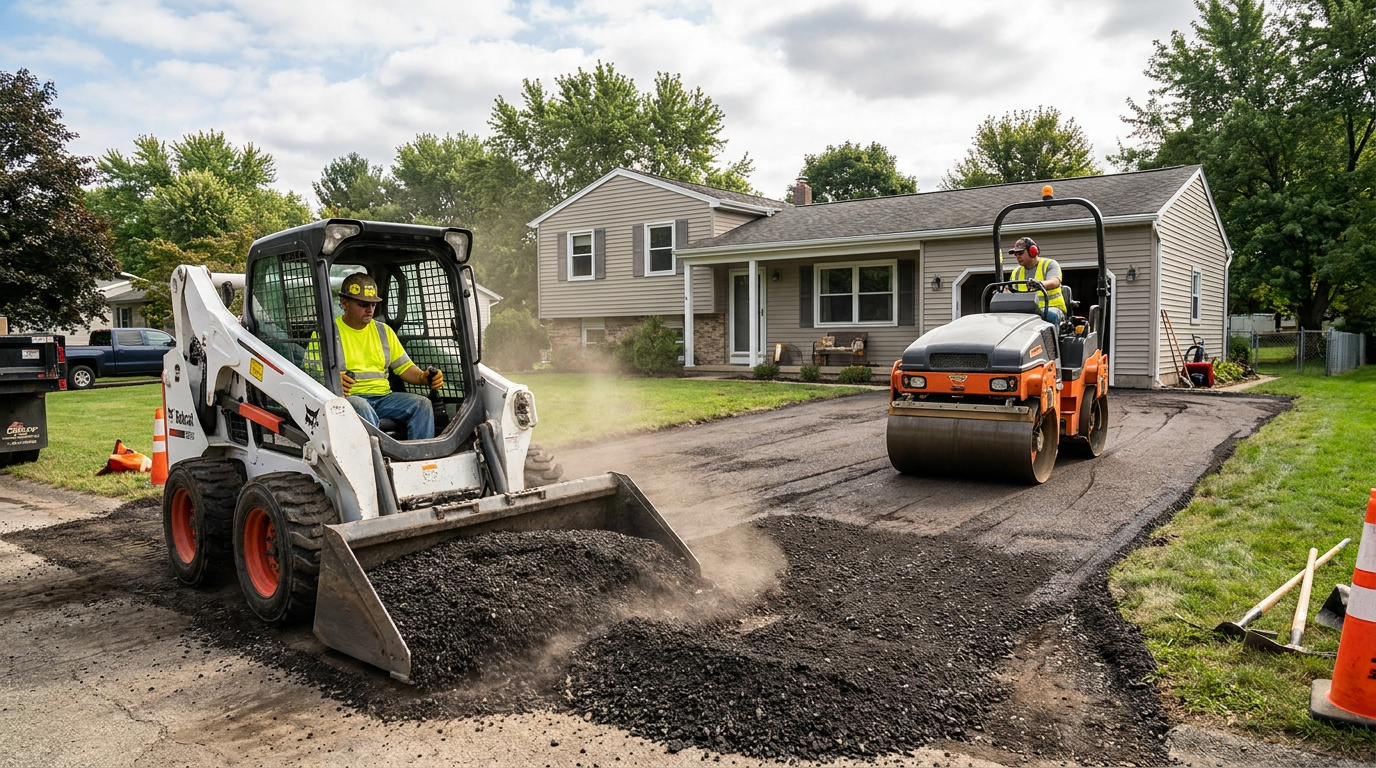
An asphalt millings driveway costs $1 to $5 per square foot for most professional installations, with $2 to $5 common once you factor in grading and compaction. Your total comes down to a few core variables: square footage, layer depth, base prep, and haul distance. Material-only pricing typically sits at $10 to $20 per ton, though small loads and delivery push that higher. A 600-square-foot recycled asphalt driveway often lands between $600 and $1,500 installed, depending on depth and site conditions. Broader projects range from $7,875 to $22,625, averaging around $15,250. Your asphalt millings installation cost climbs fast when you need drainage fixes, deeper sections, or subgrade improvements. Weak soil and long haul distances erase much of the savings you’d expect.
What are asphalt millings used for on driveways
Asphalt millings are used on driveways as a practical surfacing material for a range of applications. An asphalt millings driveway works well for private lanes, parking pads, rural roads, and long residential approaches where a polished finish isn’t the priority. Because millings are reclaimed asphalt pavement (RAP) ground up from old road surfaces, they carry an aged binder that re-bonds under compaction. The crushed aggregate, coated with residual binder, knits together after you spread and compact it, delivering a firmer surface than loose gravel. You can use millings to cut dust, mud, and stone scatter while keeping costs low. Millings driveway pros cons show they’re best suited to budget-focused projects, high-traffic access routes, and properties needing a stable, recycled surface without new hot-mix expense.
Which factors affect asphalt millings driveway cost
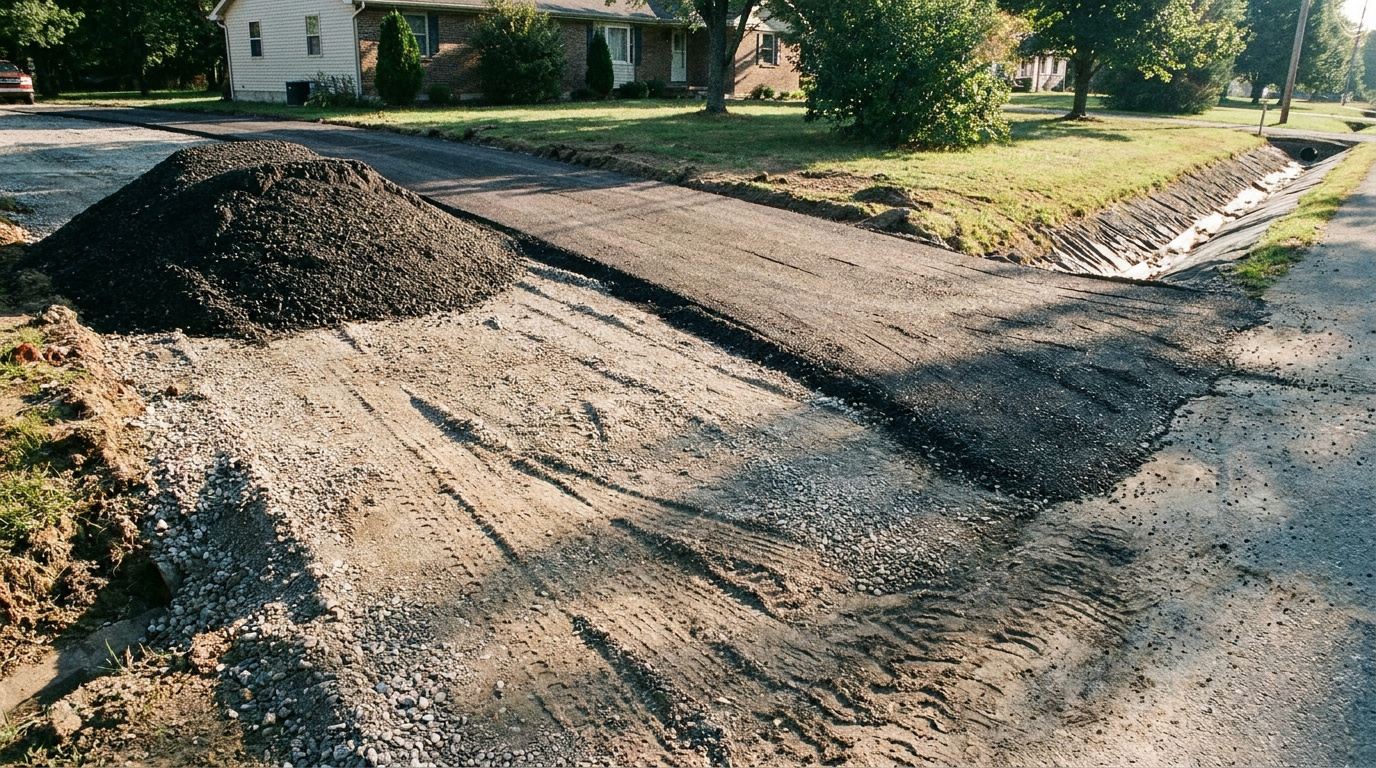
Several factors affect asphalt millings driveway cost, including site conditions, prep requirements, drainage, and haul logistics. Millings themselves run about $10 to $20 per ton, but the surrounding work often dictates your final number. Site conditions and prep requirements carry the most weight in your estimate. Choosing the right gravel contractor credentials is essential for ensuring quality and compliance with local regulations. This can ultimately save you time and money by avoiding potential pitfalls during installation.
- Grading and base prep: Uneven terrain, weak subgrade, or the need for crushed stone drives labor and material costs upward.
- Drainage work: Correcting poor runoff or installing proper slope adds expense but prevents rutting later.
- Haul distance and load size: Delivery fees and small-load surcharges can erode the savings you’d expect from a recycled material.
Expect a 600-square-foot driveway to land near $600 to $1,500 installed, depending on depth.
What are the pros and drawbacks of asphalt millings
Asphalt millings offer lower cost, less dust, and decent drainage, but they finish rougher than hot-mix and don’t last as long as new asphalt. Installed correctly, millings knit into a stable surface that beats loose gravel on dust, mud, and stone scatter, while staying porous enough to drain. The tradeoffs show up in finish quality and longevity, both of which hinge on your base, grading, and compaction.
| Factor | Advantage | Drawback |
|---|---|---|
| Cost | Lower upfront price | Hauling can erode savings |
| Surface | Less dust and scatter | Rougher than hot-mix |
| Drainage | Stays somewhat porous | Can rut if too thin |
| Lifespan | Reuses old pavement | Shorter than new asphalt |
Expect periodic regrading and added compaction, especially over weak subgrade or thinly spread layers.
How is an asphalt millings driveway installed
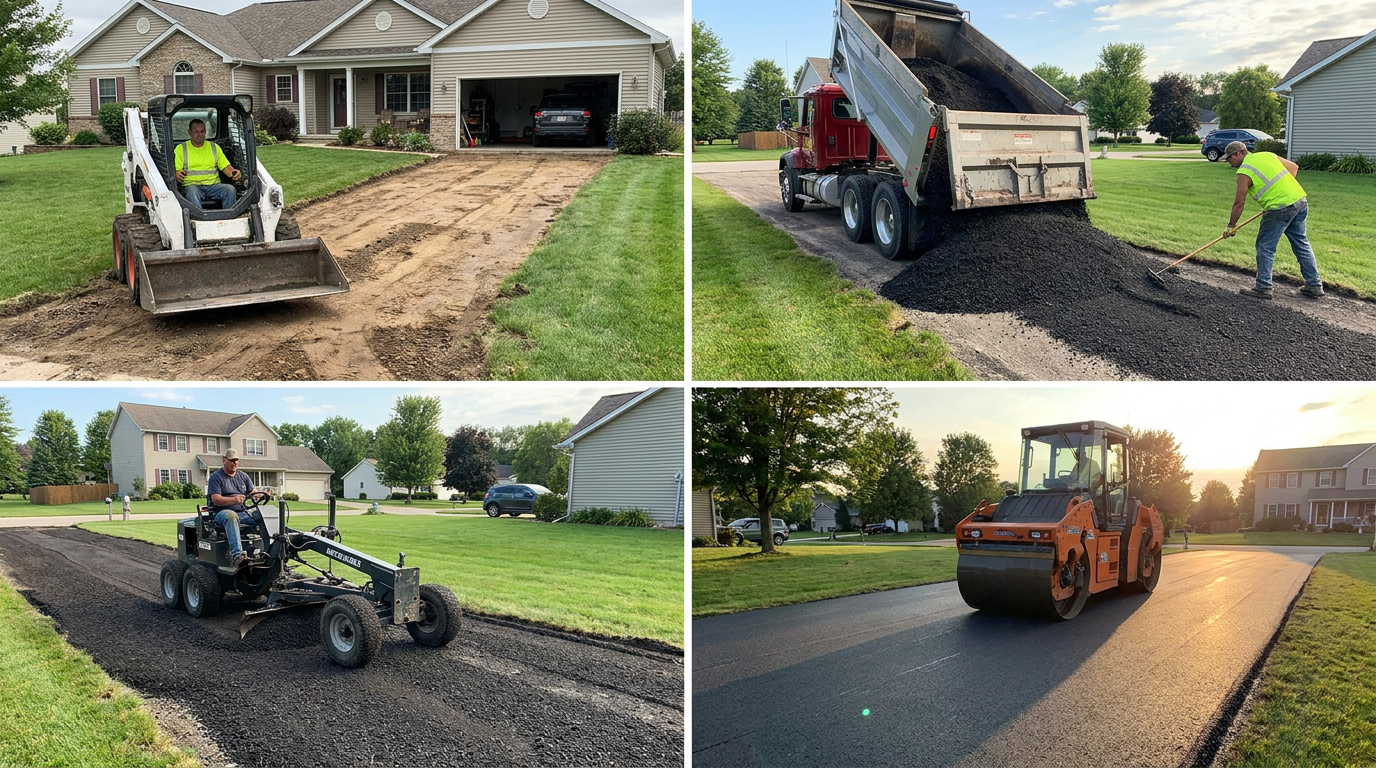
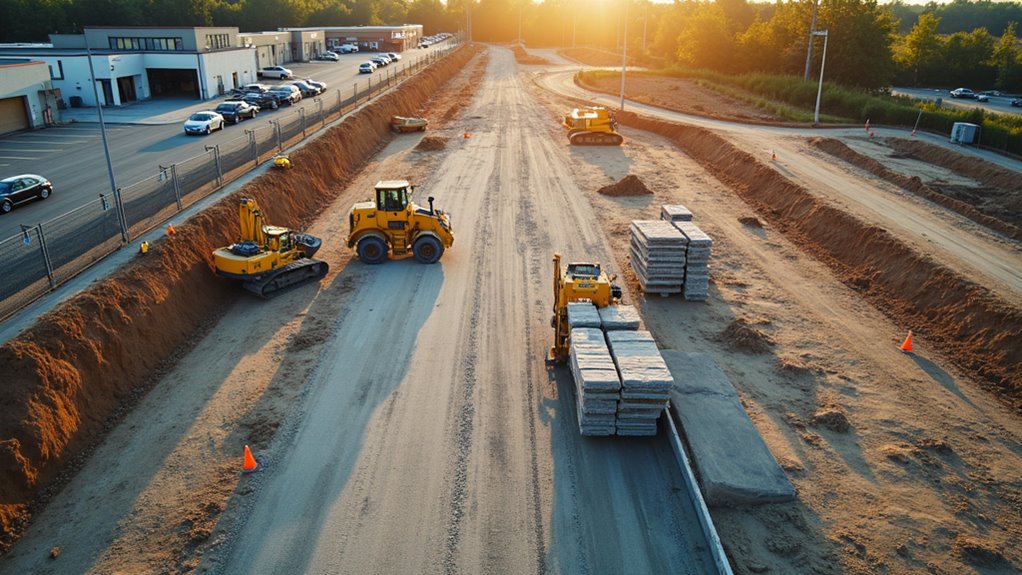
An asphalt millings driveway is installed through disciplined prep and compaction that turns a pile of reclaimed pavement into a stable driving surface. Start by clearing vegetation, debris, and any weak material from the driveway footprint. Next, grade the area to establish proper slope and drainage, since standing water undermines everything beneath it. When selecting materials for your driveway, consider using drainage-friendly asphalt, as it helps manage water runoff effectively. This type of asphalt allows for better drainage, reducing the risk of puddles and potential surface damage.
Get the base right:
- Prepare a firm base, often with crushed stone or compacted subgrade improvements where soil is weak
- Spread millings in a layer around 3 to 4 inches thick, adjusting for traffic and base conditions
- Compact the surface with a roller or plate compactor, lightly watering to help the material knit
Done correctly, you’ll get a surface that binds tightly and resists rutting.
When are asphalt millings a good driveway choice
Asphalt millings are a good driveway choice for budget-focused, function-first projects where a polished finish isn’t the priority. They’re a strong fit for long rural driveways, private lanes, and parking pads where you’d otherwise spend far more on hot-mix or concrete. If you’ve got a stable subgrade or can build a proper crushed-stone base, millings compact into a firm, low-dust surface that outperforms loose gravel. They also make sense when you value drainage, since the material stays somewhat porous unless sealed tight. Consider them when you can source material locally and keep haul distances short, since delivery erodes savings fast. Skip millings if you need a smooth, uniform look, have poor soil you can’t correct, or won’t commit to periodic regrading and recompaction. A tar chip driveway comparison can help determine if this less conventional option meets your needs, offering a slightly textured, budget-friendly surface that many homeowners find appealing.
Choose the Right Surface for Your Driveway
Asphalt millings can be a cost-effective driveway option when proper grading, base preparation, and compaction are handled correctly. V&F Paving can help evaluate your property and recommend the right driveway solution through its driveway paving services. Call (203) 624-2449 or request a free estimate to discuss your driveway needs, site conditions, and paving options.
Frequently Asked Questions
Can You Seal an Asphalt Millings Driveway?
Yes, you can seal an asphalt millings driveway once it’s properly compacted and knit together. First, make sure the surface is fully cured and tightly rolled, since a well-compacted base helps the sealer bond. Applying a sealcoat tightens the porous surface, reduces water infiltration, and gives you a smoother, more finished look. Keep in mind you’ll trade off some of the natural drainage that millings normally provide when they’re left unsealed.
How Long Does an Asphalt Millings Driveway Last?
You’ll typically get fewer years from a millings driveway than from a properly built hot-mix asphalt surface, though longevity estimates vary widely by installation. Your results depend heavily on compaction, grading, and base quality. If you skimp on the base or spread millings too thin, you’ll see rutting and unevenness sooner. Compact thoroughly, maintain proper drainage, and regrade periodically, and you’ll stretch your driveway’s service life considerably longer.
Do Asphalt Millings Harden Completely Over Time?
Not completely. Your millings won’t cure into a solid slab like new hot-mix asphalt, but they’ll knit together and firm up considerably as the aged binder reactivates under heat, traffic, and compaction. You’ll get a stable, semi-bound surface that stays somewhat porous unless sealed. Proper compaction and warm weather help the material bind faster, so don’t expect a perfectly rigid finish, but rather a tighter, more durable driving surface over time.
Are Asphalt Millings Environmentally Safe to Use?
You’ll find asphalt millings environmentally sound for most driveway applications. They’re reclaimed pavement, so you’re reusing existing aggregate and aged binder instead of sending it to a landfill. That reduces demand for fresh aggregate and virgin asphalt production. You’re also cutting waste and conserving resources. The aged binder’s largely inert once compacted, minimizing leaching concerns. If you’re near sensitive water sources, verify local regulations and ensure proper drainage to stay compliant.
How Do You Maintain an Asphalt Millings Driveway in Winter?
You’ll want to plow carefully, keeping the blade slightly raised to avoid scraping and displacing compacted millings. Use plastic-edged or skid-shoe-equipped blades when possible. Skip heavy salt; it won’t help much on porous surfaces, so rely on sand for traction instead. Watch for ruts and soft spots after freeze-thaw cycles, and regrade or recompact them in spring. Maintain proper drainage so meltwater doesn’t pool, freeze, or undermine your base.