

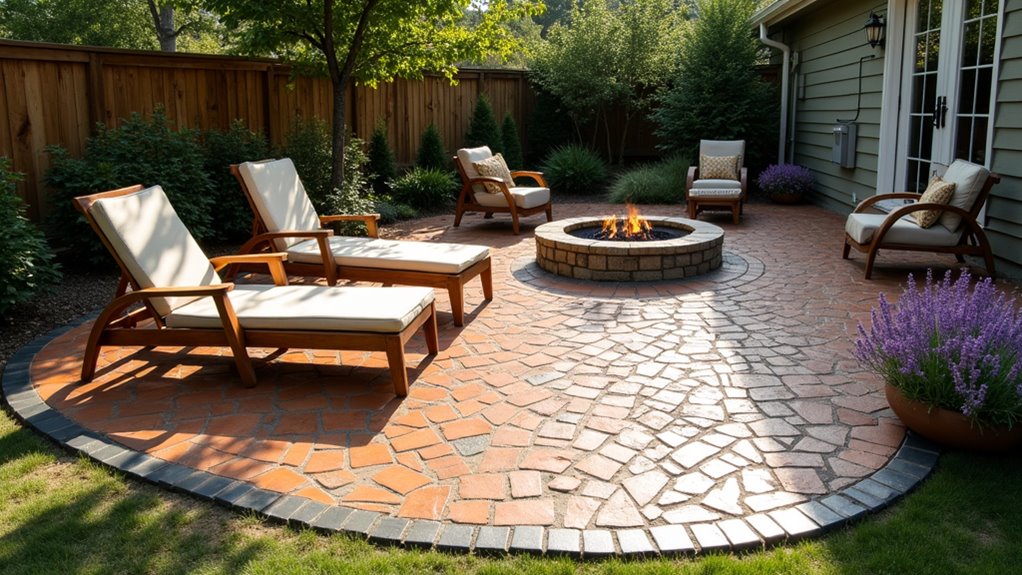
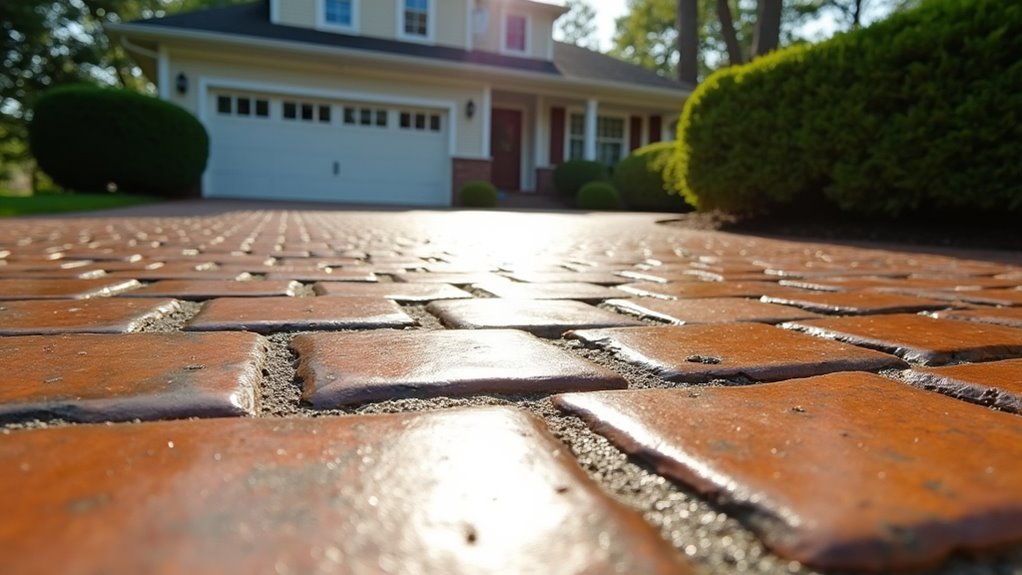

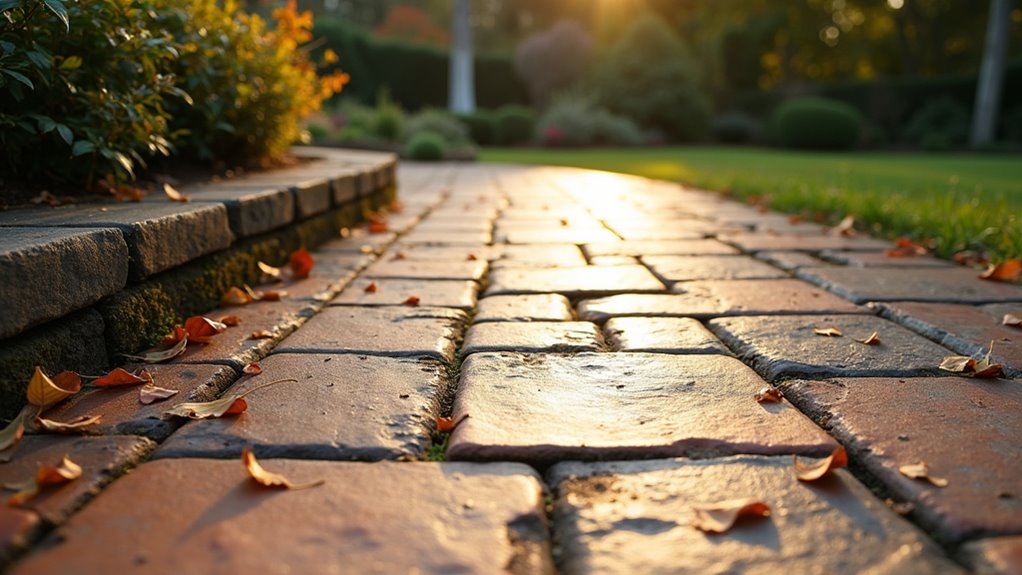
Belgium blocks are cut granite paving stones, usually about 5 × 5 × 9 inches, with 4-inch cubes for curves and detail work. You’ll use them to edge driveways, frame walkways and patios, and border planting beds. Their cut faces hold straighter lines than river cobbles. Set in concrete and haunched on the back, they resist the sideways push from vehicles. They cost more upfront, but the right size and installation method make them last for decades.
Key Takeaways
- Belgium blocks are durable natural-stone paving units, usually granite, cut into rectangular or cube-like shapes for clean, defined lines.
- Common sizes include regulation blocks about 5 × 5 × 9 inches and smaller 4-inch cubes for curves and detailed work.
- As driveway edging, blocks set in concrete with back haunching resist vehicle loads and prevent asphalt or pavers from crumbling or spreading.
- They frame walkways, patios, and planting beds, creating formal borders, decorative accent bands, and patterned curves or fans.
- They cost more upfront than lighter edging, roughly $5 and $15 per block, and need joint upkeep and frost-heave checks.
What are belgium blocks and what are they used for
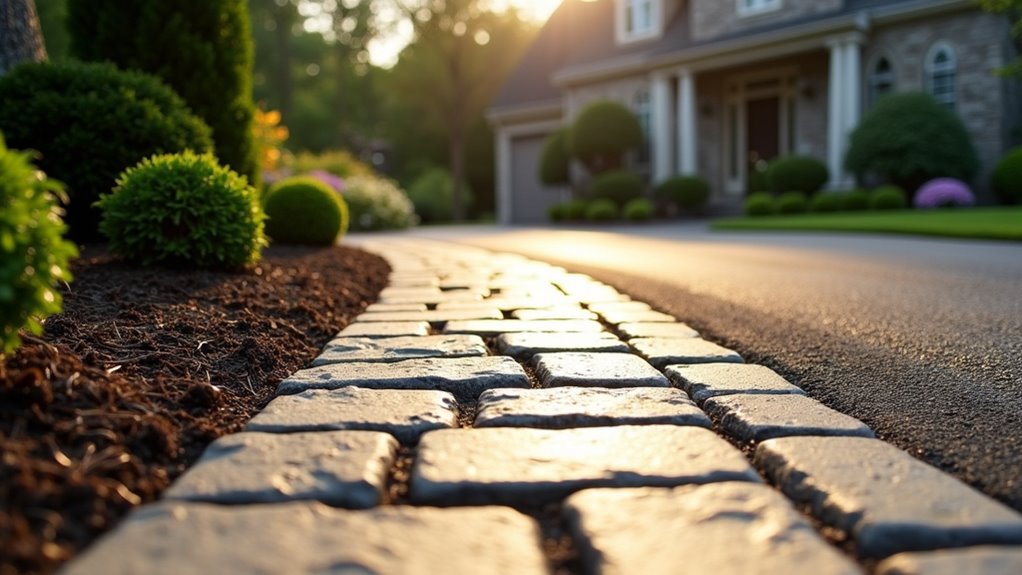
Belgium blocks, also called Belgian blocks, are natural-stone paving units, usually granite, cut into rectangular or roughly cube-shaped forms. A belgian block is dense, durable stone with cut faces that create cleaner lines than rounded river cobbles. Despite the name, a belgian block isn’t necessarily quarried in Belgium.
You’ll typically find regulation blocks around 5 by 5 by 9 inches, while smaller 4 by 4 by 4-inch cubes handle curves, detailed patterns, and accent borders. Sizes vary by supplier, so confirm dimensions before you estimate quantities.
You can use a belgium block to edge driveways, protect asphalt and pavers from crumbling, build aprons, define planting beds, and lay formal walkways. With proper base preparation and restraint, it’ll withstand vehicle loads.
How do belgium blocks compare to other edging materials
Belgium blocks hold straighter lines than rounded river cobbles and withstand vehicle loads, but they cost more upfront than lighter edging materials. The main trade-off is how well an edging holds a line, resists vehicle loads, and lasts outdoors against what it costs to buy and install.
Belgium blocks give you dense granite with cut faces, so you get straighter, more regular lines than rounded river cobbles. Set in concrete haunching, belgian blocks restrain asphalt and pavers against lateral movement and tire pressure.
| Factor | Belgian Stone Performance |
|---|---|
| Line and shape | Cut faces hold straight runs; small cubes handle curves |
| Vehicle loads | Withstands traffic with concrete backing |
| Cost | Roughly $5 and $15 per block, plus labor |
You’ll pay more upfront than for lighter edging, but proper base preparation and restraint keep belgian blocks in place long term. Sweep, replenish joints, and check for frost heave after winter.
What are they made of
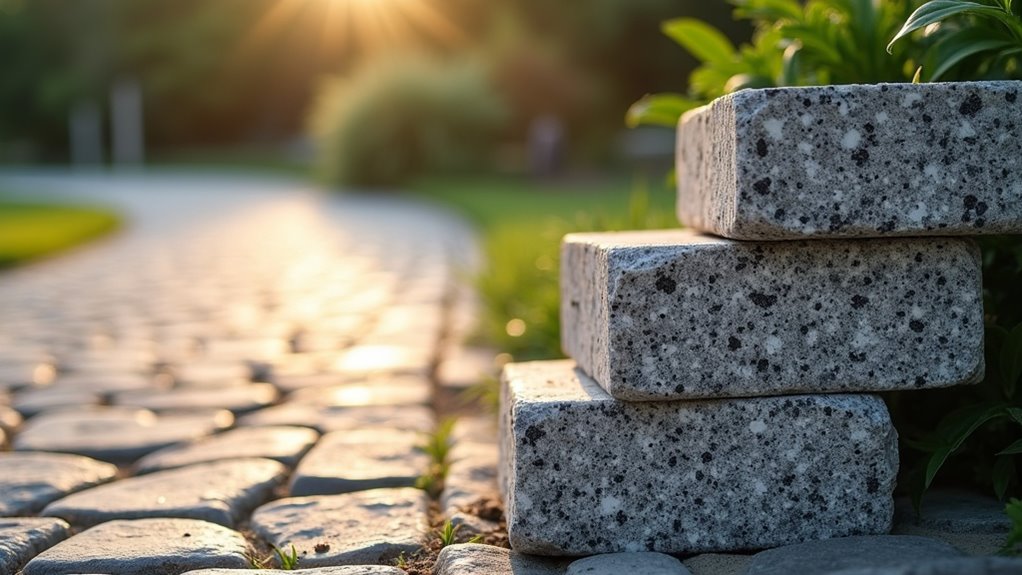
Most Belgian blocks are made of natural granite, quarried and cut into rectangular or roughly cube-shaped units. Granite’s density gives you a hard, durable block that handles vehicle loads and outdoor exposure when it’s properly supported. Because the faces are cut, you’ll get straighter lines and tighter joints than you would with rounded river cobbles.
“Belgian block” is a common paving and garden term, and the blocks aren’t necessarily sourced from Belgium.
Sizes vary by supplier and intended use. Regulation blocks typically measure about 5 × 5 × 9 inches, which suits driveway edging and aprons. Smaller cubes, around 4 × 4 × 4 inches, work better for curves, accent borders, and detailed patterns. Always confirm exact dimensions with your supplier before you order.
How are they used for driveway edging
Belgian blocks edge a driveway by forming a raised stone border along an asphalt or paver drive, defining its shape and keeping the surface from crumbling or spreading outward. Start by measuring the run, marking your finished block height, and stringing a guide line. Dig a trench about 1 foot wide and 8 inches deep, adjusting for block size and site conditions. Compact a crushed-stone base, then set each block in concrete and haunch the back side so vehicle loads can’t push it sideways. Keep the grade pitched so water drains away rather than pooling against the blocks. Plan on roughly 12 regulation blocks per 5 feet for estimates, but you’ll adjust that figure for your actual block dimensions and chosen joint widths.
How are they used for walkways and patios

Belgian blocks are used for formal walkways, garden paths, and decorative accents within a larger paved area, since their cut faces lock into tidy lines. You can lay them as the main paving surface or pair them with other materials for contrast. Common uses include: Using walkway and patio stone can enhance the overall aesthetic appeal of any outdoor space. They provide a durable and attractive solution for creating defined areas in gardens and yards.
Belgian blocks bring tidy, formal lines to walkways and garden paths, whether laid as the main surface or paired for contrast.
- Accent bands: Run smaller cubes through concrete or paver patios to break up large fields.
- Borders: Frame walkways and patio edges to define the space and hold pavers in place.
- Patterned sections: Use 4-inch cubes for curves, fans, and detailed layouts.
- Full paths: Set regulation blocks as individual units for a formal, traditional look.
For walking comfort, choose blocks with even tops and stable joints. Compact the base and use suitable joint material to limit settling.
How do they work as landscape borders
Belgian blocks installed as a raised border create a clean, durable boundary between pavement, lawn, and planting beds. Along driveways, they retain asphalt and paver edges, preventing crumbling and spreading while giving you a firm connection to surrounding ground.
You can lay them straight or curved. For tight curves and detailed layouts, switch to smaller 4-inch cubes, which follow bends without wide, uneven joints.
Keep a consistent top line and reveal along the entire run. A guide line helps you avoid abrupt height changes that look sloppy and create trip points.
Keep soil and mulch below the block tops. Over time, that buildup spills over the edge, stains the granite, and hides the crisp line you worked hard to establish during installation.
How do you choose the right belgium block for your project
Choose the right Belgium block by matching its size, finish, and installation method to the traffic and layout you’re planning.
- Driveway edging and aprons: Choose 5-by-5-by-9-inch regulation blocks and set them in concrete backing to resist vehicle loads.
- Curves and accent bands: Use 4-inch cubes. They’ll follow tight radii and detailed patterns better than longer blocks.
- Walkways: Pick blocks with even tops and a comfortable surface finish so you’re not walking on uneven, rough edges.
- Budget: Expect roughly $5 and $15 per block, but source, size, and labor change totals.
For edging, estimate about 12 regulation blocks per 5 feet, and add extra for cuts and joints. Confirm exact block dimensions with your supplier.
Add a Durable Belgian Block Finish to Your Property
VF Paving provides Belgian block installation, driveway paving, custom edging, walkways, patios, and other residential paving services across Connecticut. Belgian blocks can create a defined border around a driveway, walkway, patio, or landscaped area while adding a durable natural-stone finish. Call (203) 624-2449 to discuss your project and request a free estimate.
Frequently Asked Questions
How Much Do Belgium Blocks Typically Cost per Block?
You’ll typically pay about $5 and $15 per granite block, based on one online calculator’s estimate. Your actual price depends on block size, source, and supplier, and labor raises installed costs. If you’re edging a driveway with regulation 5 × 5 × 9-inch blocks, plan roughly 12 blocks per 5 feet, then adjust for joints. Don’t forget concrete backing, base aggregate, and delivery when you budget your project, and get local quotes.
How Many Belgium Blocks Do I Need for Driveway Edging?
You’ll need roughly 12 regulation blocks (5 × 5 × 9 inches) for every 5 feet of edging, or about 2.4 per linear foot. Measure your run along both sides, then multiply. A 60-foot driveway edged on both sides is 120 feet, so plan on about 288 blocks. Your actual count shifts with block dimensions, joint width, and orientation, so confirm sizes with your supplier and order a few spares.
How Do You Maintain and Clean Belgium Blocks Over Time?
You’ll keep Belgium blocks in good shape by sweeping them and rinsing off dirt with a hose. Skip harsh chemicals; they can damage stone. In winter, use stone-safe de-icers and rinse off residue once temperatures allow. Each spring, walk the run and check for frost heave, loose blocks, or washed-out joints, then replenish sand or stone dust. Keep soil and mulch below the block tops to limit buildup and staining.
Can Freezing Winters and De-Icing Salts Damage Belgium Blocks?
Yes, but the granite itself usually isn’t the weak point. Your base and joints are. Freezing water can cause frost heave, loosen blocks, and wash out joint material, so you’ll want a compacted crushed-stone base and grading that keeps water from pooling. Don’t use harsh chemicals. Choose stone-safe winter products, rinse off de-icing residue, and promptly inspect after every winter for heaved or loose blocks and joints needing fresh material.
Can I Install Belgium Blocks Myself, or Should I Hire a Professional?
You can install Belgium blocks yourself, especially for garden borders or walkway edging, if you’re comfortable with heavy lifting and precise grading. Set a guide line, dig a trench about 1 foot wide and 8 inches deep, compact a crushed-stone base, and back blocks with concrete. For driveways or aprons carrying vehicle loads, you’ll benefit from hiring a professional who can handle haunching, drainage, and grade so water doesn’t pool.