
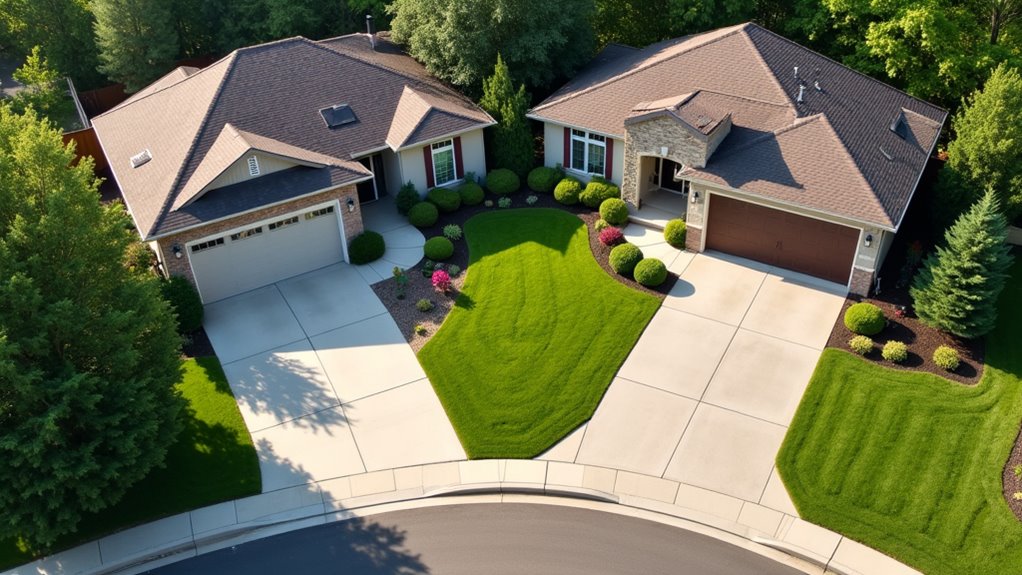
Your asphalt driveway’s drainage problems usually trace back to insufficient pitch, reverse-pitched or flat sections, or settlement that creates low-spot “birdbaths.” Once water pools, it works into the porous pavement, weakens the base, and softens the subgrade, accelerating cracks and potholes. You’ll fix minor pooling with crack sealing and patching, while moderate to major issues need regrading, drains, milling, or full-depth patching. Let’s break down which fix matches your driveway’s severity.
Key Takeaways
- Common causes include below-target pitch, reverse-pitched or flat sections, poor base compaction, and yard grading that pushes runoff onto the slab.
- Standing water seeps into porous asphalt, softens the subgrade, and accelerates cracking, potholes, and surface breakup.
- Grading problems like reversed pitch and settlement create “birdbaths” that channel water back toward the slab or garage.
- Fixes scale with severity: crack sealing and patching for minor pooling, regrading and drains for moderate runoff, milling or rebuild for major failure.
- Resurfacing works when the base is intact but sheds poorly; call a contractor for recurring puddles, widening cracks, or failing edges.
What causes asphalt driveway drainage problems and which paving fixes work
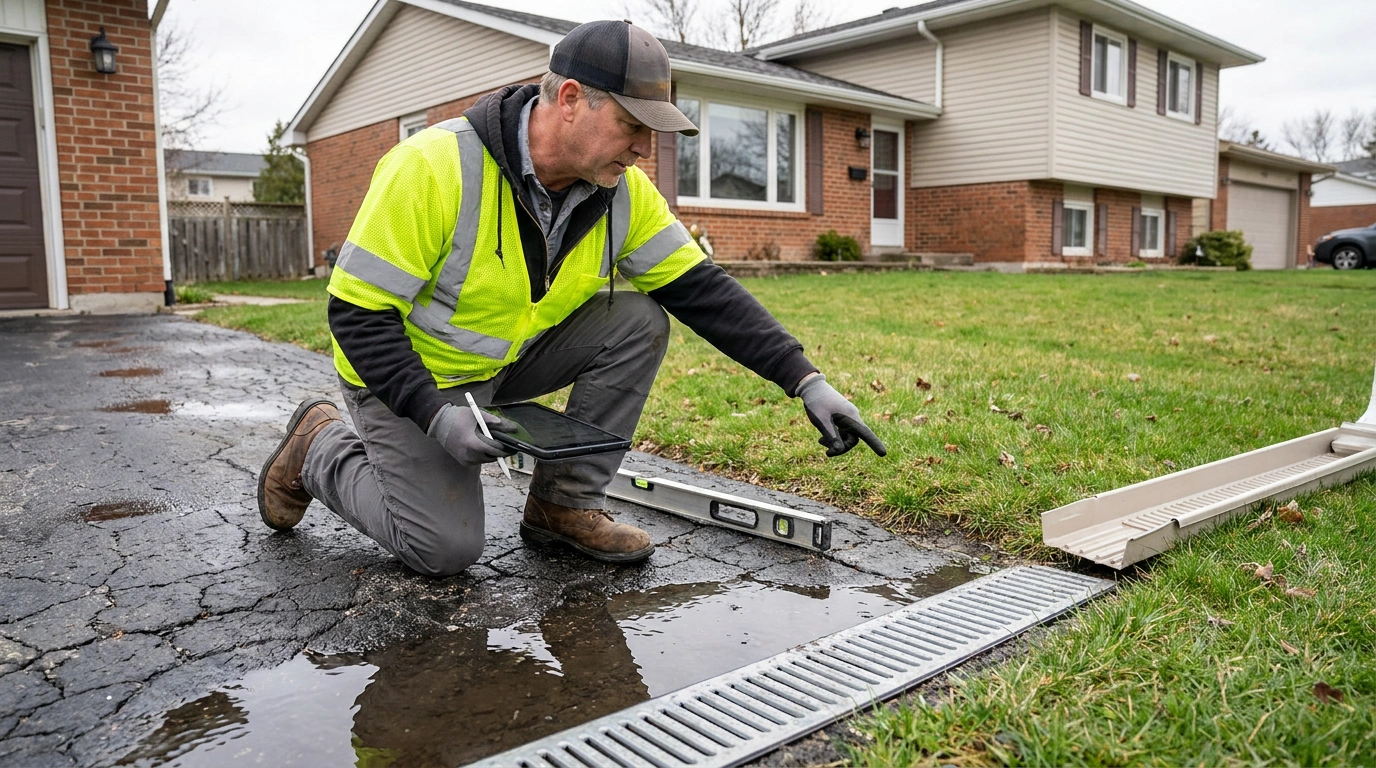
Asphalt driveway drainage problems trace back to slope, base, or runoff. Most start when the surface pitch falls below the 2% target, leaving reverse-pitched or flat sections where water pools. Settlement and weak base compaction create low-spot birdbaths, while roof runoff and yard grading push extra water onto the slab. Correcting driveway grading drainage is your first move. Regrade adjacent soil, extend downspouts, and shape surroundings so runoff flows away. Next, consider driveway moss cleanup to prevent further drainage issues. Removing moss not only enhances curb appeal but also ensures water can flow freely during rainstorms.
For the pavement itself, asphalt drainage repair depends on severity. Seal cracks to keep water out of the base, patch shallow depressions so runoff sheds, and install channel, edge, or French drains to intercept water before it collects and undermines your driveway. Infrared driveway repairs offer a modern solution for effective pavement restoration. This method uses heat to soften existing asphalt, allowing it to be seamlessly blended with new material.
How does standing water damage an asphalt driveway
Standing water damages an asphalt driveway because asphalt is porous, so the water doesn’t just sit on top. It works its way in and attacks the pavement from the surface down. When you’ve got water pooling on driveway surfaces, that moisture seeps through the asphalt and reaches the base beneath. Once it’s down there, it weakens the material, softens the subgrade, and sets up conditions for cracking, potholes, and surface breakup.
Left unaddressed, driveway drainage issues turn moisture into structural damage. Water finds existing cracks, migrates deeper, and enlarges them with every freeze-thaw and wetting-drying cycle. Edges start failing, low spots deepen, and small puddles grow into serious defects. Alligator crack causes further deterioration as water seeps into these fissures, leading to more extensive damage over time. Addressing these cracks promptly can mitigate risks and prolong the lifespan of your driveway.
The longer water lingers, the faster your pavement deteriorates, so you’ll want to intercept and redirect it early.
Which grading problems cause water to collect on pavement
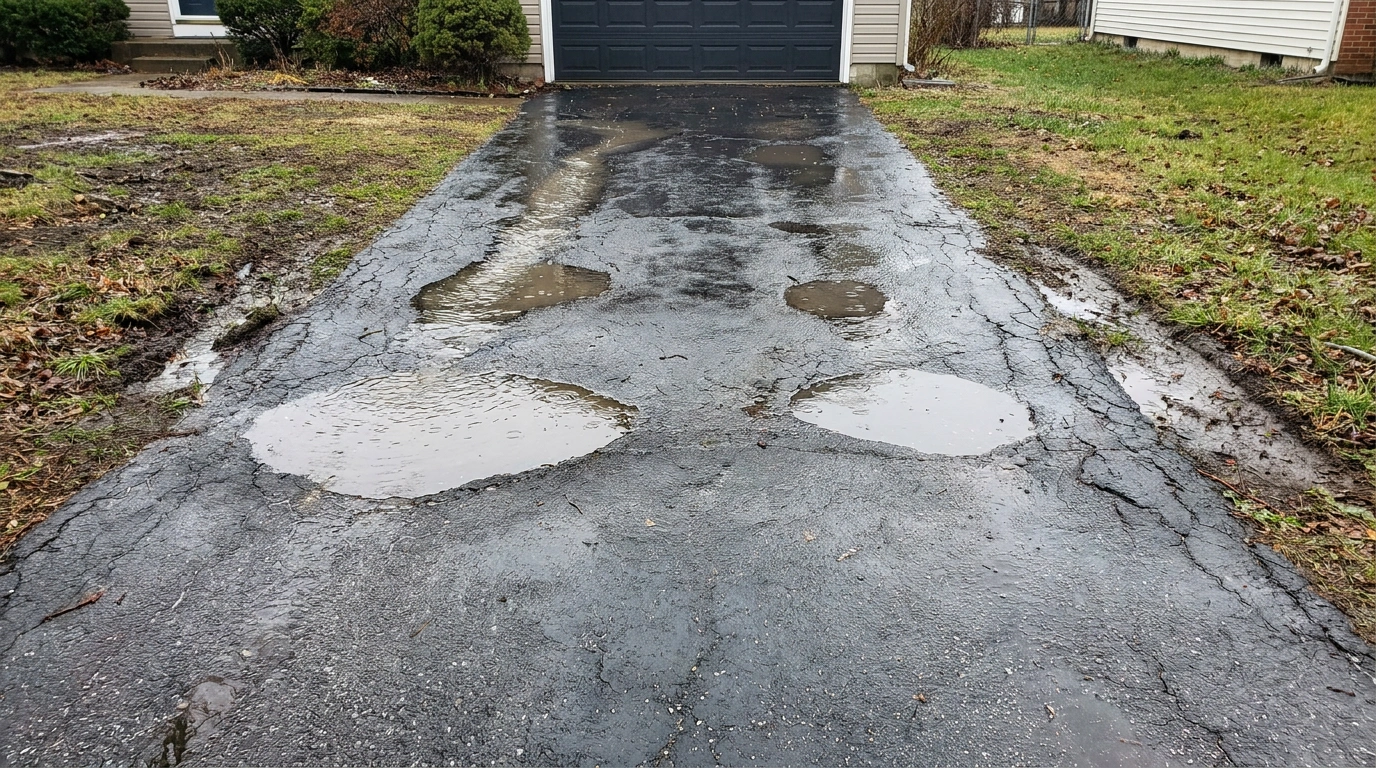
How does bad grading cause water to collect? Bad grading causes water to collect when the slope flattens or reverses, leaving runoff nowhere to go, so it pools instead of draining off the edge. Your driveway needs a slight pitch, about 2%, to move water toward a safe outlet. Reverse pitch is especially problematic because it channels water back toward the slab or garage rather than away from it.
Low spots, settlement, and surface depressions create “birdbaths” that hold water long after rain stops. These often start where the base wasn’t compacted evenly, letting sections sink under repeated load. Yard grading that slopes toward the pavement adds to the problem, pushing more water onto a surface that already can’t shed it. Correcting slope and low spots stops water from collecting.
How do paving drainage fixes compare
Paving drainage fixes scale with severity, from cheap crack sealing for minor pooling up to full rebuilds for failed bases. Correcting slope and low spots addresses the source, but the right fix depends on how bad the drainage problem has gotten. For minor issues, you’ll seal cracks and patch shallow depressions so water flows off instead of pooling. When runoff comes from surrounding areas, you regrade soil or add channel and French drains to intercept it. Once the base fails broadly or the original grade is wrong, you’re looking at milling, full-depth patching, or a complete rebuild.
| Problem Severity | Recommended Fix |
|---|---|
| Minor surface pooling | Crack sealing, patching |
| Moderate runoff intrusion | Regrading, drain installation |
| Major base or grade failure | Milling, full-depth patch, rebuild |
Match the fix to the damage, and you’ll avoid overspending on small problems or underbuilding on failing ones.
When can resurfacing help correct drainage problems
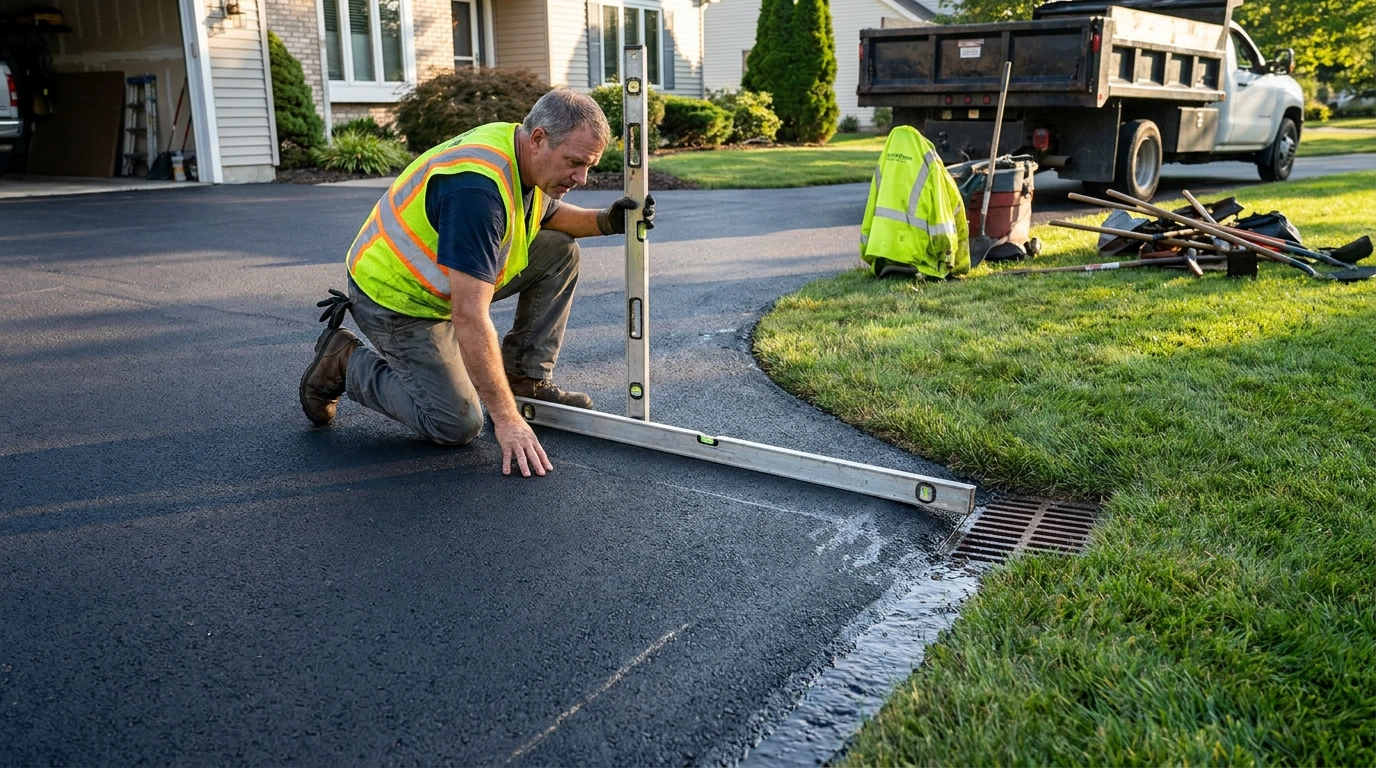
Resurfacing can correct drainage problems when your pavement’s still structurally sound but no longer sheds water correctly, restoring the surface profile it’s lost to settlement and wear. Milling and overlay let you correct minor slope deficiencies, eliminate shallow birdbaths, and reestablish that 2% pitch that moves runoff toward a safe outlet.
Resurfacing works best when the base is intact and the problem’s confined to the surface. If low spots sit over failed material, you’ll need full-depth patching first. An overlay alone won’t hold. Verify the base isn’t saturated or shifting, since resurfacing over a compromised subgrade just repeats the failure.
Pair the new surface with runoff control and proper grading. Correcting slope without addressing incoming water leaves you resurfacing again sooner than you’d like.
When should a paving contractor evaluate driveway drainage
A paving contractor should evaluate driveway drainage when you notice recurring puddles or birdbaths that linger after rain, since standing water signals slope or settlement problems that worsen quickly. Have your driveway evaluated when you spot cracks widening, edges failing, or dips forming near the garage entrance, because these often indicate base movement beneath the surface. Get an assessment when roof runoff, downspout discharge, or yard grading sends water onto the pavement, so you can redirect it before saturation damages the base. Schedule an inspection before resurfacing or sealing, too. Correcting drainage first prevents wasted repairs. Early evaluation catches minor defects while they’re still cheap patching jobs, not full rebuilds.
Fix Driveway Drainage Before Water Causes More Damage
Recurring puddles can be more than a surface nuisance. They may signal poor grading, settlement, or base problems that need the right repair. V&F Paving can evaluate your driveway and recommend the right fix through its residential driveway paving services, including resurfacing, repairs, or replacement when needed. Call (203) 624-2449 or request a free estimate to address drainage before the damage spreads.
Frequently Asked Questions
How Much Does Asphalt Driveway Drainage Repair Typically Cost?
Your cost depends on the fix you need. Simple crack sealing and patching low spots run cheaper, while regrading soil or installing channel, edge, or French drains cost more. If your base has failed or the original grade is wrong, you’re looking at milling, full-depth patching, or a rebuild, which are the priciest options. Get an assessment first, since correcting slope, base, and runoff together prevents you from paying twice for recurring damage.
How Long Do Driveway Drainage Fixes Usually Last?
Your drainage fix’s lifespan depends on the repair type and whether you’ve addressed the root cause. Crack sealing typically holds two to five years, while patching low spots lasts three to seven. If you correct slope, base, and runoff together, you’ll get ten-plus years. Channel and French drains can last decades when you keep them clean. Skip the underlying grade problem, though, and you’ll see puddles return fast.
Can I Install a French Drain Myself?
You can install a French drain yourself if you’re comfortable with digging and grading. You’ll need to trench along the water’s path, set a consistent slope so runoff moves away, and lay perforated pipe in gravel wrapped with filter fabric. Get the pitch right, or it won’t drain. If the drain ties into your driveway’s edge or existing structures, consider bringing in a pro to protect the pavement.
Does Homeowners Insurance Cover Driveway Drainage Damage?
Typically, no. Most homeowners policies won’t cover driveway drainage damage because they treat it as gradual wear, poor maintenance, or a pre-existing grading defect, not a sudden, covered peril. If a covered event like a burst pipe or storm surge causes the damage, you might have a claim. Review your policy’s exclusions carefully and document the cause. When it’s slope, base failure, or runoff, you’ll usually pay out of pocket.
How Often Should I Inspect My Driveway for Drainage Issues?
Inspect your driveway at least twice a year, ideally in spring and fall, plus after any heavy rainstorm. Walk the surface while water’s still draining and watch for standing puddles, birdbaths, or runoff pooling near the garage. Check that downspouts still direct water away and look for new cracks or low spots. Catching these early lets you seal cracks or patch depressions before they turn into costly base failure.