

Start by sweeping or blowing off loose debris on a dry day. Then scrub affected areas with a stiff-bristle broom to break up buildup. Mix a cleaner using 1 part bleach to 3 parts water, adding 1 cup detergent per gallon for better cling. Apply it evenly with a pump sprayer, let it dwell at least five minutes, then rinse at low pressure. There’s more to learn about keeping growth from returning.
Key Takeaways
- Sweep off loose debris, then scrub affected areas with a stiff-bristle broom on a dry day.
- Mix 1 cup bleach with 1 gallon water plus 1 cup detergent for effective cleaning.
- Apply the cleaner evenly using a pump sprayer and let it dwell at least five minutes.
- Rinse with a garden hose at low pressure, scrubbing away dead growth and stubborn patches.
- Prevent recurrence by improving drainage, trimming shade, sweeping regularly, and applying a moss inhibitor.
How do you remove moss and algae from an asphalt driveway
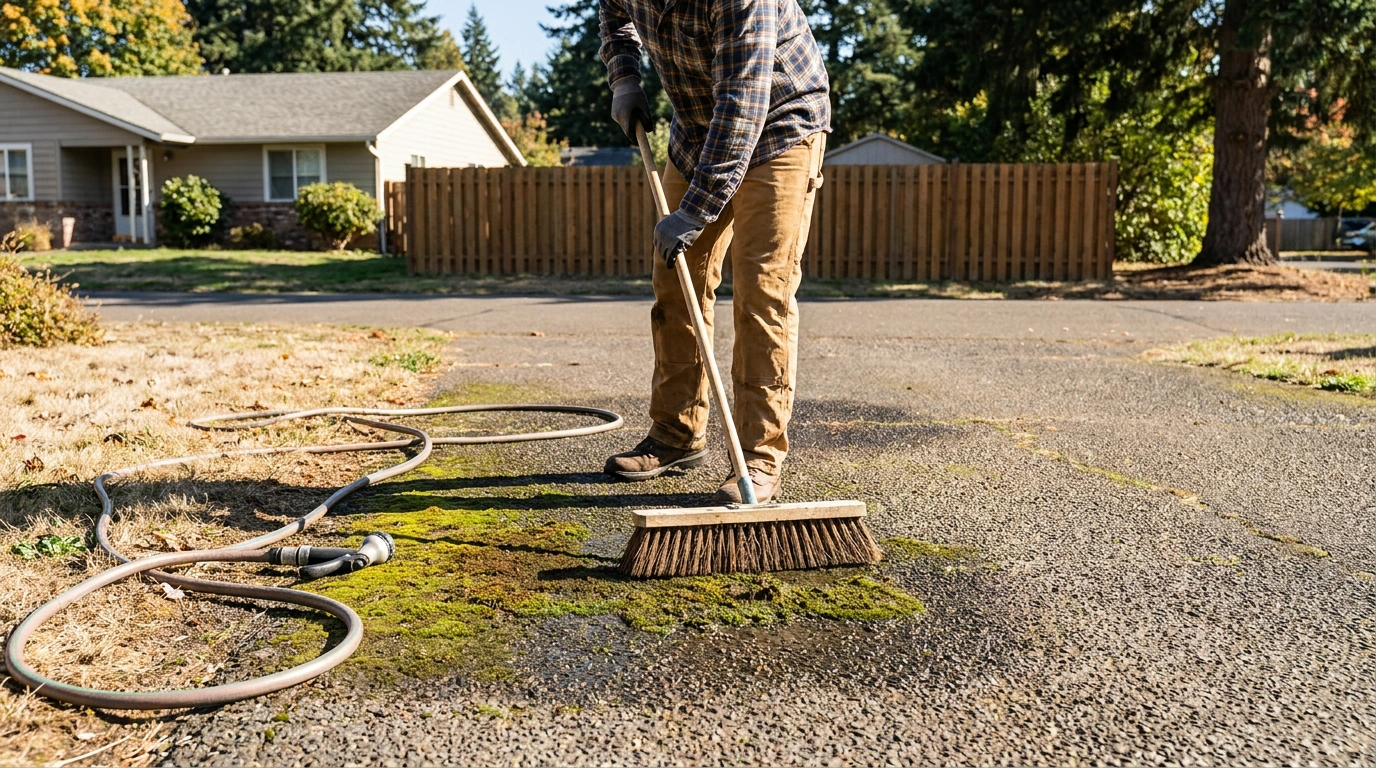
Remove moss and algae from an asphalt driveway by clearing the surface, applying a cleaner, letting it dwell, then rinsing and scrubbing away the dead growth. Start by sweeping or blowing off loose debris, then work a stiff-bristle broom across the affected area on a dry day. To remove moss from asphalt driveway surfaces, apply a cleaner evenly with a pump sprayer. A 1 part bleach to 3 parts water solution works well. Let it dwell at least five minutes so it penetrates the growth. For asphalt driveway algae removal, rinse with a garden hose at low pressure, then scrub stubborn patches with a stiff brush. Heavily established algae on asphalt driveway sections may require a second application to fully clear.
Why do moss and algae grow on asphalt
Moss and algae grow on asphalt because moisture lingers in shaded, damp, or poorly draining areas where both thrive. Organic debris like leaves and dirt traps water on the surface, feeding growth and making driveway moss removal a recurring task. Asphalt with texture, cracks, or aging wear gives moss and algae places to anchor, so worn surfaces are harder to keep clear. Water runoff patterns concentrate moisture along edges and low spots, creating persistent damp zones. Nearby soil, lawns, and overhanging trees drop spores and debris that repeatedly recontaminate the surface. Understanding these conditions helps you clean moss off driveway surfaces more effectively and target the sources, not just the visible growth, for lasting results. Paving drainage fixes are essential for preventing water accumulation and minimizing the growth of moss and algae. By addressing these issues, homeowners can create a more sustainable environment for their driveways and reduce maintenance efforts.
Which cleaning methods are safe for asphalt surfaces
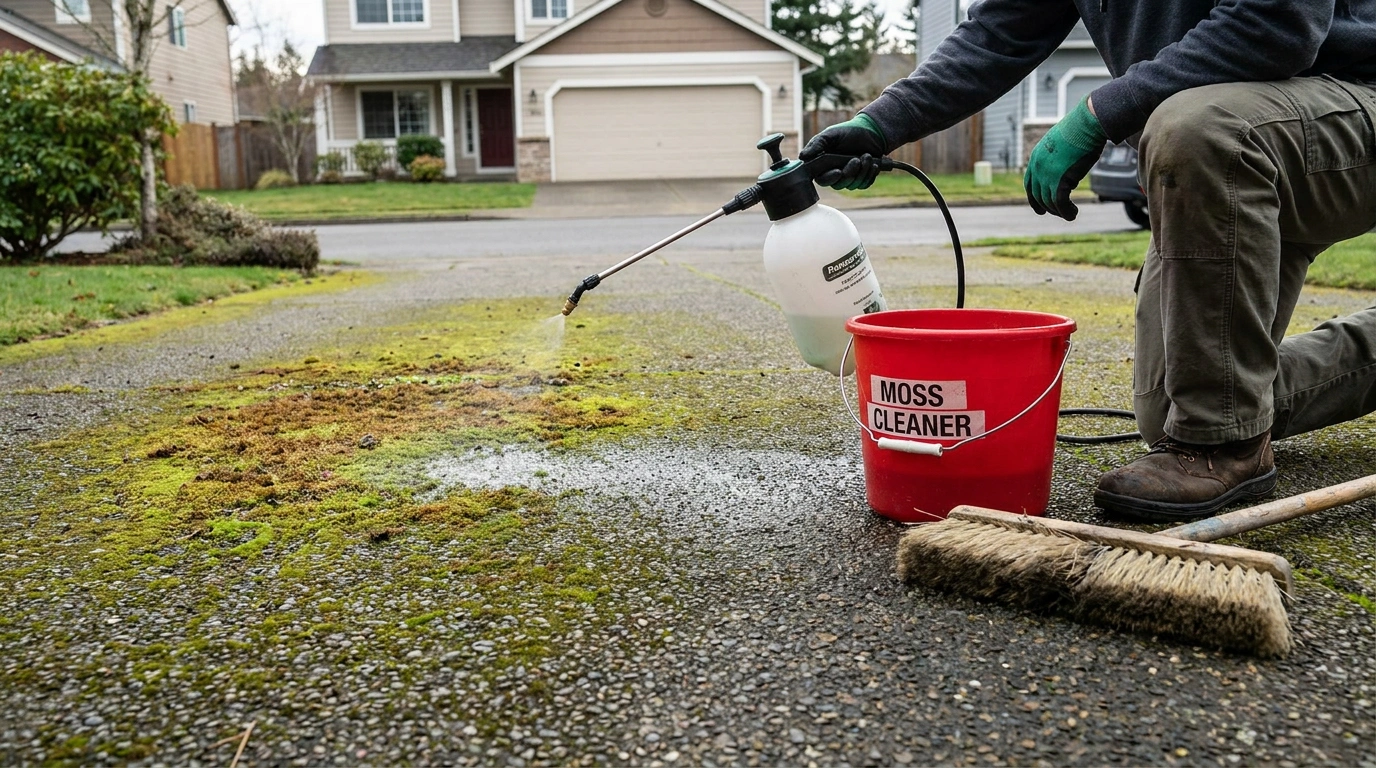
Several cleaning methods are safe for asphalt surfaces when you control concentration, dwell time, and rinsing pressure to protect the binder and aggregate. Asphalt tolerates most household treatments. Choose from these proven options:
- Bleach solution: Mix 1 part bleach to 3 parts water, or add 1 cup detergent per gallon for better cling.
- Vinegar: Apply undiluted or lightly diluted for moderate moss and algae deposits.
- Commercial moss killers: Use asphalt-rated biocides according to label directions.
- Spray-and-forget cleaners: Apply and let them work without rinsing.
Always rinse at low pressure afterward, and skip concentrated pressure spray, which erodes aging asphalt and widens existing cracks. Rapid pothole response is essential for maintaining road safety. Timely repairs can prevent further damage and reduce hazards for drivers.
How should you clean a moss-covered asphalt driveway
Clean a moss-covered asphalt driveway by clearing the area, then applying a bleach solution and scrubbing away the growth. Begin by removing vehicles, planters, and toys, then sweep or blow away loose debris. Work on a dry day when moss dislodges more easily, and protect nearby plants before applying any chemical. Scrub the surface with a stiff-bristle broom to break up buildup. Next, mix your cleaner: combine 1 cup household bleach with 1 gallon of water plus 1 cup liquid detergent, then apply it evenly with a pump sprayer. Let the bleach solution dwell for at least 5 minutes. Rinse with a garden hose using low pressure, and scrub stubborn patches with a stiff brush or lift loosened growth with a flat scraper. Heavily established moss may need a second application.
How do drainage and shade affect recurring growth
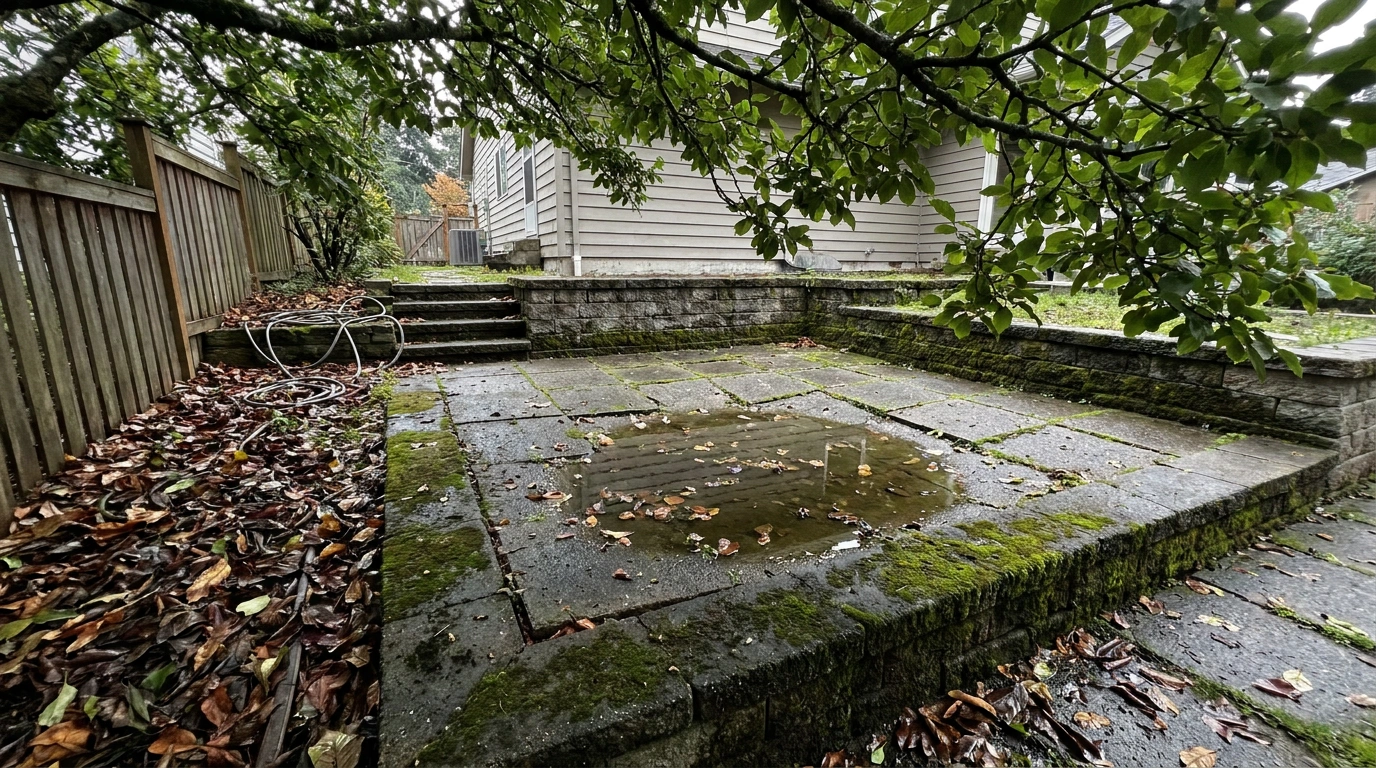
Poor drainage and heavy shade are the two conditions most likely to bring growth back after you’ve cleaned, because moss and algae thrive on lingering moisture. Water that pools in low spots or runs along edges keeps the surface damp long enough for spores to reestablish. Shade from overhanging trees or structures slows evaporation, compounding the problem. Address both conditions directly to reduce recurrence.
| Condition | Corrective Action |
|---|---|
| Poor drainage | Regrade low spots or add channels so water flows off |
| Heavy shade | Trim branches and vegetation to increase sunlight |
| Standing debris | Sweep regularly so leaves don’t trap moisture |
Recheck shaded or damp areas often, since these spots regrow first. Fixing drainage and reducing shade extends the results of any cleaning.
How can you reduce future moss and algae build-up
Reduce future moss and algae buildup by denying these organisms the moisture they need to establish. Consistent maintenance disrupts the damp, debris-laden conditions they depend on, keeping your asphalt clear between deep cleanings. Focus on the factors you can control:
Deny moss the moisture it craves, and consistent upkeep keeps your asphalt clear between deep cleanings.
- Sweep regularly to remove leaves, dirt, and organic debris that trap water against the surface.
- Improve drainage by clearing low spots and directing runoff away from the driveway so water doesn’t pool.
- Trim overhanging vegetation to increase sunlight exposure and reduce the persistent shade that slows drying.
- Apply a moss inhibitor or preventative treatment once the surface dries fully, targeting shaded or damp zones.
Recheck problem areas periodically for early regrowth, treating small patches before they spread and re-anchor. Road surface cracking can lead to serious safety hazards if left unaddressed. Regular inspections can help identify issues early on, allowing for timely repairs.
Keep Your Asphalt Driveway in Better Condition
Cleaning moss and algae can improve your driveway’s appearance, but recurring growth may point to drainage problems, surface wear, or aging asphalt. V&F Paving helps Connecticut homeowners keep driveways in better condition with professional driveway asphalt paving solutions. If your surface is cracking, holding water, or deteriorating, call (203) 624-2449 or request a free estimate to discuss the right next step.
Frequently Asked Questions
Can Moss and Algae Permanently Damage or Weaken Asphalt Over Time?
Yes, moss and algae can weaken your asphalt over time. They trap moisture against the surface, and that lingering dampness accelerates wear, especially where texture, cracks, or aging already exist. As growth anchors into those cracks, it widens them and lets more water penetrate. You’ll see faster deterioration in shaded, poorly draining spots. If you don’t remove it, repeated moisture cycles keep degrading the surface and compromise the asphalt’s long-term integrity.
Is Bleach or Vinegar Safer for Nearby Lawns and Plants?
Vinegar’s generally safer for nearby lawns and plants, though neither’s truly harmless. Bleach can scorch foliage, damage roots, and alter soil chemistry if runoff reaches your greenery. Vinegar’s acetic acid breaks down faster and won’t linger like bleach’s residue, but concentrated applications still burn leaves and lower soil pH. Either way, you’ll want to protect surrounding plants beforehand, rinse overspray immediately, and control runoff so treated water doesn’t drain into vegetation.
How Often Should I Treat My Driveway for Moss Prevention?
You should recheck shaded or damp areas regularly and treat as needed rather than on a fixed schedule. Inspect early each spring and fall, when moisture lingers longest, and apply a moss inhibitor after the driveway dries. For heavily shaded or poorly draining spots, you’ll likely need more frequent treatments. Keep sweeping debris, improving drainage, and trimming vegetation between applications, and you’ll reduce regrowth and stretch the time between treatments considerably.
Does Sealing an Asphalt Driveway Help Prevent Moss Growth?
Sealing helps because it fills surface texture, cracks, and pores where moss and algae anchor and hold moisture. You’ll get a smoother, less porous surface that sheds water faster, giving growth fewer places to establish. It won’t stop moss entirely, though, as shaded, damp, or poorly draining spots can still invite regrowth. You’ll still need to sweep debris, improve drainage, and trim vegetation. Reseal periodically as the coating wears to maintain that protective barrier.
What Season Is Best for Cleaning Moss From Asphalt?
You’ll get the best results tackling moss on a dry day, ideally in late spring or early summer when warmer temperatures and lower moisture make moss easier to dislodge. Dry conditions let you sweep and scrub loosened growth more effectively, and your cleaning solution won’t get diluted by rain. Avoid wet, shaded winter months when moisture lingers and encourages regrowth. Schedule treatment ahead of a few consecutive dry, mild days.