
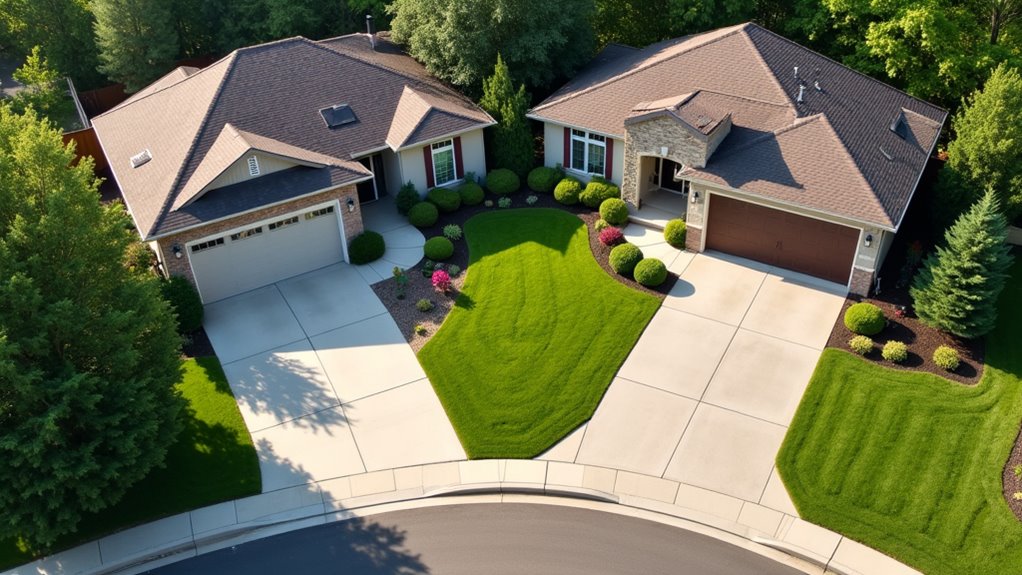
You’ll want to assess whether asphalt damage penetrates only the surface layer or compromises your structural base. Resurfacing works for isolated cracking, color fading, and shallow potholes—costing $1–$3 per square foot while extending lifespan 8–15 years. However, alligator cracking patterns, recurring potholes, and damage exceeding 25% of total surface area indicate base failure requiring full replacement at $4–$10 per square foot. The sections below break down specific diagnostic indicators for each scenario.
Resurfacing vs. Replacement: Cost, Lifespan, and Downtime
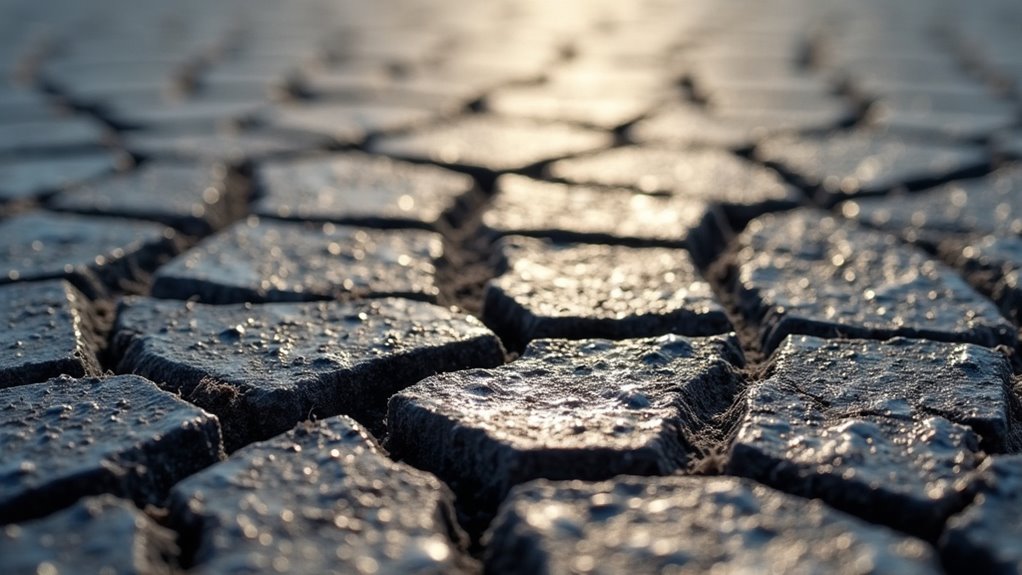
When evaluating whether to resurface or replace damaged asphalt, cost differentials provide the clearest starting point. Resurfacing cost ranges from $1–$3 per square foot, while replacement averages $4–$10 per square foot. For a 30m² driveway, you’ll spend £600–£1,500 on resurfacing versus £1,500–£3,600+ for replacement.
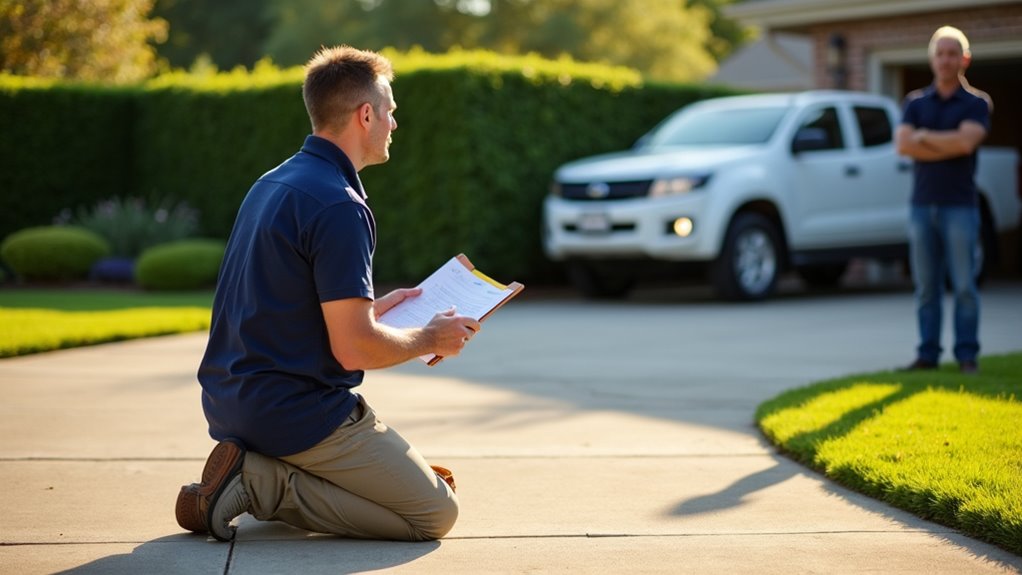
However, resurfacing lifespan risk analysis reveals critical tradeoffs. Resurfacing extends surface life by 8–15 years, whereas replacement delivers 15–30 years of durability. Your resurfacing vs. replacement decision hinges on resurfacing eligibility criteria: intact foundations and surface-level damage only. A professional inspection can determine whether your pavement’s foundation remains sound enough for resurfacing or requires complete replacement.
Resurfacing performance risk factors include underlying structural compromise that overlays can’t address. Construction timelines differ notably—resurfacing completes in 1–2 days while replacement requires 3–5 days. Determining whether asphalt resurfacing enough depends on matching these metrics against your pavement’s condition. Resurfacing performance risk factors include underlying structural compromise that overlays can’t address. Construction timelines differ notably—resurfacing completes in 1–2 days while replacement requires 3–5 days. When evaluating whether to driveway resurface or replace, the decision depends on matching these metrics against your pavement’s current condition and structural integrity.
Is Your Asphalt Damage Surface-Level or Structural?
Distinguishing between surface-level and structural asphalt damage determines whether you’ll spend $1–$3 per square foot on resurfacing or $4–$10 per square foot on full replacement. Surface-level indicators include raveling, aging of asphalt binder, linear cracking, block cracking, and bleeding and discoloration. These distresses affect only the top layer while leaving base integrity intact. Distinguishing between surface-level and structural asphalt damage determines whether you’ll spend $1–$3 per square foot on resurfacing or $4–$10 per square foot on full replacement. Understanding asphalt overlay vs resurfacing helps clarify which remedy fits your pavement condition. Surface-level indicators include raveling, aging of asphalt binder, linear cracking, block cracking, and bleeding and discoloration. These distresses affect only the top layer while leaving base integrity intact.
Structural damage signals subgrade or base failure, requiring deeper intervention. Alligator cracking patterns, rutting in wheel paths, and moisture-related stripping indicate compromised foundational layers. Rutting specifically creates depressions that cause water accumulation and affect the pavement’s structural integrity over time. You can differentiate by examining crack depth and pattern distribution. Surface cracks remain isolated and shallow, while structural failures display interconnected networks extending through multiple pavement layers. Core sampling provides definitive assessment when visual inspection proves inconclusive, revealing bonding conditions and moisture infiltration depth.
5 Signs Your Asphalt Only Needs Resurfacing
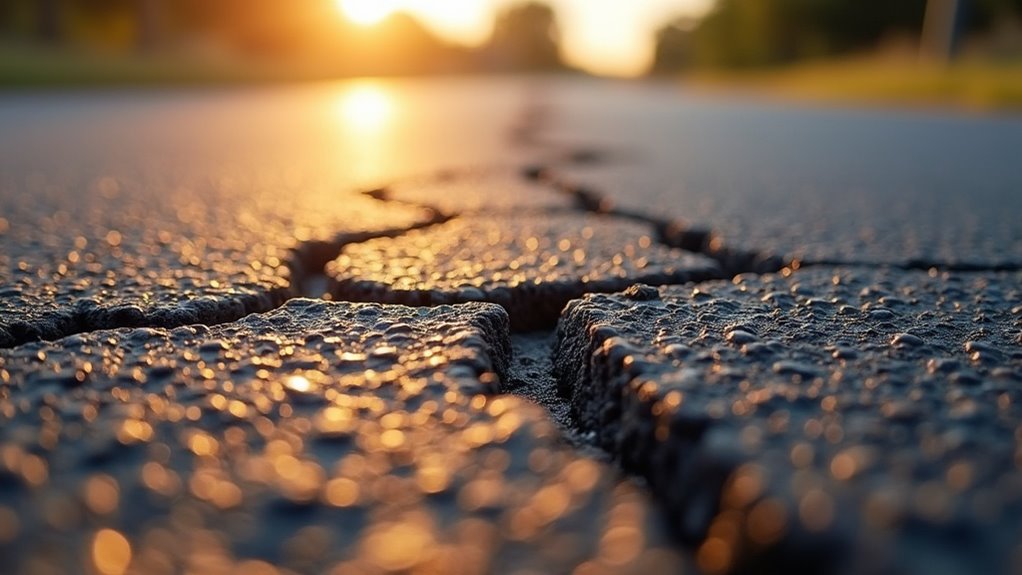
How do you determine whether your asphalt requires a cost-effective overlay or expensive reconstruction? Understanding asphalt aging progression stages helps you identify when is asphalt resurfacing enough. Surface-level crack repair viability depends on distress depth and base integrity.
| Indicator | Asphalt Overlay Suitability Factors |
|---|---|
| Crack depth | Penetrates surface layer only |
| Color fading | UV-induced binder breakdown present |
| Potholes | Shallow without base compromise |
| Water pooling | No severe erosion or infiltration |
| Edge condition | Minor crumbling, intact structure |
You’ll notice early crack propagation stages pavement exhibits respond well to overlays. Surface delamination asphalt shows aggregate exposure and texture roughness—both correctable through resurfacing. If you’re observing faded striping, minor raveling, or shallow depressions without structural failure, overlay restoration remains viable. When the asphalt’s foundation remains sound, resurfacing becomes a cost-effective option that can add years to the life of your driveway or parking lot.
5 Signs Your Asphalt Needs Full Replacement
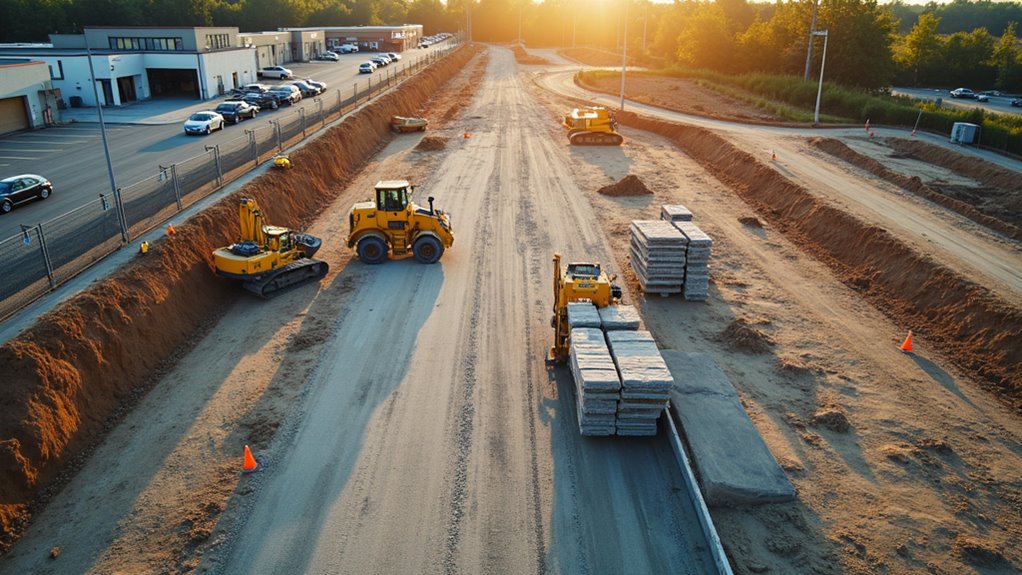
Not every damaged surface qualifies for overlay restoration—some conditions indicate structural failure that resurfacing can’t address. When you observe alligator cracking networks, you’re seeing base layer compromise that requires structural layer assessment asphalt professionals conduct through pavement deflection testing.
If your pavement shows recurring potholes in identical locations, asphalt base condition testing will likely reveal subbase deterioration. Pavement subsurface evaluation becomes critical when pooling water persists beyond 24 hours, signaling slope failure and moisture infiltration.
You’ll need full replacement when damage exceeds 25% of total surface area. Pavement engineering evaluation metrics—including the pavement structural rating system—help quantify deterioration severity. Surfaces exceeding 15-20 years with widespread cracking, warping, or buckling typically fail these assessments, confirming reconstruction necessity over resurfacing attempts.
How to Choose Based on Traffic, Age, and Budget
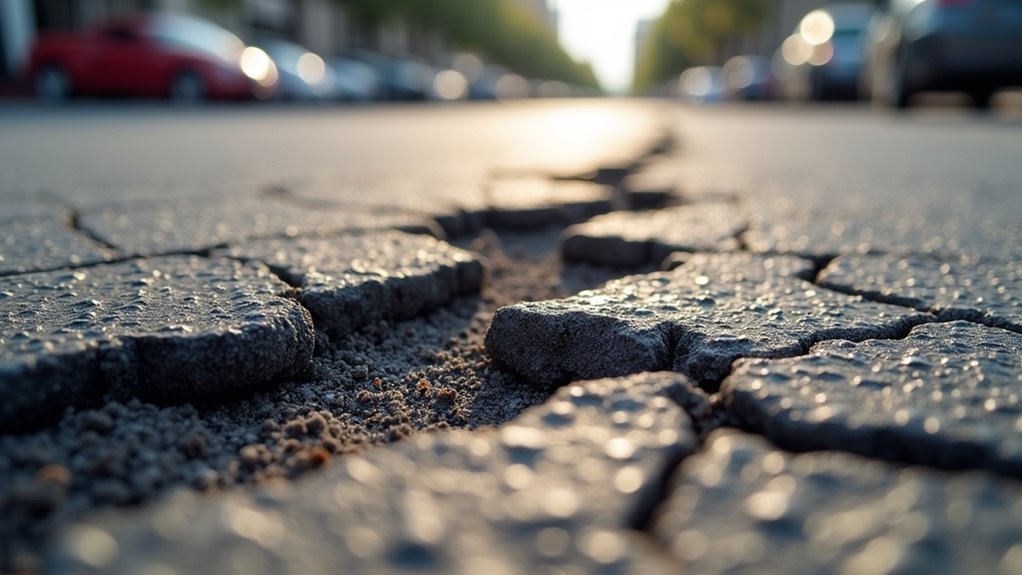
Your decision between resurfacing and full replacement depends on three quantifiable variables: traffic load intensity, pavement age relative to expected lifespan, and budget constraints weighed against long-term cost efficiency. When considering asphalt pavement maintenance options, it’s crucial to evaluate the specific needs of your surface to determine the most effective course of action. Each option presents its own advantages and disadvantages, which can impact both immediate costs and future maintenance requirements. Engaging with a specialist can provide insights tailored to your unique circumstances, ensuring the chosen solution aligns with both your budget and performance expectations.
| Factor | Resurfacing Threshold | Replacement Threshold |
|---|---|---|
| Traffic Load | Moderate volume, stable base | Heavy commercial, repeated stress |
| Pavement Age | Under 20 years, structurally sound | 15-20+ years, declining integrity |
| Budget Impact | 1-2 day completion, lower cost | 3-5 days, higher initial investment |
| Lifespan Extension | 8-15 additional years | 20-30 year performance |
| Base Condition | Intact foundation | Base layer moisture damage indicators present |
Conduct a pavement thickness adequacy review alongside asphalt damage severity levels assessment. Apply pavement distress classification scale metrics to evaluate rut depth tolerance limits. When base layer moisture damage indicators exist, asphalt rehabilitation limits favor replacement over overlay solutions.
Frequently Asked Questions
Can Resurfacing Be Done Over Previously Patched Areas of Asphalt?
Yes, you can resurface over previously patched asphalt when the underlying foundation remains structurally sound. You’ll need to properly prepare patched areas and apply tack coat to guarantee adequate bonding between old and new layers. However, if base layer failure exists beneath patches or patching covers more than one-third of total pavement area, you’re better off with full reconstruction. Expect resurfaced patches to add only 2-10 years versus 25 years for complete replacement.
What Weather Conditions Are Required for Successful Asphalt Resurfacing Installation?
You need air temperatures between 50°F and 85°F, with ground temperatures at least 50°F for proper bonding. Your asphalt mix should maintain approximately 175°F during application. You’ll want humidity levels between 40-70% and must avoid paving if rain’s expected within 24-48 hours. Spring and early fall offer ideal conditions, while sunny, moderate days promote even heating and faster curing. Strong winds and extreme temperatures compromise workability and compaction quality.
Does Resurfacing Affect Existing Drainage Slopes and Water Runoff Patterns?
Resurfacing can affect your existing drainage slopes and water runoff patterns if not properly executed. Since overlays typically add thin layers, they’re generally insufficient to alter established 1-2% slopes. However, you’ll risk disrupted runoff when contractors ignore topography, causing water diversion to unintended areas. You should verify and document existing slopes before work begins, use feathered edges to blend with original grading, and conduct post-resurfacing checks to confirm water flows correctly toward drains.
How Long Must New Resurfacing Cure Before Vehicles Can Drive on It?
You should wait 48-72 hours before allowing passenger vehicles on newly resurfaced asphalt. Heavy vehicles like trucks and SUVs require 7-14 days to prevent indentations in the still-malleable surface. Temperatures below 50°F extend initial curing to 5-7 days, while rain within 24-48 hours adds 1-2 extra days. Full curing takes 6-12 months as volatiles evaporate and bonds tighten, though functional use begins much earlier under ideal 70-80°F conditions.
Will Resurfacing Hide Underlying Issues That Could Worsen Over Time?
Yes, resurfacing can mask compromised bases from erosion or poor installation, leading to eventual failure. If you’re dealing with alligator cracks, sinkholes, or moisture intrusion into base layers, these structural deficiencies will persist beneath the overlay. Reflection cracks will mirror underlying damage through your new surface. You’ll see recurring failures when base issues go unaddressed. Before resurfacing, you should assess structural depth, drainage conditions, and bonding integrity to determine if full-depth reclamation is necessary.