

A gravel driveway costs about $1 to $3 per square foot installed, so a typical 100-foot single-lane driveway (about 1,000 square feet) runs $1,000 to $3,000. Driveway gravel itself costs roughly $25 to $60 per ton before delivery, and a 1,000-square-foot driveway needs about 17 tons at a 4-inch depth. Your price goes up if the ground needs excavation, a new base, drainage work, or fabric underneath. Gravel costs far less than asphalt or concrete up front, but it needs regrading and fresh stone every few years.
Key Takeaways
- Gravel driveways cost $1 to $3 per square foot installed, the cheapest of any driveway surface.
- Length drives the total, from about $500 for a 50-foot driveway to $13,000 or more for a quarter-mile driveway.
- Driveway gravel runs about $25 to $60 per ton before delivery, and most driveways need 4 inches or more of compacted stone.
- Excavation, base work, geotextile fabric, and drainage can add as much as the gravel itself on soft or wet ground.
- Topping up a gravel driveway every 2 to 4 years costs a fraction of the original install, but it’s an ongoing expense paved driveways don’t have.
What Is the Average Cost of a Gravel Driveway
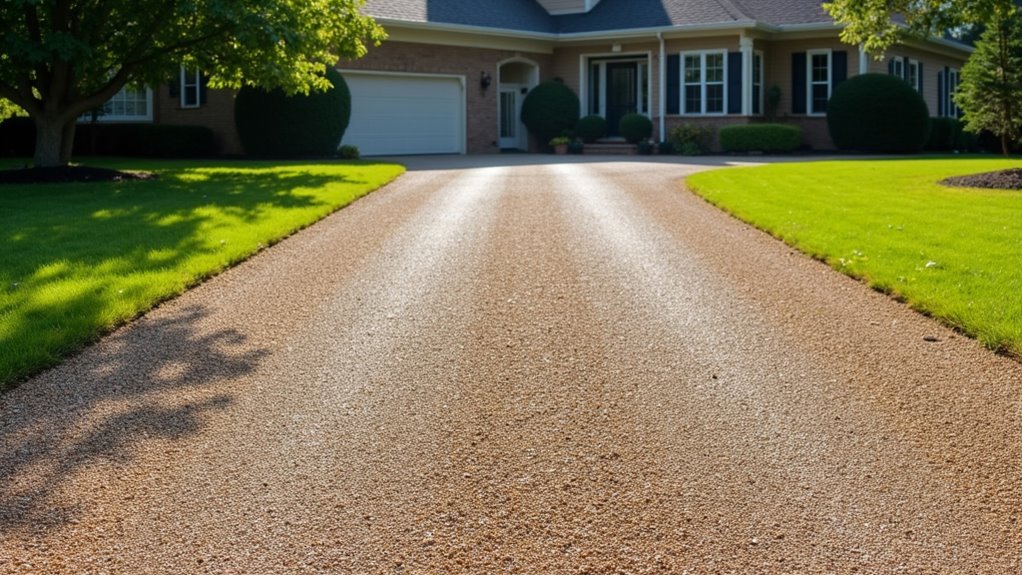
The average gravel driveway costs about $1,000 to $3,000 for a 100-foot, single-lane driveway, or $1 to $3 per square foot installed. That price covers the gravel, delivery, spreading, and grading on firm ground. The low end applies when the ground is already level and firm. The high end reflects decorative stone, longer hauls, or extra grading.
For comparison, a standard two-car parking area of about 600 square feet costs $600 to $1,800 in gravel. The same area in asphalt runs $4,200 to $9,000. If you’re weighing the two, our guide to how much it costs to pave a driveway covers paved options.
How Much Does a Gravel Driveway Cost by Length
A gravel driveway costs about $500 for a 50-foot driveway, $1,000 to $3,000 for a 100-foot driveway, and $10,000 to $30,000 for a 1,000-foot driveway. These figures assume a 10-foot-wide single lane, 4 inches of gravel, and firm ground.
| Driveway Length (10 ft wide) | Typical Installed Cost | Gravel Needed at 4 Inches |
|---|---|---|
| 50 ft (500 sq ft) | $500 to $1,500 | About 9 tons |
| 100 ft (1,000 sq ft) | $1,000 to $3,000 | About 17 tons |
| 200 ft (2,000 sq ft) | $2,000 to $6,000 | About 35 tons |
| 1,000 ft (10,000 sq ft) | $10,000 to $30,000 | About 175 tons |
| Quarter mile, 1,320 ft (13,200 sq ft) | $13,000 to $40,000 | About 230 tons |
Long driveways often come in at the lower end per square foot, because the setup and delivery costs are spread over more area. A 12-foot-wide driveway costs about 20 percent more than these figures. A two-lane driveway costs about double.
How Much Does Driveway Gravel Cost per Ton
Driveway gravel costs about $25 to $60 per ton for common crushed stone and processed gravel. Decorative stone costs more. Delivery usually adds $75 to $200 per truckload, depending on distance and load size.
| Gravel Type | Typical Cost per Ton | How It’s Used |
|---|---|---|
| Processed gravel or crusher run | $25 to $50 | Base layer that packs firm, the backbone of most driveways |
| 3/4-inch crushed stone | $30 to $60 | Base or surface layer that drains well |
| Pea gravel | $30 to $60 | Decorative top layer, shifts under tires |
| Crushed limestone or traprock | $35 to $65 | Hard-wearing surface layer |
| River rock and marble chips | $60 to $150 or more | Decorative borders, rarely the driving surface |
Prices vary by quarry and season, so get a delivered price per ton when you compare suppliers. Buying in full truckloads, usually 10 to 20 tons, often lowers the price per ton.
How Much Gravel Do You Need for a Driveway
You need about 1.4 tons of gravel per cubic yard, and a cubic yard covers about 80 square feet at a 4-inch depth. To work out your own driveway, use this calculation:
- Multiply length by width in feet to get square feet.
- Multiply that by the depth in feet (4 inches is 0.33 feet, 6 inches is 0.5 feet) to get cubic feet.
- Divide by 27 to get cubic yards.
- Multiply cubic yards by 1.4 to get tons.
- Add about 10 percent extra for compaction and spillage.
For example, a 100-foot driveway that’s 10 feet wide, at 4 inches deep, works out to 1,000 × 0.33 ÷ 27 × 1.4, or about 17 tons. With the 10 percent extra, order about 19 tons. For curves, turnarounds, and odd shapes, follow our guide to measure your driveway accurately before you order.
Most gravel driveways that fail weren’t too cheap. They were too thin. Four inches of compacted stone is the minimum for a surface that holds up.
What Extra Costs Come With a Gravel Driveway

The extra costs that come with a gravel driveway are excavation, base building, fabric, and drainage, and on difficult ground they can match the cost of the gravel. A gravel driveway is only as stable as what’s under it.
- Excavation and grading: Removing topsoil and shaping the driveway for drainage. This is often the biggest add-on for a new driveway.
- Base layer: Soft or clay soil may need 4 to 6 extra inches of processed gravel under the top layer.
- Geotextile fabric: A layer under the stone that keeps it from sinking into soft soil.
- Drainage: A culvert pipe where the driveway crosses a ditch, or regrading to move water away.
- Removal: Hauling out an old asphalt or concrete driveway before laying gravel.
- Edging: Timber, steel, or stone edging that keeps gravel from spreading into the lawn.
Our guide on how to install a gravel driveway walks through each layer and when it’s needed.
How Much Does It Cost to Regravel a Driveway
Regraveling a driveway usually costs a few hundred dollars for a typical 100-foot driveway, because you’re adding only 1 to 2 inches of fresh stone instead of building from scratch. A 2-inch top-up on 1,000 square feet takes about 9 tons. At $25 to $60 per ton plus delivery, the materials come to roughly $300 to $750. Grading and spreading add to that if you hire it out.
Most gravel driveways need a top-up every 2 to 4 years, and grading once or twice a year to fill ruts and potholes. Our gravel driveway maintenance guide covers how to keep the surface smooth between top-ups.
Is a Gravel Driveway Cheaper Than Asphalt Over Time
A gravel driveway is much cheaper than asphalt to install, and it usually stays cheaper over time for long or rural driveways. The gap narrows on short driveways in snowy areas. Gravel at $1 to $3 per square foot costs a fraction of asphalt at $7 to $15. But gravel needs regular top-ups, regrading, and weed control, and snowplows push stone into the lawn every winter.
If you want something between gravel and asphalt, recycled asphalt millings and tar and chip are worth a look. Our asphalt millings driveway guide and our comparison of tar and chip vs asphalt explain both. For a full side-by-side, see gravel vs asphalt vs concrete driveways.
What Gravel Works Best for a Connecticut Driveway
The gravel that works best for a Connecticut driveway is an angular crushed stone or processed gravel that locks together when compacted. Round pea gravel and river rock roll under tires and plows. Angular stone packs into a firm surface that sheds water and holds up through freeze-thaw cycles.
A few local factors affect both the choice and the cost:
- Snow plowing: Plows and snowblowers throw loose stone into the lawn, so a well-compacted processed gravel surface loses less material each winter.
- Freeze-thaw cycles: Water trapped in a poorly drained gravel driveway freezes and heaves, so crowning the surface and draining the edges matter.
- Slopes: Gravel washes out on steep grades during heavy rain. Our guide to the best paving options for steep driveways covers alternatives.
- Local stone: Processed gravel and traprock are widely available from Connecticut quarries, which helps keep delivery costs reasonable.
If you’re new to gravel driveways, our overview of what a gravel driveway is explains the layers and how they work.
Get a Price for Your Gravel or Paved Driveway
Gravel prices depend on your driveway’s length, the ground underneath, and how much base and drainage work is needed. V&F Paving can evaluate your property and price gravel, millings, or asphalt through its driveway paving services. Call (203) 624-2449 or request a free estimate to discuss your driveway length, site conditions, and surface options.
Frequently Asked Questions
Is Pea Gravel Good for a Driveway?
Pea gravel looks attractive, but it’s not the best choice for a driving surface. Its small, round stones don’t lock together, so they shift under tires, rut easily, and scatter when plowed. It works better as a decorative border or walkway. For the driveway itself, angular crushed stone or processed gravel gives a firmer, longer-lasting surface for about the same price per ton.
Can You Put Gravel Over an Existing Asphalt Driveway?
You can, but it’s rarely a good idea. Gravel on smooth asphalt doesn’t lock in place and tends to slide off, especially on slopes. Water can also get trapped between the two layers. If an asphalt driveway is failing, it’s usually better to break it up and use it as a base, remove it, or resurface it with new asphalt.
Do You Need a Permit for a Gravel Driveway in Connecticut?
Many Connecticut towns require a permit for a new driveway or a new curb cut, whether it’s gravel or paved, and some have rules about runoff and drainage onto the road. Regraveling an existing driveway usually doesn’t need a permit. Check with your town’s building or zoning office before starting a new driveway.
How Long Does a Gravel Driveway Last?
A well-built gravel driveway can last for decades, because the base stays in place while you add fresh stone on top every few years. What wears out is the surface layer, which ruts, thins, and gets pushed into the lawn. Good drainage, a compacted base, and regular grading make the biggest difference in how long it lasts.
Can You Pave Over a Gravel Driveway Later?
Yes. An existing gravel driveway often makes a good base for asphalt, which can lower the cost of paving later. A contractor will regrade it, add and compact fresh stone where needed, then lay asphalt on top. Our guide on how much it costs to pave a driveway shows what the upgrade typically costs.