

Gravel gives you the lowest upfront cost at $1–$3 per square foot with a 100-year lifespan, but you’ll rake and replenish it regularly. Asphalt runs $7–$13 per square foot, handles freeze-thaw cycles well, and lasts 15–30 years with resealing every 2–3 years. Concrete costs $8–$18 per square foot but delivers 30–40 years of low-maintenance service with superior load-bearing capacity. Your climate, budget, and traffic patterns determine which material performs best for your property. Gravel gives you the lowest upfront cost at $1–$3 per square foot with a 100-year lifespan, but you’ll rake and replenish it regularly. When comparing gravel driveway cost per m2, remember that material pricing and installation depth significantly influence the final budget. Asphalt runs $7–$13 per square foot, handles freeze-thaw cycles well, and lasts 15–30 years with resealing every 2–3 years. Concrete costs $8–$18 per square foot but delivers 30–40 years of low-maintenance service with superior load-bearing capacity. Your climate, budget, and traffic patterns determine which material performs best for your property.
Gravel vs Asphalt vs Concrete: A Quick Comparison
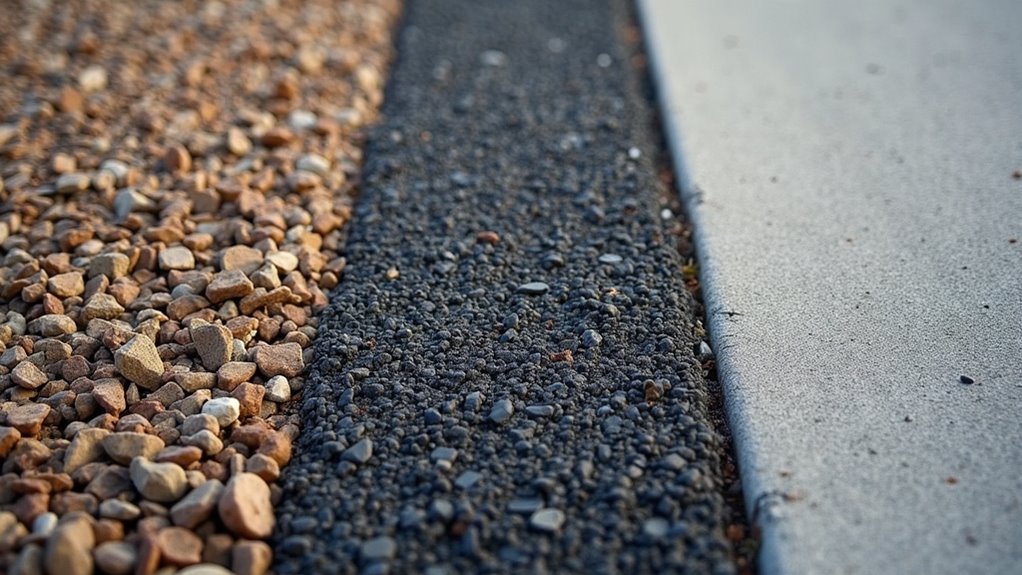
When selecting a driveway material, you’ll need to weigh durability, maintenance demands, and climate performance against your budget and aesthetic preferences. In any driveway material comparison, lifespan varies considerably: gravel driveways last up to 100 years, concrete delivers 30–40 years, and asphalt provides 15–30 years with proper sealing. Gravel is the most popular choice for rural driveways due to its unmatched affordability and easy replacement.
When comparing gravel vs asphalt driveway options, consider that gravel remains flexible under heavy loads but offers poor drivability and can damage vehicles. Asphalt requires sealing every two to five years but melts snow faster in winter. In the asphalt vs concrete vs gravel debate, concrete demands minimal maintenance and offers superior customization with decorative patterns. Asphalt performs better in cold climates, while concrete excels in hot environments where asphalt becomes tacky.
What Does Each Driveway Type Cost?
Budget constraints often determine which driveway material you’ll ultimately choose, regardless of performance characteristics. When comparing types of driveway materials, you’ll find significant cost variations per square foot.
| Material | Cost per Sq Ft | 1,000 Sq Ft Total |
|---|---|---|
| Gravel | $1–$3 | $1,000–$3,000 |
| Asphalt | $7–$13 | $5,000–$12,000 |
| Concrete | $8–$18 | $8,000–$18,000 |
In a gravel vs asphalt driveway comparison, you’re looking at 4x–6x higher costs for asphalt. The gravel vs concrete driveway cost difference is even steeper, with concrete running 6x–8x more expensive.
Factor in excavation costs of $1–$8 per square foot and labor at $4–$8 per square foot. Gravel grid stabilization adds $2–$12 per square foot if you need enhanced load-bearing capacity. If your property has challenging terrain, expect labor costs to increase by 20%–50% due to the additional grading and preparation work required.
How Long Will Your Driveway Last?
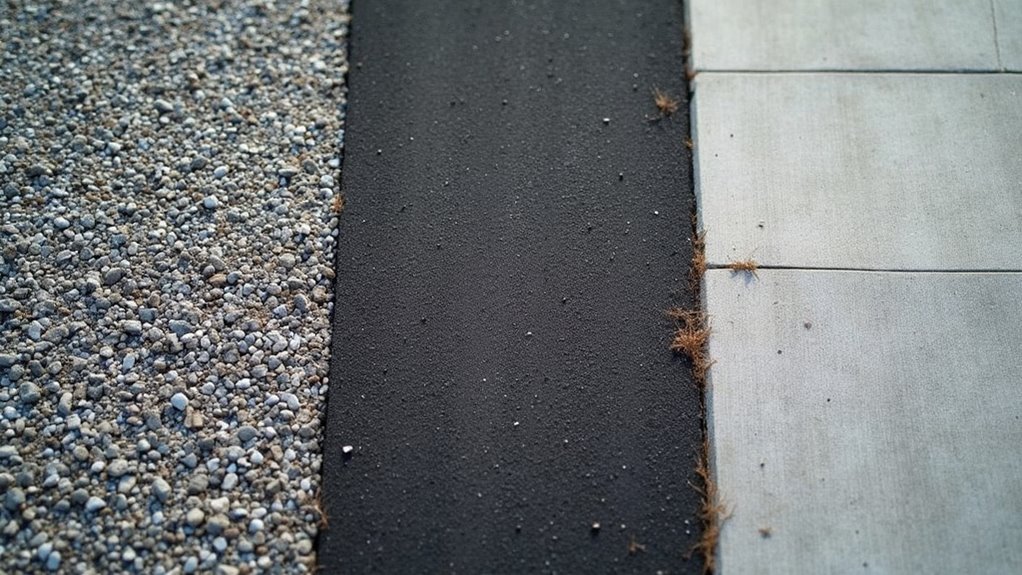
Your driveway’s lifespan varies considerably based on material choice: gravel typically lasts 10 to 15 years, asphalt endures 15 to 20 years, and concrete can perform for 30 to 40 years with proper installation. Climate exposure, traffic loads, and soil conditions directly impact each material’s structural integrity over time. Asphalt’s flexibility makes it particularly well-suited for northern climates where freeze/thaw cycles can damage more rigid materials. Understanding these durability factors helps you match material specifications to your property’s specific demands.
Material Lifespan Comparison
A driveway’s lifespan depends heavily on material selection, installation quality, and ongoing maintenance protocols. You’ll find significant variance across the three primary materials when evaluating long-term performance specifications.
Expected Lifespan by Material:
- Gravel: 10-15 years with regular replenishment; susceptible to rutting without maintenance
- Asphalt: 15-30 years; requires resurfacing every 3-5 years to maximize durability
- Concrete: 20-50 years; outlasts asphalt by 10-20 years due to superior environmental resistance
Concrete delivers the longest service life, reaching 50+ years under diligent care protocols. Asphalt demands the highest maintenance frequency but provides 5-15 additional years over gravel installations. You’ll need to factor these lifespan differentials against initial installation costs when calculating total cost of ownership for your driveway project.
Factors Affecting Durability
| Factor | Primary Impact | Critical Specification |
|---|---|---|
| Installation Quality | Structural integrity | 2-3″ residential asphalt thickness |
| Climate Conditions | Surface degradation | Freeze-thaw cycle resistance |
| Drainage Management | Foundation stability | Proper grading and slope |
| Traffic Load | Wear acceleration | Vehicle weight distribution |
| Maintenance Frequency | Lifespan extension | Seal coating every 2-3 years |
Climate conditions accelerate deterioration through freeze-thaw cycles and UV oxidation. Drainage management prevents water infiltration that weakens foundations. Traffic loads from heavy vehicles exceed residential design specifications, causing premature cracking. Regular maintenance protects against environmental damage.
Which Driveway Works Best in Your Climate?
Because climate conditions directly impact driveway material performance, you’ll want to match your choice to your region’s specific weather patterns.
Your local climate should be the starting point for every driveway material decision you make.
Cold Climates: Asphalt’s flexibility withstands freeze-thaw cycles, reducing crack formation. Its dark surface absorbs heat, accelerating snow and ice melt. Concrete risks spalling without proper sealing.
Hot Climates: Concrete resists softening under extreme heat and reflects sunlight, staying cooler. Asphalt softens, creating vulnerability to dents under heavy vehicle loads.
Wet Climates: Gravel provides superior natural drainage, preventing water pooling. Permeable pavers reduce runoff and erosion effectively.
Key climate-material specifications:
- Asphalt lifespan: 15-20 years in freeze-thaw zones with regular maintenance
- Concrete lifespan: 30-40 years in warm regions with proper expansion joints
- Gravel requires stabilization grids in high-precipitation areas to prevent displacement
How Much Maintenance Does Each Driveway Need?
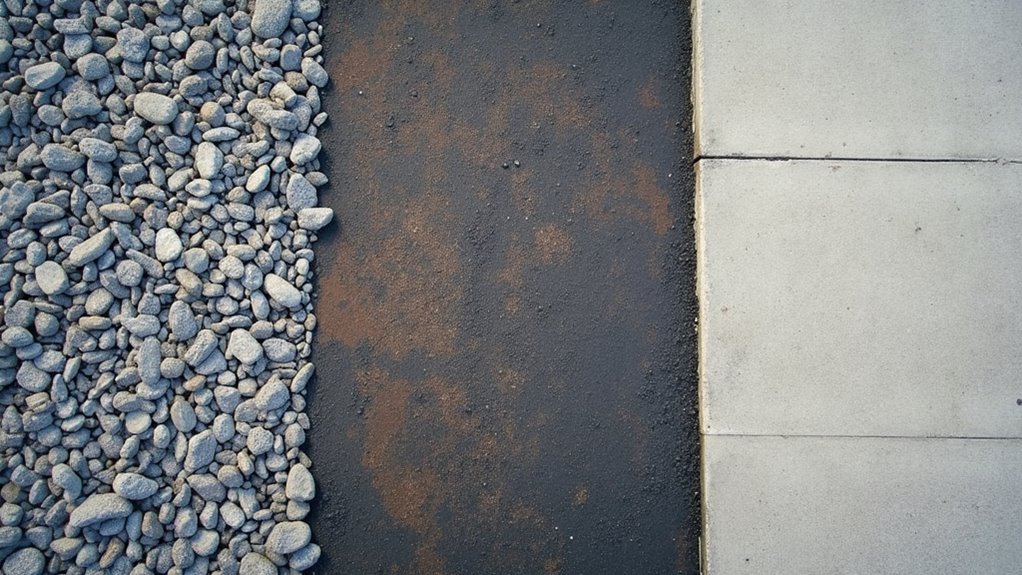
Beyond selecting the right material for your climate, understanding each driveway type’s maintenance demands will help you calculate true ownership costs over time.
Gravel driveways require the highest maintenance frequency. You’ll need to rake the surface several times yearly, add fresh gravel every 1-2 years for high-traffic areas, and address drainage issues promptly to prevent washout and mud accumulation. Gravel driveways require the highest maintenance frequency. If you’re researching what is a gravel driveway called, it’s important to understand the upkeep involved. You’ll need to rake the surface several times yearly, add fresh gravel every 1–2 years for high-traffic areas, and address drainage issues promptly to prevent washout and mud accumulation.
Asphalt demands moderate attention. You should apply sealcoating every 2-3 years, fill cracks annually to prevent freeze-thaw damage, and patch potholes immediately to maintain structural integrity.
Concrete offers the lowest maintenance load. You’ll seal the surface every 2-5 years, address cracks as they appear, and pressure wash annually. However, expect resurfacing or slab replacement every 20-30 years due to settling.
All three types benefit from routine debris removal to maximize lifespan.
How Long Does Installation Take?
When you’re planning your driveway project, installation timelines vary significantly between materials. Gravel driveways complete fastest at 1–3 days with minimal curing requirements, while asphalt needs 1–2 days for installation plus 24–48 hours before vehicle use. Concrete demands the longest commitment—you’ll finish pouring in one day, but you’ll wait 7 days minimum before driving on it and 28 days for full strength.
Gravel Installs Fastest
Gravel driveways install faster than asphalt or concrete, often reaching completion within one to two days. You’ll spread the top layer in approximately 1.5 hours, while compaction requires just 15 minutes with a plate compactor. The layered process moves quickly when you follow proper material specifications.
Your installation requires three distinct stone layers:
- #3 stone (fist-sized) as the 8-inch base layer
- #57 stone (ping pong ball-sized) for the 4-inch middle layer
- #21-A crusher run (thumbnail-sized with dust) as the finish
Each layer gets compacted with a mechanical roller before adding the next. You can rent a skidsteer for $200 per 24 hours to handle the work yourself. Total depth should reach 10-12 inches over geotextile fabric for maximum longevity.
Concrete Requires Curing Time
Concrete driveways demand patience that gravel installations don’t require—you’ll wait 28 days for full curing before the surface reaches its design strength. During this period, hydration reactions form crystalline bonds that create the material’s structural integrity. Concrete driveways demand patience that gravel installations don’t require—you’ll wait 28 days for full curing before the surface reaches its design strength. While comparing materials and planning gravel driveway maintenance equipment, remember that during this curing period, hydration reactions form crystalline bonds that create the material’s structural integrity.
Your timeline breaks down into specific load-bearing phases. After 24-48 hours, the surface firms enough for light foot traffic and form removal. By day 7, concrete achieves 70% strength, permitting passenger vehicle access. Light vehicles can drive on the surface after 3-4 days in mild climates with temperatures between 60-80°F.
Heavy trucks must wait the full 28 days when strength reaches 90-100%. During curing, avoid driving near edges and distribute vehicle weight by parking in varied spots. Liquid membrane compounds or wet blankets enhance crack resistance throughout this critical phase.
Which Driveway Is Right for Your Home?
How do you determine which driveway material best matches your property’s requirements? Consider your climate zone, traffic load, and budget constraints when selecting materials.
Choosing the right driveway material starts with understanding your climate, expected traffic, and budget limitations.
Key selection criteria:
- Cold climates: Choose asphalt for superior freeze-thaw resistance without cracking
- Heavy vehicle traffic: Select concrete for maximum load-bearing capacity and 30-40 year lifespan
- Budget-conscious projects: Opt for gravel’s lowest upfront cost, accepting ongoing maintenance demands
Concrete delivers the best lifecycle value at $6,500-$8,000 over 30 years, despite higher installation costs of $8-$20 per square foot. Asphalt requires resealing every 3-5 years at $300-$800 per treatment, increasing total ownership costs to $8,000-$10,000.
You’ll maximize ROI with concrete, which adds $3,000-$10,000 to home value. Match material specifications to your specific load requirements and regional climate conditions.
Frequently Asked Questions
Can You Install a Driveway Yourself or Is Professional Help Required?
You can tackle small gravel driveway projects yourself, but you’ll need professional help for asphalt and concrete installations. These materials demand specialized equipment for excavation, grading, and compaction that you won’t typically have access to. You’re also dealing with precise material specifications, proper subbase preparation, and load-bearing requirements that require expertise. Without professional techniques, you’ll risk cracks, uneven surfaces, and premature deterioration that’ll cost more to fix than hiring contractors initially.
How Does Each Driveway Type Affect Your Home’s Resale Value?
Concrete driveways deliver the highest ROI at 60-80%, adding $3,000-$10,000 to your home’s value with their 30-50 year lifespan and minimal maintenance requirements. Asphalt provides a moderate 50-75% ROI and can increase perceived value by up to 10%. Gravel offers the lowest return at 50-60% due to limited curb appeal and high maintenance demands. You’ll sell your home 7-10 days faster with paved surfaces versus gravel installations.
Which Driveway Material Is Most Environmentally Friendly?
Gravel offers you the most environmentally friendly option. You’ll benefit from its permeable surface that enhances natural drainage and groundwater recharge while minimizing stormwater runoff. When you source gravel locally, you’re cutting transportation emissions considerably. The material requires minimal processing energy compared to asphalt’s petroleum-based production or concrete’s cement manufacturing, which accounts for 8% of global CO2 emissions. You’re also avoiding the high embedded carbon typical of manufactured alternatives.
How Do Gravel, Asphalt, and Concrete Driveways Handle Drainage Differently?
Gravel driveways let water infiltrate directly through angular, coarse stones in a 4-6 inch base, making them ideal for permeable applications. You’ll find asphalt and concrete surfaces promote sheet flow runoff due to their low permeability, requiring crowned designs or edge swales to direct water away. Both impervious materials need surface channels or French drains to prevent pooling, while gravel naturally handles heavy rainfall without additional drainage infrastructure.
Can You Pave Over an Existing Gravel or Asphalt Driveway?
Yes, you can pave over both existing gravel and asphalt driveways. For gravel, you’ll need to grade and compact the base first, filling voids with fines or crushed concrete before laying 3 inches of binder asphalt and 2 inches of topcoat. For asphalt, you can apply overlays directly after repairing cracks and potholes, extending your driveway’s lifespan by 5-10 years. Always evaluate sub-base conditions before proceeding.