


To clean oil off asphalt without damaging it, you’ll want to act fast—cover fresh spills with kitty litter or baking soda, stomp it in, and let it absorb overnight. For embedded stains, scrub with dish soap or a biodegradable degreaser, avoiding gasoline or harsh solvents that dissolve asphalt’s petroleum-based binder. If pressure washing, stay between 1,500-2,800 PSI at a 45-degree angle. Understanding why certain products cause damage will help you protect your driveway long-term. To clean oil off asphalt without damaging it, you’ll want to act fast—cover fresh spills with kitty litter or baking soda, stomp it in, and let it absorb overnight. When working to remove oil stains from blacktop driveway surfaces, focus on absorbent materials first, then move to gentle cleaners. For embedded stains, scrub with dish soap or a biodegradable degreaser, avoiding gasoline or harsh solvents that dissolve asphalt’s petroleum-based binder. If pressure washing, stay between 1,500–2,800 PSI at a 45-degree angle. Understanding why certain products cause damage will help you protect your driveway long-term.
Absorb Fresh Oil Stains Before They Set
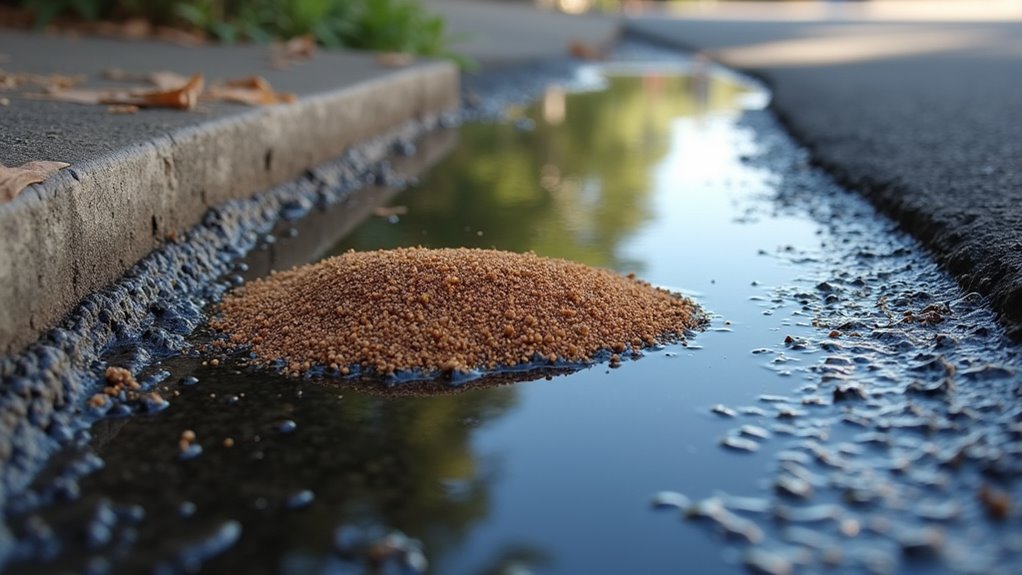
When fresh oil hits your asphalt driveway, you need to jump on it immediately—delays of even a few hours allow the oil to seep into the porous surface and bond with the asphalt binder, causing permanent softening and degradation. First, mop up excess oil before applying any absorbent materials.
To remove oil from asphalt effectively, cover the spill generously with kitty litter, baking soda, or sawdust. Press the absorbent into the stain by stomping on it, then let it sit overnight for maximum absorption. This asphalt cleaner method works best on wet spills. Sweep up the saturated material and dispose of it properly. Understanding how to get oil off asphalt driveway surfaces quickly prevents costly repairs and preserves your pavement’s structural integrity. In hot tropical climates, oil stains can penetrate and bake into asphalt even faster, making immediate action especially critical.
Household Cleaners That Lift Oil Without Damaging Asphalt
Fresh oil spills respond well to absorbent materials, but older stains that have partially bonded with your asphalt require a different approach—household cleaners that dissolve oil without attacking the petroleum-based binder. Fresh oil spills respond well to absorbent materials, but older stains that have partially bonded with your asphalt require a different approach—household cleaners that dissolve oil without attacking the petroleum-based binder. If your goal is to remove old oil stain from asphalt driveway, focus on gentle degreasers and surfactant-based solutions that lift embedded oil safely.
When learning how to clean oil off asphalt, you’ll find these household products effective for lifting embedded stains: When learning how to clean oil off asphalt, you’ll find these household products effective for lifting embedded stains. Choosing the best oil stain remover for asphalt driveway surfaces often starts with simple, readily available options that safely break down petroleum residue.
- Dish soap – Pour directly onto the stain, scrub with a stiff-bristled brush, add water for suds, then rinse with a garden hose. Dish soap works as a powerful degreaser that helps break down the oil molecules for easier removal.
- Baking soda – Sprinkle generously, scrub in circular motions, let sit 30 minutes, then rinse thoroughly.
- Powdered detergent – Cover the stain completely, add water, scrub vigorously, and let penetrate for one hour before rinsing.
- Oven cleaner – Spray on, let dwell 5-10 minutes, scrub with a hard brush, then rinse to clean oil off asphalt driveway surfaces.
Products That Will Ruin Your Asphalt Driveway
Not every cleaning product belongs on your asphalt driveway—several common substances will actively destroy the petroleum-based binder that holds your surface together. You’ll want to avoid these damaging agents at all costs.
| Harmful Product | Damage Mechanism |
|---|---|
| Gasoline | Dissolves binder, causes cracks and potholes |
| Deicing salts | Accelerates freeze/thaw cycles, expands cracks |
| Motor oil | Infiltrates surface, causes crumbling |
| Harsh pesticides | Chemical breakdown of asphalt structure |
| Tarminator products | Strips tar from unsealed surfaces |
Gasoline and motor oil penetrate deeply, breaking down the binder holding sand and gravel together. Deicing salts force water expansion during freezing, blasting apart your surface. Tarminator, while effective for vehicle detailing, will damage unsealed driveways if runoff contacts the surface. Fix vehicle leaks promptly and use sand alternatives for winter traction. If you notice oil damage already forming, small cracks that seem minor can quickly escalate into costly repairs if left untreated.
When Household Cleaners Fail, Use a Commercial Degreaser
Household dish soap and baking soda work well for light oil spots, but stubborn stains require stronger chemistry. Commercial degreasers contain surfactants that lift oil from asphalt pores, emulsifiers that break hydrocarbons into smaller droplets, and alkaline agents that enable deep penetration without damaging the asphalt binder.
Here’s what to look for in an effective commercial degreaser:
- Biodegradable, non-ammonia formula that’s safe around kids and pets
- Surfactant-based chemistry that lifts oil without harsh solvents
- Dilutable concentration for adjusting strength based on stain severity
- Residue-free finish that won’t leave white streaks or slippery surfaces
Products like Oil Eater, Simple Green Pro HD, and Asphalt Kingdom Universal Degreaser offer these features while protecting your driveway’s integrity. You’ll get professional-grade cleaning power without the risk of surface degradation.
How Pressure Washing Removes Deep Oil Stains
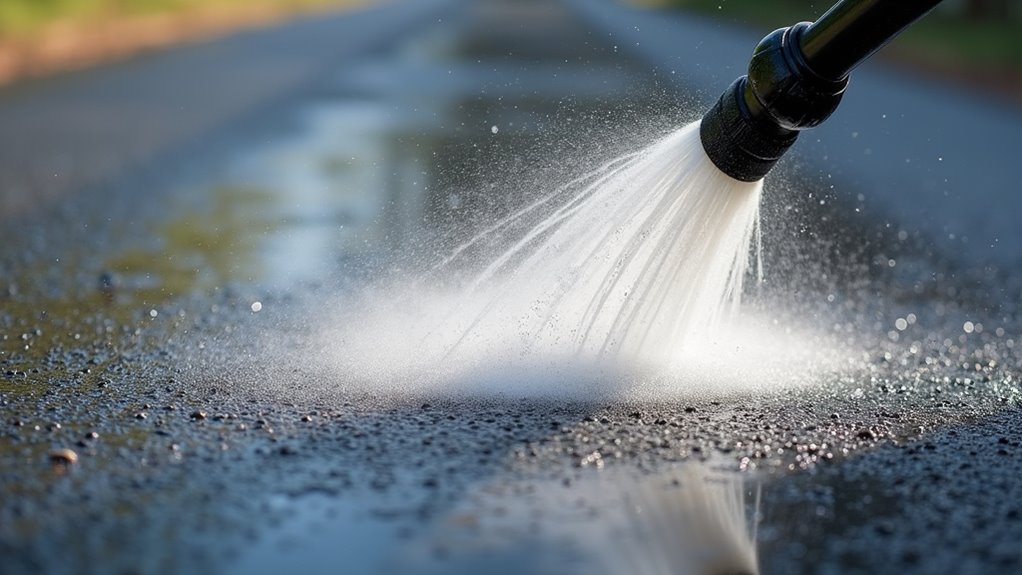
When commercial degreasers alone can’t penetrate deep oil stains, pressure washing provides the mechanical force needed to extract embedded petroleum from asphalt pores. High-pressure water jets break down oil particles and lift them from the porous surface structure. You’ll achieve ideal results by applying degreaser first, letting it dwell for 15 to 30 minutes, then following with pressure washing.
| Pressure Range | Effectiveness | Risk Level |
|---|---|---|
| Below 1,500 PSI | Insufficient for deep stains | Low |
| 1,500-2,800 PSI | Optimal removal zone | Minimal |
| Above 3,000 PSI | Excessive force | High damage risk |
Maintain your wand at a 45-degree angle and keep consistent nozzle distance from the surface. Cold water works for most applications, but stubborn grease may benefit from hot water treatment during cooler months.
Cover Permanent Stains With Sealcoating or Patching
Although pressure washing and degreasers remove most oil contamination, some stains penetrate too deeply into the asphalt binder to eliminate completely. When cleaning fails, you’ll need restoration methods to address permanent damage.
Sealcoating won’t repair oil-damaged pavement—it’s a protective treatment, not a fix. Oil prevents proper adhesion between sealant and asphalt, causing peeling and failure. You must apply oil stain primer over cleaned areas before sealcoating to guarantee bonding.
For severe damage, patching offers a permanent solution:
- Cut a square or rectangle around the oil-damaged section
- Remove all affected pavement layers completely
- Install new asphalt material in the excavated area
- Compact the patch to match surrounding pavement grade
After treatment, sealcoating creates a non-porous barrier preventing future oil penetration.
Why Old Oil Stains Need Multiple Cleaning Attempts
Even after sealcoating or patching severely damaged areas, you’ll likely encounter stubborn stains that resist initial cleaning efforts. Hydrocarbons in motor oil penetrate asphalt binder deeply, forming permanent chemical bonds that intensify over time. Surface absorption occurs rapidly, while subsurface penetration progresses slowly but persistently.
Single treatments extract only surface-level contamination. Each cleaning cycle pulls hydrocarbons incrementally closer to the surface.
| Cleaning Method | Surface Effectiveness | Deep Stain Extraction |
|---|---|---|
| Kitty Litter/Absorbents | Fresh spills only | None |
| Dish Soap | Moderate with repetition | Minimal |
| Commercial Degreasers | High surface removal | Partial |
| Baking Soda Paste | Moderate | Requires multiple cycles |
| Professional Poultice | High | Progressive extraction |
You’ll need successive applications regardless of method. Repeat each treatment until visible residue disappears completely.
Frequently Asked Questions
Can Oil Stains on Asphalt Contaminate Soil or Groundwater Beneath My Driveway?
Yes, oil stains on your asphalt can contaminate soil and groundwater beneath your driveway. When oil seeps through cracks, potholes, or degraded binder, petroleum hydrocarbons migrate downward, harming soil microorganisms and potentially reaching groundwater supplies. You’ll find heavy metals like cadmium and zinc accumulate in contaminated soils, while pollutants enter stormwater runoff. Damaged asphalt accelerates this process, so you should address oil stains promptly to prevent environmental contamination and structural deterioration.
How Long After Cleaning Can I Safely Park My Car on the Asphalt?
You can safely park your car on cleaned asphalt after 24 to 72 hours, depending on weather conditions. Warmer temperatures between 70-80°F accelerate drying, allowing shorter wait times. If humidity exceeds 70% or temperatures drop drastically, you’ll need to extend your waiting period. Avoid sharp turning maneuvers during initial parking, and keep heavy vehicles off longer to prevent indentations that trap water and accelerate surface deterioration.
Will Oil Stains Affect the Resale Value of My Home?
Yes, oil stains can drastically impact your home’s resale value. They create negative first impressions, signaling poor maintenance to potential buyers. You’ll find that well-maintained driveways increase resale value by up to 10%, while visible stains can reduce your asking price by thousands of dollars. Beyond aesthetics, untreated stains weaken asphalt’s structural integrity, leading to cracks and potholes—issues that deter buyers concerned about costly future repairs.
Is It Safe to Clean Oil Stains Near Grass or Garden Beds?
Yes, you can safely clean oil stains near grass or garden beds if you choose the right methods. Use commercial degreasers formulated for asphalt or biodegradable microbial cleaners that won’t harm vegetation. Contain oil first with absorbents like kitty litter before cleaning. Direct pressure washer spray away from plants and pre-treat stains for 15-30 minutes before rinsing. Avoid TSP, muriatic acid, and ammonia-based cleaners—they’ll contaminate soil and damage surrounding plants.
Can Extreme Temperatures Affect How Well Oil Stain Removal Methods Work?
Yes, extreme temperatures considerably affect oil stain removal effectiveness. In hot weather, you’ll find oil penetrates and bakes into asphalt faster since heat softens the binder, making stains harder to lift. You should clean during cooler morning or evening hours. In cold conditions, you’ll face freeze-thaw damage that reduces surface cleaner efficacy, and pressure washing risks creating icy hazards. Commercial degreasers formulated for high temperatures work better on heat-set stains.