


For fresh oil stains, you’ll get the best results with Simple Green Pro HD or Purple Power applied undiluted and scrubbed with a stiff-bristled brush. Dawn dish soap works in a pinch but only achieves about 60% effectiveness. Old stains require asphalt-specific removers applied thick and left to dry for 5-12 hours before sweeping away. Understanding the difference between fresh and aged stains will help you choose the right approach below. For fresh oil stains, you’ll get the best results with Simple Green Pro HD or Purple Power applied undiluted and scrubbed with a stiff-bristled brush. When selecting products to remove oil stains from asphalt driveway surfaces, match the cleaner strength to the stain age for best performance. Dawn dish soap works in a pinch but only achieves about 60% effectiveness. Old stains require asphalt-specific removers applied thick and left to dry for 5–12 hours before sweeping away. Understanding the difference between fresh and aged stains will help you choose the right approach below.
Why Most Oil Stain Removers Fail on Asphalt Driveways
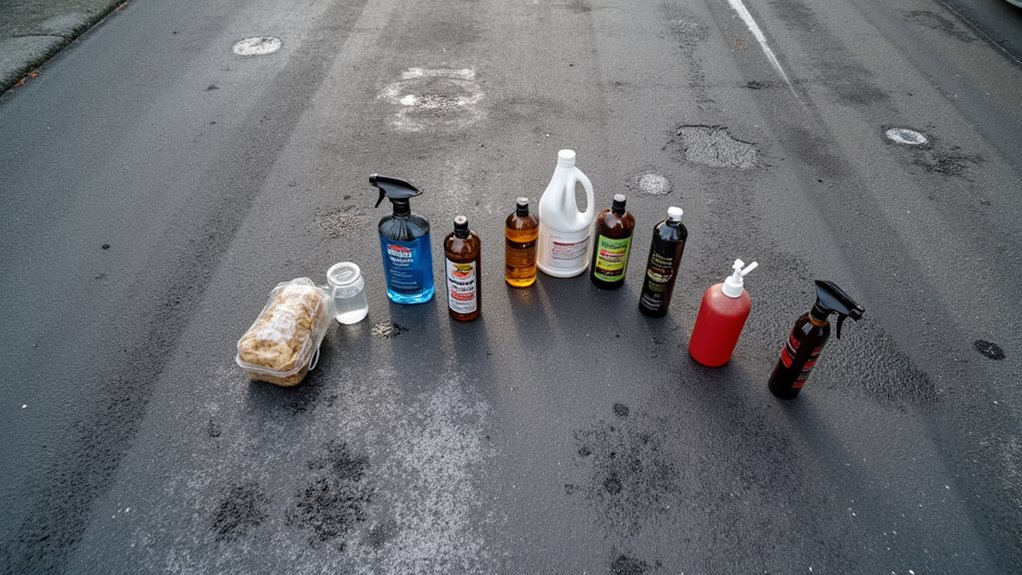
Most oil stain removers fail on asphalt for one fundamental reason: oil and asphalt share the same petroleum base. When motor oil hits your driveway, it doesn’t just sit on the surface—it dissolves the binder that holds everything together. This chemical similarity means standard cleaners can’t fully extract embedded oil without affecting the asphalt itself.
Here’s the critical problem: oil seeps below the surface within 6-12 months, evading any asphalt oil stain remover designed for topical treatment. Freeze-thaw cycles drive contamination deeper, while sun-rain exposure makes removal unpredictable. Cracks caused by oil damage allow water infiltration, expanding problem areas beyond the original stain.
Consumer-grade absorbents like kitty litter only capture surface oil. They’ll leave embedded stains untouched, resulting in permanent discoloration and structural weakening. You need an asphalt oil stain remover specifically formulated to penetrate without damaging the binder.
Fresh vs. Old Asphalt Oil Stains: What Works Best?
Fresh oil stains respond to treatment far differently than aged contamination, and timing determines which removal method you’ll need. Fresh oil stains respond to treatment far differently than aged contamination, and timing determines which removal method you’ll need. Understanding oil stains on asphalt vs concrete is especially important, since each surface absorbs and releases petroleum at very different rates.
Time is everything when treating oil stains—fresh spills need quick action, while aged stains demand specialized removal techniques.
Treating Fresh Stains
Act immediately by blotting puddles with a stiff broom. Apply kitty litter overnight for absorption, then follow with a degreaser. Simple Green outperforms competitors, nearly eliminating stains after one application with hard brushing. Purple Power achieves 70-75% effectiveness, while Dawn only manages 60% and leaves brown residue.
Tackling Old Stains
Aged oil penetrates deep into asphalt’s porous structure, requiring specialized treatment. Apply an oil stain remover asphalt-specific product thick like pancake batter. Let it sit 5-12 hours until dry and cracked, then sweep away the hardened poultice. Test stain firmness with a screwdriver—soft spots indicate burn-through requiring patch repair. Repeat applications for persistent contamination. When repairing damaged areas, you can replace the compromised asphalt with cold patch or hot asphalt.
Industrial Degreasers That Actually Remove Asphalt Oil Stains
When home remedies fall short on stubborn oil contamination, industrial-strength degreasers offer the chemical muscle needed to break down petroleum deposits embedded in asphalt’s porous surface. Unlike WD-40, which won’t remove oil stains from asphalt effectively, dedicated formulas like Simple Green Pro HD and Oil Eater deliver proven results as a degreaser for oil stains.
For the best oil stain remover for asphalt driveway applications, consider Zep Industrial Purple Degreaser’s high-alkaline formula for heavy contamination or Purple Power for budget-friendly effectiveness. These asphalt oil remover products penetrate porous surfaces to emulsify embedded petroleum. Since asphalt is petroleum-based, oil stains can soften and break down the surface over time, making prompt treatment essential.
Apply your chosen degreaser undiluted on severe stains, let it soak 5-15 minutes, then scrub with a stiff-bristled brush. You’ll typically achieve 70-100% stain removal with one or two applications.
Household Products That Remove Asphalt Oil Stains
Everyday household products can tackle asphalt oil stains without requiring a trip to the hardware store. Dawn dish soap serves as an effective asphalt oil stain remover when you pour it directly on fresh stains, scrub with a stiff bristle brush, and let it sit for 20-40 minutes before rinsing. Everyday household products can tackle asphalt oil stains without requiring a trip to the hardware store. If you’re researching how to clean oil off asphalt, Dawn dish soap serves as an effective asphalt oil stain remover when you pour it directly on fresh stains, scrub with a stiff bristle brush, and let it sit for 20–40 minutes before rinsing.
For absorption-based removal, the best oil stain remover for asphalt driveway applications includes cat litter and baking soda. Press cat litter into the stain overnight, then sweep and rinse. Alternatively, sprinkle baking soda, add minimal water, and scrub in circular motions.
Powdered laundry detergent offers another solution—cover the stain completely, add water, scrub thoroughly, and let it penetrate for one hour. These methods work best on newer stains; older ones require multiple applications.
How to Apply Oil Stain Remover on Asphalt Safely
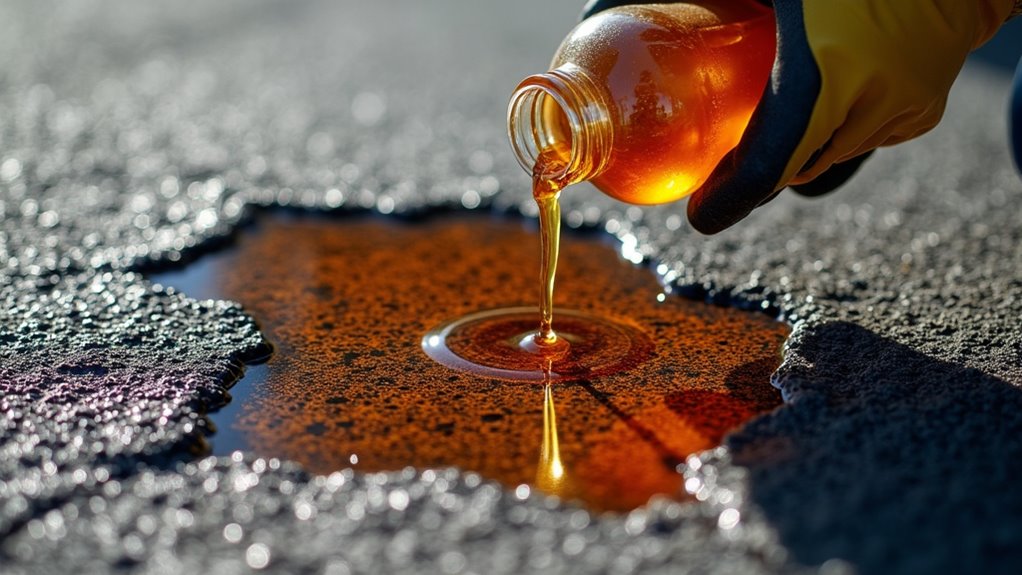
How effectively your oil stain remover works depends largely on proper surface preparation and application technique. Before applying any product, clear loose debris and blot excess surface oil from the stained area. You’ll want to test your chosen remover on an inconspicuous spot first to check for discoloration or damage.
Follow these essential application guidelines:
- Apply products only to cool, dry asphalt surfaces for best absorption.
- Work in temperatures between 60 and 80 degrees Fahrenheit, avoiding rain or wet conditions.
- Provide adequate ventilation when using powder-based removers during cleanup.
- Reapply as needed, since porous asphalt may release trapped oil over time.
For microbial formulas like ACT Asphalt Cleaner, simply mist with water to activate—no scrubbing required. Overnight products like Oil Eater form a powder you’ll sweep away.
Frequently Asked Questions
Can Oil-Eating Microbe Products Be Safely Used on Asphalt Surfaces?
Yes, you can safely use oil-eating microbe products on asphalt surfaces. Products like FORO® and EatOils™ won’t damage your pavement because they’re all-natural and chemical-free. The bacteria consume oils and produce harmless byproducts—just carbon dioxide and water. They’ll actually help re-oxidize damaged asphalt bitumen. You’ll need patience since biological processes take time, and you may require multiple applications for deep stains, but they’re effective and surface-safe.
What Temperature Range Works Best for Removing Oil Stains From Asphalt?
You’ll get the best results cleaning oil stains from asphalt in mild temperatures during early fall or late spring. Avoid freezing conditions, which create dangerous icy spots from leftover water, and extreme summer heat, when asphalt softens and becomes more vulnerable to damage. If you must clean during warm summer days, work early morning or late evening when the surface is cooler. This timing guarantees effective cleaning without compromising your pavement’s integrity.
Why Is WD-40 Not Recommended for Removing Oil Stains From Asphalt?
WD-40 isn’t recommended because its solvents can degrade your asphalt’s binder over time, potentially softening or discoloring the surface. It only works on surface-level stains—it can’t reach oil that’s penetrated deep into asphalt’s porous structure. Additionally, WD-40 leaves a non-water-soluble residue that attracts more dirt and complicates future cleaning. You’re better off using microbial cleaners, professional degreasers like Simple Green, or absorbents like cat litter for effective, asphalt-safe results.
How Long Should Cat Litter Sit on Asphalt Oil Stains Before Removal?
For fresh oil spills, you’ll want to let cat litter sit overnight to maximize absorption. Rub it in with your foot, then leave it for at least 8-12 hours before sweeping. However, you should know that cat litter only works effectively on wet, fresh spills—it won’t penetrate established stains that have soaked into asphalt pores. For older stains, you’ll need to follow up with a degreaser and scrubbing.
Can Mixing Different Oil Stain Removal Chemicals Create Hazardous Reactions?
Yes, mixing different oil stain removal chemicals can create hazardous reactions. You should never combine bleach with ammonia-based degreasers, as this produces toxic chloramine gas. Mixing bleach with acidic cleaners releases dangerous chlorine gas. Even combining hydrogen peroxide with vinegar creates corrosive peracetic acid fumes. Always read product labels carefully, use one cleaner at a time, rinse surfaces thoroughly between applications, and guarantee proper ventilation to protect yourself from toxic exposure.