


Oil stains require different removal approaches for each surface. Asphalt’s petroleum-based binder chemically bonds with spilled oil, causing softening and structural damage that demands gentle, surfactant-based degreasers. Concrete absorbs oil up to 28mm deep into its porous structure, so you’ll need aggressive scrubbing and poultice-based products to draw out embedded contamination. Fresh spills on asphalt need immediate attention, while concrete gives you slightly more reaction time before permanent staining sets in—understanding these differences shapes your entire cleanup strategy.
Why Oil Stains Hit Asphalt and Concrete Differently
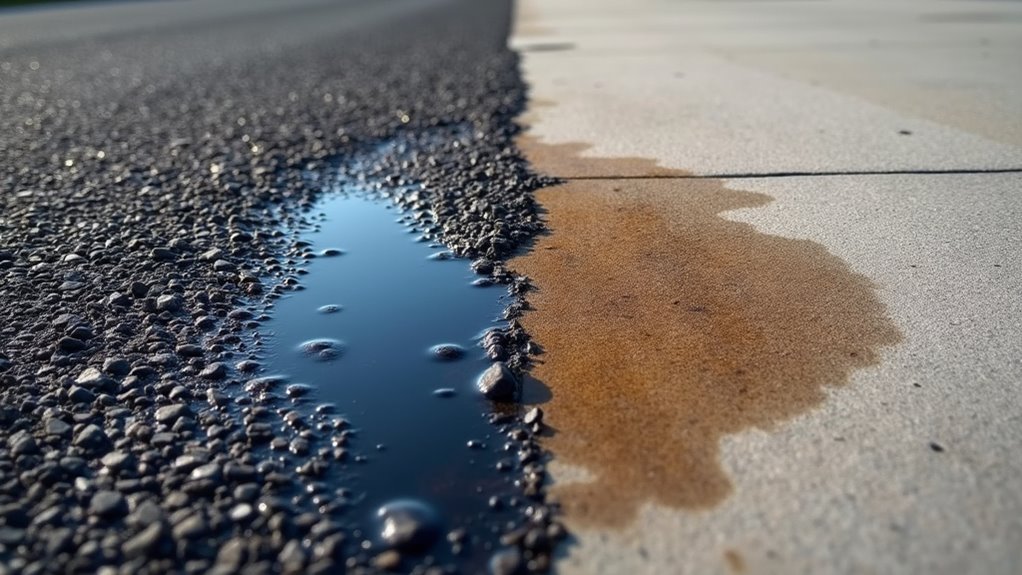
Oil doesn’t just sit on pavement—it interacts with it, and the chemistry differs dramatically between asphalt and concrete. When you’re dealing with oil stains on asphalt driveway surfaces, you’re facing a petroleum-on-petroleum reaction. The oil dissolves the bitumen binder, weakening structural integrity and creating soft spots prone to pitting and crumbling.
Oil stains on concrete driveway surfaces behave differently. Concrete’s pores absorb oil without chemical dissolution of the cement paste binder. Your concrete remains structurally firm—oil causes no softening effect. However, unsealed concrete allows oil to quickly soak deep into the pores, making removal increasingly difficult over time.
Fresh asphalt is particularly vulnerable since oxidized surfaces resist penetration better. Prolonged oil exposure accelerates binder breakdown in asphalt, leading to cracks, water intrusion, and eventual pothole formation. Concrete primarily suffers aesthetic damage and moisture-related spalling during freeze-thaw cycles.
How Deep Oil Penetrates Each Surface
Understanding the chemistry is one thing—knowing how far that damage extends matters more for choosing effective treatments.
Oil penetration depth depends on concrete porosity, concrete permeability, and liquid viscosity. Lower viscosity oils penetrate faster and deeper than thicker products. In standard concrete, non-ethylated fuel reaches 28mm after 1000 hours. Polymer-modified surfaces dramatically reduce this penetration.
| Surface Type | Penetration Depth | Exposure Time |
|---|---|---|
| Standard Concrete | 28mm | 1000 hours |
| Vinyl-Acrylic Modified | 20mm | 1000 hours |
| Styrene-Butadiene Modified | 5mm | 1000 hours |
| Asphalt | Surface-level absorption | Immediate |
You’ll notice asphalt absorbs oil differently—it bonds chemically rather than penetrating through pores. This distinction determines whether you’re extracting oil from depth or breaking molecular bonds at the surface. The polymer modifications work because they create non-continuous membranes on cement grains, which impedes water and other liquids from accessing the concrete’s internal structure.
Fresh Oil Spill Response: Asphalt vs Concrete
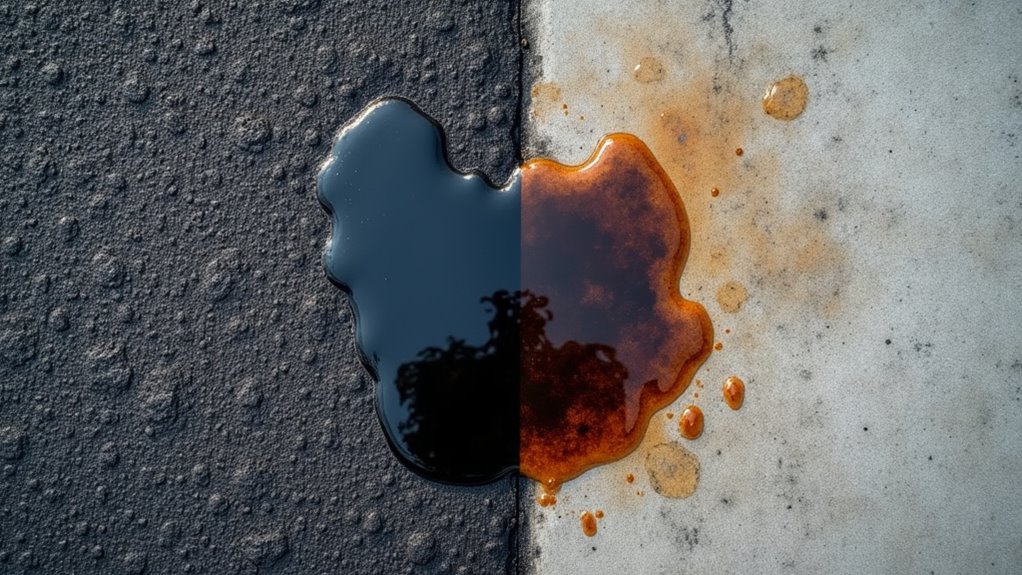
How quickly you respond to a fresh oil spill determines whether you’re facing a simple cleanup or permanent surface damage. When dealing with an oil stain on asphalt driveway surfaces, immediate blotting methods are critical because petroleum-based asphalt softens and bonds with oil rapidly, especially on hot days.
For asphalt initial cleanup steps, apply cat litter or sawdust immediately, allowing 30-60 minutes of dwell time before sweeping. Use rags to blot excess oil without spreading it further. This urgency is especially important since asphalt driveways already require regular resealing every 2-3 years to protect from the elements, and oil damage can compromise that protective barrier.
Concrete offers slightly more reaction time due to its rigid structure, but don’t delay. Learning how to remove oil stains from driveway concrete requires prompt wiping before the alkaline surface reacts and causes discoloration. Address spills within minutes to prevent penetration up to one-quarter inch deep.
Best Degreasers for Concrete Oil Stains
Why do some degreasers work better than others on concrete oil stains? Concrete’s porous structure allows oil to penetrate deeply, requiring products that can reach embedded contaminants. When you need to remove oil from driveway surfaces, choose formulations designed for porous substrates.
Effective options for treating oil stains on driveway concrete include:
- Pour-N-Restore: Combines citrus degreaser with absorbent powder for deep extraction
- Oil Eater: Water-based, nonacidic formula at 10:1 dilution for fresh stains
- CAF Eximo: Microbial action breaks hydrocarbon chains over 4 weeks
- PROSOCO Oil & Grease Stain Remover: Poultice application draws out deep-set oil
- ACT Concrete Cleaner: Enzyme-based treatment for petroleum contamination
Understanding how to remove oil from blacktop differs considerably—these concrete-specific products may damage petroleum-based asphalt surfaces.
Best Degreasers for Asphalt Oil Stains
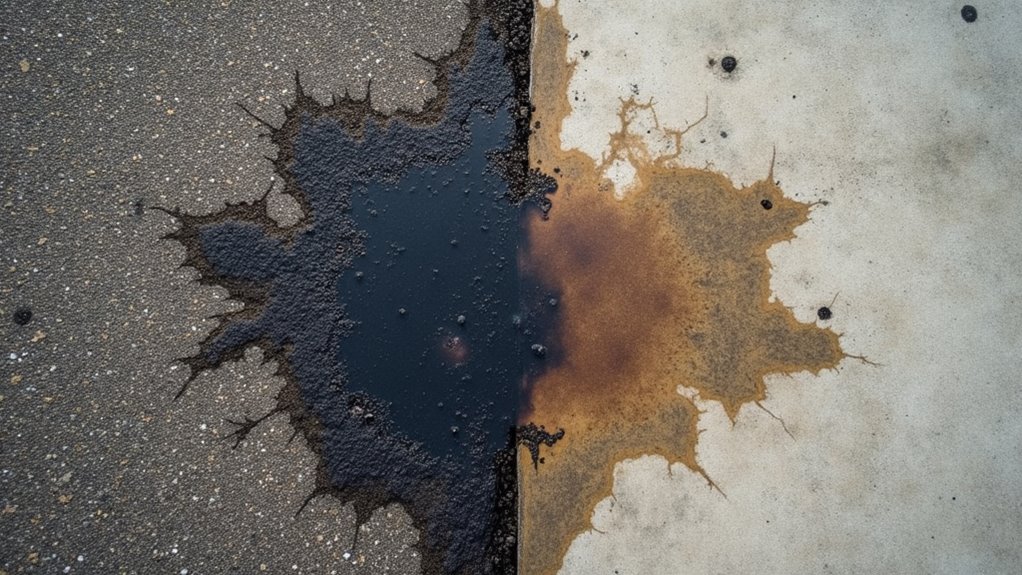
When tackling oil stains on asphalt, you’ll need to choose between biodegradable options like Asphalt Kingdom Universal Degreaser and professional-grade solutions like Purple Power or Simple Green. Each product category offers distinct advantages—eco-friendly formulas prioritize safety for kids and pets, while industrial-strength chemicals deliver superior penetration into asphalt’s porous surface. Your application method and dwell time will determine whether you achieve complete stain removal or simply reduce visible discoloration.
Biodegradable Degreaser Options
For asphalt surfaces, you’ll want biodegradable degreasers that break down oil without attacking the petroleum-based binder in blacktop.
These five options deliver effective results while remaining eco-friendly:
- Asphalt Kingdom Universal Degreaser – surfactant-based, non-ammonia formula that’s safe around pets and children
- ACT Asphalt Cleaner – microbial dry powder that converts petroleum stains to oxygen and water without scrubbing
- EATOILS BT200 – bacterial spore formula providing continuous microbial action for up to 72 hours
- Oil Eater Cleaner & Degreaser – highly concentrated, dilutable solution available at major retailers
- AVIA-OSR Oil Stain Remover – VOC-free liquid that penetrates porous surfaces to absorb hydrocarbons
Each product eliminates harsh acids and hazardous chemicals that could damage asphalt’s structural integrity. You’ll get effective oil removal while protecting your blacktop investment.
Professional-Grade Chemical Solutions
Although biodegradable options work well for routine maintenance, professional-grade chemical solutions deliver the aggressive cleaning power you’ll need for stubborn, set-in oil stains on asphalt.
Zep Industrial Purple Degreaser’s high-alkaline formula annihilates tough grease and oil residues from vehicles, making it ideal for auto shops and heavy garage use. You’ll need gloves and eye protection due to its strength, but the concentrated version cuts through baked-in stains effectively.
For sealed asphalt surfaces, Simple Green Pro HD offers a non-corrosive, non-acidic alternative that lifts automotive fluids and tire marks without damaging your driveway.
Techniseal Pro-Grade Oil & Grease Remover takes a different approach—it morphs from liquid to powder as it dries, pulling embedded petroleum products from the surface. This industrial-strength cleaner won’t discolor asphalt-like materials during treatment.
Application and Dwell Time
Proper application technique determines whether your degreaser penetrates the stain or simply sits on the surface. Before applying any product, scrub the entire area with a stiff broom to remove loose dirt and blot existing oil puddles.
For ideal results, follow these application guidelines:
- Apply degreaser to cool, dry surfaces in temperatures between 60-80 degrees
- Use a stiff bristle deck brush to work product into pavement nooks
- Test on an inconspicuous area first, especially on unsealed asphalt
- Avoid application before rain or on wet ground
- Repeat applications 1-2 times for severe or older stains
Oil Eater’s overnight formula requires extended dwell time to allow microbes to break down petroleum. Simple Green and similar degreasers need active scrubbing rather than passive soaking for effective penetration.
How to Remove Oil Stains From Each Surface
You’ll need different cleaning approaches for concrete and asphalt since their surface compositions react differently to degreasers and application methods. For concrete, you can use aggressive scrubbing techniques and poultice-based products that penetrate deep into the porous material, while asphalt requires gentler treatments that won’t dissolve its petroleum-based binder. Following the correct product application steps for each surface type guarantees you’ll remove the stain without damaging your driveway or parking area.
Concrete Cleaning Steps
When oil hits concrete, you’re working against the clock—fresh spills respond to simple absorbents, while old stains demand aggressive chemical treatment.
Fresh Stain Protocol
Cover immediately with clay-based cat litter, grind it in with your foot, and leave for one hour before sweeping. Rinse with a hose and repeat as needed.
Old Stain Protocol
For penetrated stains, apply these methods in sequence:
- Spray brake cleaner liberally, cover with non-clumping litter, wait 10 minutes, brush off
- Apply Goof Off Concrete Cleaner—it penetrates up to 1/8 inch deep
- Scrub Dawn dish soap with a drill brush attachment
- Pour boiling water before applying Purple Power degreaser
- Finish with a pressure washer for stubborn residue
Seal your concrete after cleaning to prevent future penetration.
Asphalt Treatment Methods
Asphalt requires a fundamentally different approach than concrete because it’s petroleum-based—aggressive solvents that work on concrete will dissolve your driveway along with the stain. Asphalt requires a fundamentally different approach than concrete because it’s petroleum-based—aggressive solvents that work on concrete will dissolve your driveway along with the stain. When planning how to remove oil stains from asphalt driveway, always prioritize gentle, asphalt-safe cleaning methods that lift the oil without breaking down the binder that holds the surface together.
For fresh spills, apply non-clumping kitty litter immediately. Stomp it into the stain, leave it overnight, then sweep away the absorbed oil. Baking soda works similarly—sprinkle it on, scrub, wait 30-60 minutes, and rinse.
For established stains, use dish soap or laundry detergent with a stiff brush. Dawn proves effective on stains up to five days old, though you’ll likely need two applications. TSP paste offers stronger degreasing power—scrub it on, let it sit 30 minutes, then rinse.
Steam pressure washing delivers the most thorough results. If stains persist after multiple attempts, sealcoating covers them while protecting your surface with a fresh asphalt layer.
Product Application Tips
Because concrete and asphalt have fundamentally different compositions, you’ll need to match your product type to your surface. For concrete, apply penetrative removers like PROSOCO ReNew or poultice-style products that draw embedded oil out as they dry. Spread poultices thickly, let them cure completely, then sweep away residue.
For asphalt, use surfactant-based degreasers that lift oil without softening the petroleum binder. Apply diluted solutions like Oil Eater or Simple Green Pro HD, allow 5-15 minutes of contact time, then rinse thoroughly. For asphalt, use surfactant-based degreasers that lift oil without softening the petroleum binder. When choosing the best oil stain remover asphalt surfaces can tolerate, focus on products formulated specifically for petroleum-based pavements. Apply diluted solutions like Oil Eater or Simple Green Pro HD, allow 5–15 minutes of contact time, then rinse thoroughly.
Key application tips for both surfaces:
- Sweep debris before applying any product
- Follow label dilution ratios to prevent surface damage
- Wear eye protection when using high-alkaline cleaners like Zep Purple
- Work quickly on asphalt to avoid binder degradation
- Dispose of runoff according to local regulations
Why Pressure Washing Can Make Oil Stains Worse
Pressure washing seems like an obvious fix for oil stains, but it can actually worsen the problem—especially on asphalt surfaces. Pressure washing seems like an obvious fix for oil stains, but it can actually worsen the problem—especially on asphalt surfaces. If you’re trying to remove old oil stains from asphalt, relying on high pressure alone often drives the oil deeper into the pavement instead of lifting it out.
When you focus high-pressure water on one spot, you erode the asphalt’s surface. A zero-degree nozzle concentrates the jet effectively but risks significant damage. Starting closer than one foot causes immediate harm, and inconsistent sweeping motions expose areas to prolonged pressure. Even a 3000 PSI washer becomes destructive without proper distance control.
Here’s another issue: pressure washing concrete without chemicals still creates runoff that stains adjacent asphalt. Church managers and asphalt contractors have documented unprecedented staining on months-old surfaces simply from sidewalk cleaning residue transferring to curbs.
Hot water dissolves oil efficiently but amplifies asphalt vulnerability since asphalt is petroleum-based. You’re fundamentally attacking the material’s composition while trying to clean it.
Signs You Need Professional Oil Stain Removal
When DIY methods fail to lift persistent oil stains, you’re likely dealing with contamination that’s migrated deep into the surface material. Household degreasers and absorbents like cat litter work only on fresh spills—not aged stains that have cured into porous concrete or bonded with petroleum-based asphalt.
Key indicators you need professional intervention:
- Dark patches persist despite repeated cleaning attempts
- Surfaces remain slippery or sticky after degreasing
- Baking soda and store-bought cleaners leave bright rings or push stains deeper
- Stains show spreading discoloration with faint outlines from oil migration
- High-traffic business areas display visible contamination affecting reputation
Professional removal requires specialized equipment, controlled chemistry, and proper pH neutralization. Embedded oil residues demand steam cleaning and multiple treatment passes that DIY approaches simply can’t replicate effectively.
Preventing Future Oil Stains on Your Driveway
Three proactive strategies—regular sealing, immediate spill response, and consistent vehicle maintenance—prevent most oil stains before they become permanent problems.
| Prevention Method | Concrete | Asphalt |
|---|---|---|
| Sealing Frequency | Every 5-7 years | Every 3-5 years |
| Absorbent Response Time | Within minutes | Within minutes |
| Surface Porosity | Less porous | More porous |
You’ll want to seal your driveway according to its material type, as asphalt’s petroleum-based composition requires more frequent protection. When spills occur, apply non-clumping kitty litter immediately and let it sit for 30 minutes before sweeping.
Don’t overlook vehicle maintenance—fix leaks promptly and place cardboard under vehicles awaiting repairs. Store oil containers in secure locations with secondary containment systems to eliminate accidental spills entirely.
Frequently Asked Questions
Can I Use the Same Oil Stain Remover on Both Asphalt and Concrete?
No, you shouldn’t use the same remover on both surfaces. Concrete cleaners often contain solvents that’ll dissolve asphalt’s petroleum-based binding agents, causing surface degradation. For concrete, you can use products like Rust-Oleum or PROSOCO’s poultice removers that penetrate porous surfaces. For asphalt, stick with absorbent or enzyme-based cleaners that avoid harsh solvents. Always test a small area first to confirm compatibility before full application.
Will Oil Stains Void My Driveway Warranty or Affect Future Sealcoating?
Yes, oil stains can void your driveway warranty and compromise sealcoating adhesion. On asphalt, oil breaks down the binder, causing structural damage that warranty providers often exclude as neglect. On concrete, it reacts with cement paste, risking coverage denial. For sealcoating, oil residue prevents proper bonding—you’ll need primer application or professional deep cleaning. Remove stains promptly using absorbents and degreasers, then schedule sealcoating every 2-3 years for protection.
How Long Do Oil Stains Take to Cause Permanent Damage?
Oil stains cause permanent damage faster than you’d expect. On concrete, deep staining becomes irreversible within 1-2 weeks without proper cleaning. Asphalt suffers permanent softening and cracking after just 1-3 months of exposure. In freeze-thaw climates, damage accelerates twice as fast. You’ll want to treat stains immediately—asphalt begins breaking down upon contact since oil dissolves its petroleum-based binder, while concrete traps oil in its pores within hours.
Are Oil Stain Removers Safe to Use Around Pets and Landscaping?
Many oil stain removers are safe for pets and landscaping when you choose the right formulations. Look for microbial-based products like Oil-Out that use naturally occurring microbes instead of chemical solvents—they won’t harm soil, vegetation, or waterways. Biodegradable, eco-certified options break down hydrocarbons into carbon dioxide and water. Avoid traditional chemical removers that create toxic residues. Always verify products carry pet-safe certifications and apply according to manufacturer directions.
Can Old, Set-In Oil Stains Ever Be Completely Removed From Driveways?
Yes, you can remove old, set-in oil stains, but complete elimination isn’t guaranteed. Your success depends on stain age, depth, and your driveway’s porosity. You’ll need commercial-strength poultice products that pull contamination from deep within the surface—apply these for 5-12 hours. Expect multiple treatments for stubborn stains. Household remedies like kitty litter won’t work on established stains; professional-grade degreasers designed for porous surfaces deliver markedly higher success rates.