
Parking lot patching can fix potholes, deteriorated crack edges, small areas of alligator cracking, localized rutting, raveling, and delamination. The key is matching repair depth to the damage. You’ll use partial-depth patching when distress stays in the asphalt over a sound base. You’ll need full-depth patching when it reaches the base or subgrade. Widespread fatigue cracking means you’re facing reconstruction, not patching. Below, you’ll see which method fits each problem and how to prioritize repairs.
Key Takeaways
- Parking lot patching can repair potholes, deteriorated crack edges, small alligator-cracked areas, localized rutting, raveling, and delamination.
- Partial-depth patching suits distress confined to the asphalt surface, while full-depth patching addresses damage reaching the base or subgrade.
- Potholes are fixed by throw-and-roll (temporary), semi-permanent squaring and compacting, or permanent removal and replacement, including base repair if needed.
- Alligator cracking penetrating full pavement depth requires full-depth patching, while widespread fatigue cracking signals reconstruction rather than patching.
- Prioritize potholes over 50 mm and ruts over 12 mm immediately; recurring or settling patches indicate unresolved drainage or base problems.
What types of asphalt damage can parking lot patching repair
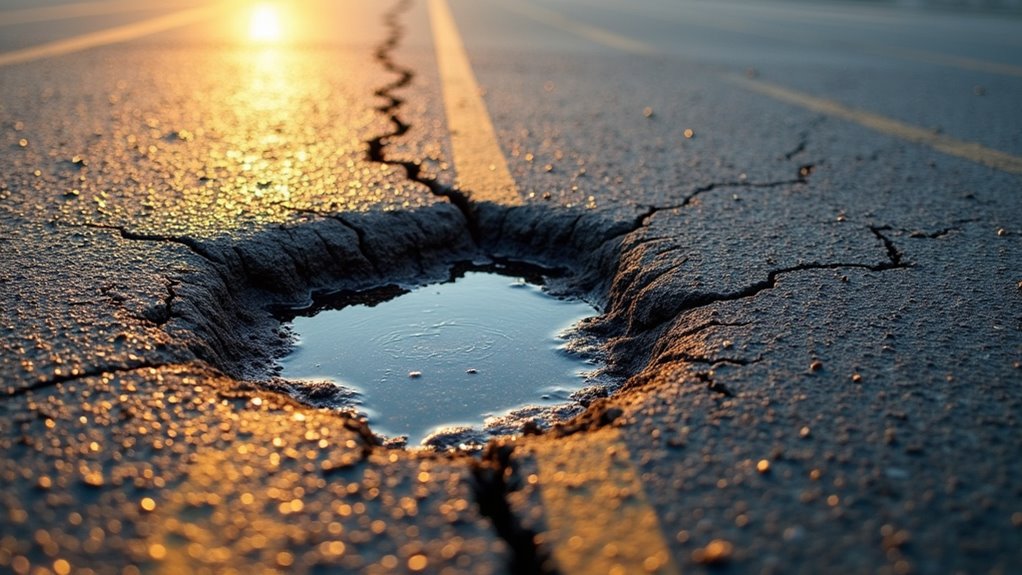
Parking lot patching repairs potholes, deteriorated crack edges, small areas of alligator cracking, localized rutting, raveling, and delamination. It works on localized asphalt damage that hasn’t spread across the entire pavement. If the distress stays within the asphalt surface, a partial-depth patch handles it. When damage reaches the base or subgrade, you’ll need a full-depth patch that replaces weakened underlying layers. FHWA rates potholes deeper than 50 mm as high severity, so measure depth before choosing a method. Quick-fill repairs work temporarily, but permanent asphalt parking lot repairs remove damaged material first. Your parking lot repair cost rises directly with depth and extent. If you’re seeing widespread fatigue cracking, recurring distress, or failed patches, you’ve likely outgrown patching and should evaluate full reconstruction instead.
Which patching method fits which type of damage
Partial-depth patching fits distress that stays within the asphalt surface over a sound base, while full-depth work fits damage that reaches the base or subgrade. To match the method to the damage, measure two things: depth and extent.
| Damage Type | Typical Condition | Recommended Method |
|---|---|---|
| Raveling, delamination, shallow cracks | Surface layer only | Skin, spray, or partial-depth patch |
| Potholes, localized rutting | Confined to asphalt layers | Semi-permanent or partial-depth patch |
| Alligator cracking, settlement | Full depth, weak base | Full-depth patch with base repair |
Throw-and-roll fills only buy time when weather or traffic blocks permanent work. For semi-permanent repairs, clean and square the hole before compacting the mix. When failed patches recur or distress covers large areas, you’re past patching and should plan for reconstruction.
How are potholes patched
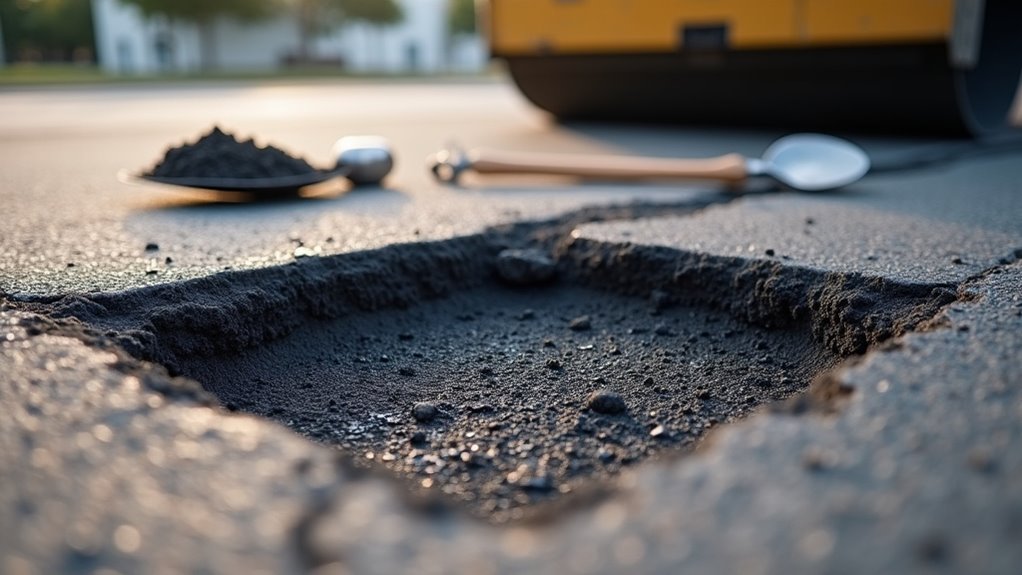
Potholes are patched with one of three methods, chosen by the hole’s depth, the condition of the base, and how long the repair needs to last. FHWA rates potholes under 25 mm deep as low severity, 25 to 50 mm as moderate, and over 50 mm as high.
Pothole repair depends on depth, base condition, and required lifespan. FHWA classifies holes under 25 mm as low severity and over 50 mm as high.
- Throw-and-roll: You fill the hole and compact the mix with truck tires. It’s fast, but it’s temporary.
- Semi-permanent: You clean and square the hole, then place and compact the mix for a tighter, longer-lasting fit.
- Permanent: You remove the damaged material, repair the base if needed, and replace the asphalt.
Use temporary fills when the season, material availability, or traffic prevents permanent work. Then schedule a proper repair before the hole reopens.
How are cracks and alligatored areas handled
Cracks are handled by sealing or patching, depending on their pattern, while alligatored areas are repaired with partial-depth or full-depth patches, or with reconstruction when the damage is widespread. Start by identifying the pattern. Longitudinal, transverse, block, and edge cracks are often isolated, and you can seal any wider than 1/4 inch to keep water out of the base. Where crack edges have deteriorated, a partial-depth patch removes and replaces the damaged surface material. Addressing cracks early matters, since interconnected fatigue cracking often breaks apart into a pothole.
Alligator cracking needs closer evaluation. These interconnected cracks usually form in wheel paths and drive lanes, signaling fatigue from repeated loading. If the distress is small and confined to the surface layer, you can use a partial-depth repair. If it extends through the pavement, you’ll need a full-depth patch, often with base or subgrade repair. Widespread fatigue cracking calls for reconstruction instead of patching.
What is the difference between surface and full-depth repair
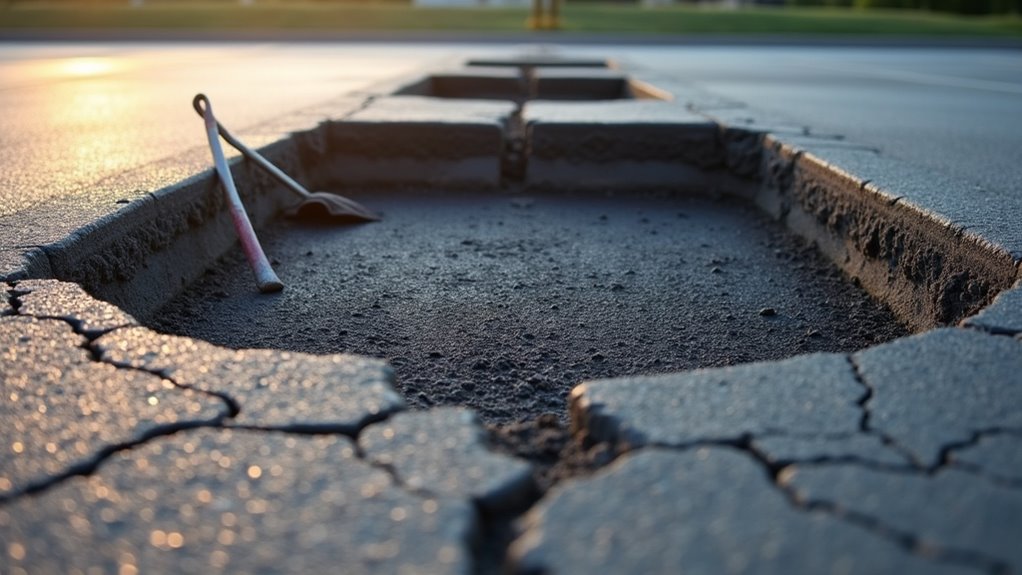
Surface repairs stay within the asphalt layer, while full-depth repairs extend through the entire pavement structure and often include base or subgrade work. You’ll choose between them based on distress type, depth, and whether the underlying layers are sound.
- Surface (partial-depth) repair: You remove and replace only the damaged asphalt. It suits raveling, delamination, shallow rutting, and isolated cracking confined to the top layer. Thin skin or spray patches handle minor surface loss.
- Full-depth repair: You excavate through the pavement to correct weakened base or subgrade. It’s indicated for alligator cracking that penetrates the full depth and for recurring failures.
- Reconstruction: When distress is widespread or patches keep failing, you’ll need to rebuild rather than patch.
Settlement in an existing patch signals that the underlying cause hasn’t been fixed.
When is that not enough on its own
Patching alone won’t hold when distress reaches below the asphalt or keeps coming back. If alligator cracking runs through the full pavement depth, you’ll need a full-depth patch that also repairs the weakened underlying base or subgrade. Otherwise, fresh asphalt simply rides on failing support and cracks again. Watch your existing patches, too. Settlement, distortion, or rutting deeper than 12 mm signals an unresolved cause, often poor drainage or inadequate pavement strength. Correct that cause, or the same failure returns. Season, material shortages, or traffic may also force a temporary throw-and-roll fix. Treat it as a stopgap and schedule permanent work. Finally, when distress is widespread, recurring, or spread across many failed patches, you’ve exceeded what patching can do. Reconstruction becomes the cost-effective choice.
How do you schedule parking lot patching
Schedule parking lot patching by severity, ranking each defect using FHWA thresholds and then assigning timing, because the same distress you’d monitor today can become tomorrow’s pothole:
- Immediate: Patch high-severity potholes deeper than 50 mm and ruts over 12 mm. If season or materials prevent permanent work, place a temporary throw-and-roll fill and schedule the permanent repair.
- Near term: Address moderate potholes (25 to 50 mm), ruts of 6 to 12 mm, and alligator cracking before fatigue breaks the surface apart.
- Routine maintenance: Seal cracks wider than 1/4 inch and treat low-severity raveling during planned work.
Book permanent patching when weather allows proper compaction. Schedule traffic closures so you can remove damaged material and repair the base. If failed patches keep recurring, plan for reconstruction instead.
Keep Parking Lot Damage From Spreading
V&F Paving provides commercial asphalt repair and parking lot paving services for property owners dealing with potholes, cracking, surface deterioration, and localized pavement failures. Proper patching can address isolated damage before it spreads, while deeper problems may require more extensive pavement work. Call (203) 624-2449 to discuss your parking lot and get an estimate.
Frequently Asked Questions
How Long Does a Typical Asphalt Parking Lot Patch Last?
There’s no single lifespan; your patch lasts as long as its method and foundation allow. Throw-and-roll fills are temporary, so you’ll likely redo them. Semi-permanent patches, where you clean and square the hole first, hold longer. Permanent repairs that remove damaged material and fix weak base or subgrade last longest. If you see settlement, distortion, or recurring failures, you’re facing underlying problems that patching won’t solve; plan for reconstruction instead.
How Much Does Parking Lot Patching Usually Cost per Square Foot?
There’s no single per-square-foot price in this guidance, so you’ll need local contractor quotes. Your cost hinges on repair scope. Temporary throw-and-roll fills typically cost least, while semi-permanent repairs add cleaning and squaring labor. Partial-depth patches stay within the asphalt surface, but full-depth patches extend through the pavement and may require base or subgrade repair, raising costs. If you’re facing widespread failed patches, reconstruction may prove more economical than repeated patching.
How Soon Can Vehicles Drive or Park on a Freshly Patched Area?
You can usually drive on a hot-mix patch once it’s cooled and compacted, often within a few hours, but you’ll get better results waiting about 24 hours before parking. Temporary throw-and-roll patches take traffic immediately, since truck tires compact them. Avoid heavy trucks, sharp turns, and stationary loads for several days, especially in hot weather. Since cure times vary with mix, depth, and temperature, confirm timing with your paving contractor.
Will a Patched Area Match the Color of the Existing Pavement?
No, not at first. Fresh hot-mix asphalt looks deep black, while your existing pavement has oxidized to gray, so you’ll see a clear contrast. Sun, traffic, and weather gradually lighten the patch, narrowing the difference over months or years, though it rarely disappears entirely. If uniform appearance matters, you can sealcoat the entire lot after the patch cures. Sealcoating also helps protect the surrounding surface from water and oxidation.
Does Weather or Temperature Affect the Quality of Asphalt Patching?
Yes, weather and season can limit how durable your patch is. When cold conditions, material availability, or traffic prevent permanent work, you’ll often get a temporary repair instead. Crews may use throw-and-roll, filling the hole and compacting mix with truck tires. For lasting results, you’ll want permanent work that removes damaged material, replaces it, and repairs the base if needed. Poor drainage also undermines patches, so address nearby water sources.