
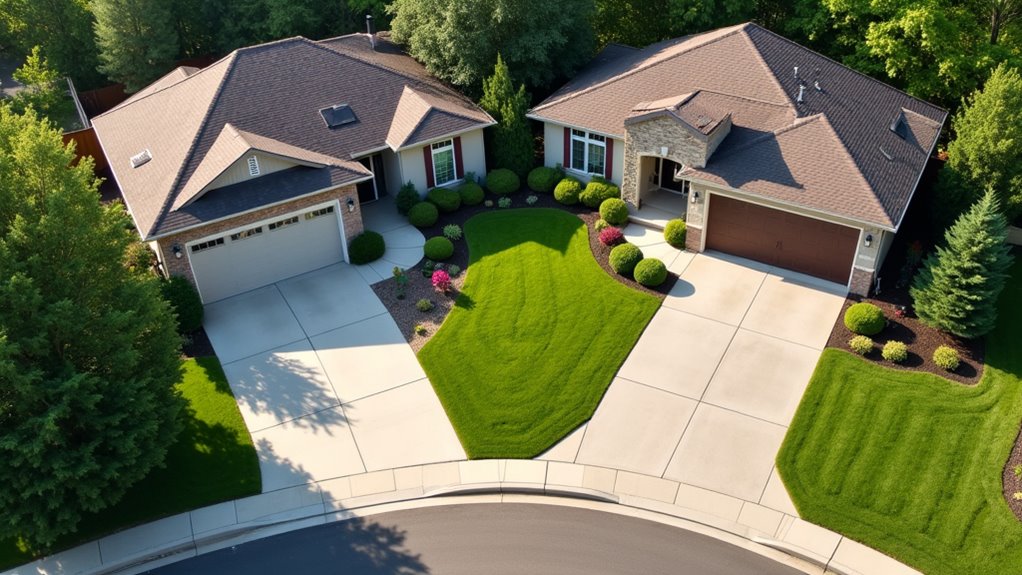
You should consider asphalt driveway replacement when you spot alligator cracking, cracks wider than 1/4 inch, or damage covering more than 30% of the surface. Recurring potholes that won’t stay patched signal base erosion that patches can’t fix. Standing water after rain confirms drainage failure actively breaking down your foundation. If your driveway’s between 15-20 years old with multiple issues, replacement beats endless repairs. Understanding each warning sign helps you make the right call.
How Long Does an Asphalt Driveway Last Before Replacement?
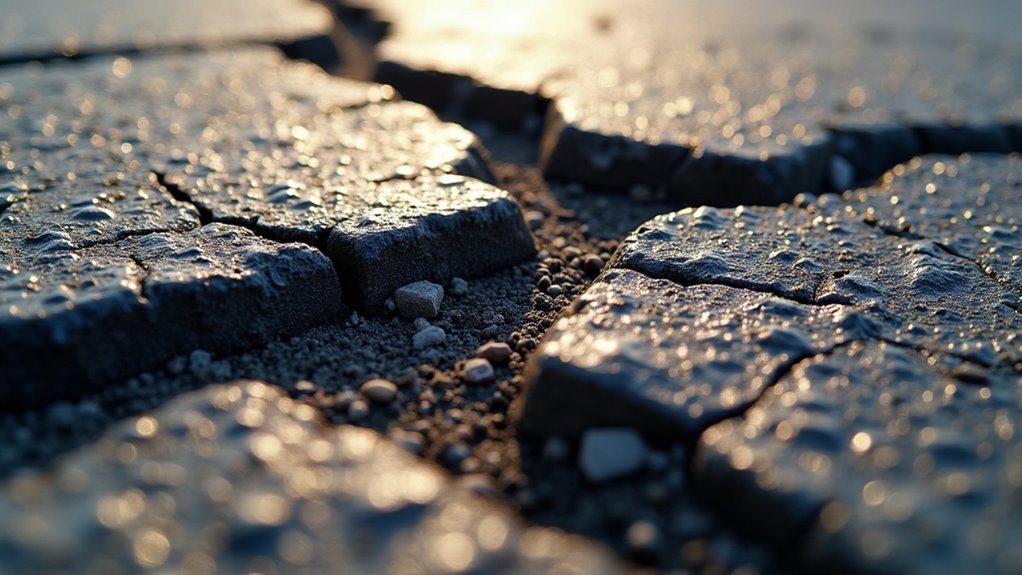
How long can you expect your asphalt driveway to perform before replacement becomes inevitable? Most asphalt driveways last between 15 to 30 years, though this range depends heavily on installation quality, climate exposure, and maintenance practices.
Understanding asphalt driveway replacement timing requires recognizing how variables affect longevity. A professionally installed driveway with a solid 3-inch hot mix base can reach 25 to 30 years. Conversely, thin installations with poor preparation fail within 8 to 10 years. The strength of the base, soil types, and drainage capabilities beneath your driveway are the most impactful factors determining overall lifespan.
The driveway aging process stages accelerate based on your maintenance level. Minimal care yields 15 to 20 years, while excellent upkeep—including sealcoating every 3 to 5 years—extends performance to 30+ years. Heavy vehicle traffic and harsh freeze-thaw cycles shorten these timelines regardless of other factors.
Which Cracks Mean Your Driveway Can’t Be Saved?
Three distinct crack patterns signal when your asphalt driveway has passed the point of salvageable repair.
Alligator Cracking
When you notice interconnected cracks resembling alligator skin spreading across your driveway, you’re facing base layer failure. This pattern indicates structural fatigue that surface repairs can’t address. The underlying damage persists regardless of patching attempts.
Alligator cracking reveals base layer failure beneath your driveway—structural damage that no surface patch can fix.
Crack Size Thresholds
Cracks exceeding one-quarter inch wide or two inches deep confirm irreparable damage. You can’t restore structural integrity once cracks reach these dimensions. Growing cracks rapidly exceed any repair viability. Water intrusion through these openings accelerates deterioration by eroding the base material beneath.
Extent Assessment
If damage covers more than 30% of your driveway’s surface, replacement becomes mandatory. Multiple failing areas indicate a compromised base that won’t support resurfacing. At this stage, you’ll need complete repaving to restore proper load distribution capacity and long-term stability. If damage covers more than 30% of your driveway’s surface, replacement becomes mandatory. When deciding whether to driveway resurface or replace, multiple failing areas usually indicate a compromised base that won’t support resurfacing. At this stage, you’ll need complete repaving to restore proper load distribution capacity and long-term stability.
Why Potholes Keep Coming Back After You Patch Them?
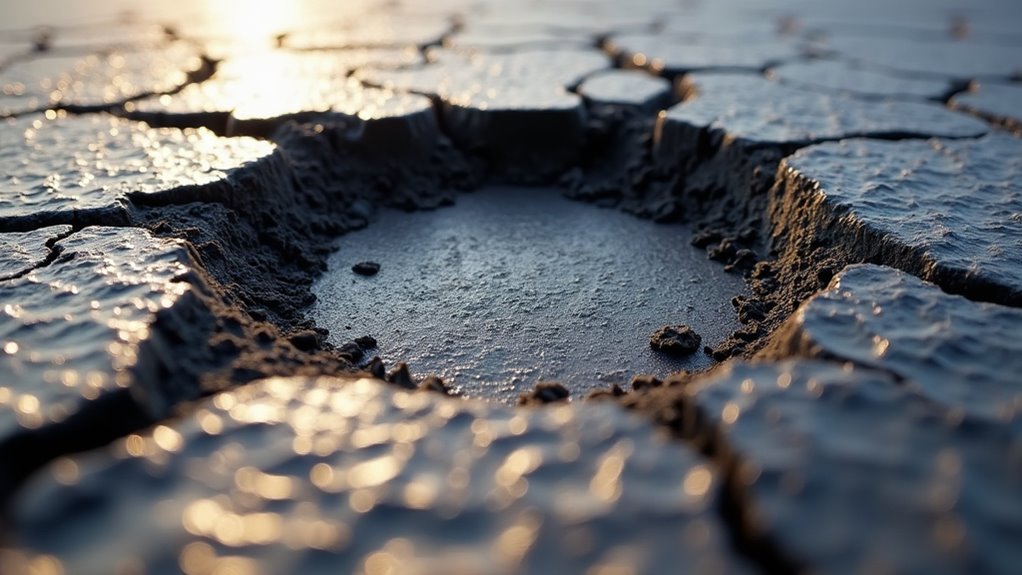
Persistent potholes reveal underlying conditions that surface patches can’t address. When you’re experiencing repeated patch failure asphalt problems, the culprit often lies beneath the visible surface. Structural base erosion asphalt damage allows water to infiltrate and destabilize your foundation, creating a cycle where new potholes form despite your repair efforts.
Several factors accelerate this pattern. Temporary cold patch materials fail because they’re designed for emergencies, not permanent solutions. Heavy traffic dislodges patches quickly, reducing lifespan by up to 30%. Poor drainage permits water pooling that erodes your base layer continuously. Human error during application, such as insufficient compaction or inadequate bonding agents, can also cause premature patch failure regardless of material quality.
If you’re patching the same areas repeatedly, you’re likely facing foundational breakdown. The total repair cost eventually exceeds material savings, making replacement more economical than continued patching.
Drainage Problems That Force Full Driveway Replacement
When water pools on your driveway after rain instead of draining properly, you’re seeing early signs of structural failure that patching won’t fix. Water flowing toward your home’s foundation creates erosion beneath the asphalt, undermining the base layer and causing soft spots that spread over time. These drainage failures compromise your driveway’s load-bearing capacity, making full replacement the only viable long-term solution.
Standing Water After Rain
Standing water after rain signals drainage failure that often necessitates complete driveway replacement. When puddles persist more than 24 hours, you’re witnessing active driveway instability progression that accelerates structural breakdown. Poor grading, settling, and base deterioration create depressions where water collects and penetrates the asphalt surface.
Understanding subgrade failure timing driveway issues helps you act before collapse occurs:
- Water seeps through porous asphalt, washing away foundation aggregate
- Saturated sub-base loses load-bearing capacity under vehicle weight
- Freeze-thaw cycles expand trapped moisture, creating extensive cracking
- Voids form beneath the surface, leading to sinkholes
- Persistent pooling resists minor repairs, indicating systemic failure
You’ll need full replacement when drainage problems compromise the foundation beyond correction. Addressing these indicators early prevents costly emergency repairs.
Water Draining Toward Home
Water draining toward your home instead of away from it creates foundation risks that demand immediate attention and often full driveway replacement.
When runoff toward foundation occurs consistently, you’re facing more than a surface problem. Improper grading allows water to pool against your home’s base, leading to moisture intrusion, settling, and structural compromise. A high water table intensifies these risks substantially.
You’ll notice accelerated structural damage as water infiltrates the subgrade, undermining both your driveway and nearby structures. Cracks form prematurely, and the pavement loses its load distribution capacity.
Professional grade measurement determines whether correction is possible. However, persistent drainage issues despite repairs typically confirm the need for complete replacement. Your new installation must incorporate proper slope calculations and drainage planning that accounts for surrounding terrain and building layout.
Soft Spots Weaken Foundation
Soft spots forming across your driveway’s surface signal that moisture has already compromised the foundation beneath. These soft spots formation patterns indicate subbase erosion that’s undermining your pavement’s structural capacity. You’ll notice depressions developing where water has weakened underlying soil layers.
Foundation weakening signs demand immediate assessment to prevent complete pavement failure:
- Standing water creates localized soft areas that spread outward over time
- Freeze-thaw cycles expand trapped moisture, accelerating subsurface damage
- Edge erosion compromises adjacent sections, destabilizing the entire driveway
- Rutting patterns reveal chronic drainage problems affecting load distribution
- Subsidence from soil washout produces uneven surfaces prone to collapse
When soft spots appear repeatedly despite repairs, your foundation can’t support resurfacing efforts. You’re facing irreversible subbase damage that requires complete driveway replacement to restore structural integrity.
Fading, Crumbling, and Warping: Hidden Replacement Triggers
When your asphalt driveway fades from black to gray, UV damage has stripped away essential oils that keep the surface flexible and crack-resistant. You’ll notice crumbling edges where the binder has broken down, leaving loose aggregate that spreads inward if left unaddressed. Warping and uneven surfaces point to soil shifts beneath the pavement, trapping water and accelerating foundation damage that resurfacing can’t fix. When your asphalt driveway fades from black to gray, UV damage has stripped away essential oils that keep the surface flexible and crack-resistant. Understanding surface wear vs structural failure helps you interpret what these visual cues really mean. You’ll notice crumbling edges where the binder has broken down, leaving loose aggregate that spreads inward if left unaddressed. Warping and uneven surfaces point to soil shifts beneath the pavement, trapping water and accelerating foundation damage that resurfacing can’t fix.
UV Damage Causes Fading
Ultraviolet radiation silently attacks your asphalt driveway every day, breaking down the binder that holds the pavement together. The UV oxidation process triggers chemical reactions that deplete essential binding oils, causing your pavement to become brittle and crack. You’ll notice color fading indicators when your once-rich black surface turns gray—a clear signal that oxidation has compromised structural integrity.
Watch for these critical warning signs:
- Surface color shifts from deep black to dull gray
- Increased brittleness along edges and high-traffic areas
- Formation of new functional groups like carbonyls that stiffen the binder
- Accelerated degradation at higher elevations with 15-20% more UV exposure
- Micro-cracks developing after prolonged sun exposure
If you’re in Denver or similar high-UV regions, expect faster deterioration requiring earlier replacement consideration.
Crumbling Edges Signal Trouble
Though UV damage weakens your driveway’s surface, crumbling edges reveal deeper structural failures that demand immediate attention. When you notice deteriorating perimeter sections, you’re witnessing pavement major failure indicators that extend far beyond cosmetic concerns.
Edge crumbling typically stems from inadequate base preparation, poor drainage, or heavy traffic stress near pavement boundaries. Water infiltration through compromised edges erodes your subbase, creating voids that accelerate collapse. If you’re driving close to narrow driveway edges, you’re compounding the damage through repeated load stress.
These driveway structural collapse signs include longitudinal cracks spreading inward, visible edge drop-offs, and weeds penetrating crack lines. Don’t ignore standing water near your driveway’s perimeter—it signals drainage failure that softens underlying soil. Once your foundation loses integrity, resurfacing won’t restore structural capacity, making full replacement your only viable solution.
Warping From Soil Shifts
Your driveway’s surface may appear intact while soil movement beneath creates irreversible structural damage. Expansive or unstable soils shift with moisture fluctuations, causing warping that patching can’t fix. Clay-heavy subgrades expand when wet and contract during dry periods, creating persistent instability.
Moisture-induced subgrade swelling compounds these issues, pushing pavement upward in localized areas. Frost heave accelerates this damage in colder climates.
Watch for these warning signs:
- Visible waves or undulations across the surface
- Sections lifting higher than surrounding pavement
- Cracks forming in parallel patterns
- Soft spots that flex under vehicle weight
- Recurring depressions after multiple repairs
When warping persists despite repairs, you’re facing foundational failure. Full replacement with proper soil stabilization and drainage solutions guarantees lasting performance and prevents repeated structural compromise.
Could Resurfacing Save Your Driveway From Replacement?
When your asphalt driveway shows surface wear but maintains structural integrity, resurfacing offers a cost-effective alternative to full replacement. Driveway resurfacing costs $1 to $3 per square foot, while replacement runs $4 to $10 per square foot—a significant difference for budget-conscious homeowners.
You’re a good candidate for resurfacing if your pavement is under 20 years old with less than 30% surface damage. The process adds 5–10 years of life and completes in just 1–2 days versus 3–5 days for replacement. You’re a good candidate for resurfacing if your pavement is under 20 years old with less than 30% surface damage. Understanding the asphalt resurfacing benefits for property owners can help you see why this option is often preferred. The process adds 5–10 years of life and completes in just 1–2 days versus 3–5 days for full replacement.
However, driveway replacement cost factors shift dramatically when foundation problems exist. If your base has deteriorated or cracks exceed manageable limits, resurfacing won’t hold. You’ll waste money applying new material over unstable ground. Evaluate your foundation first—it determines which approach delivers lasting results.
When Repairs Cost More Than Driveway Replacement
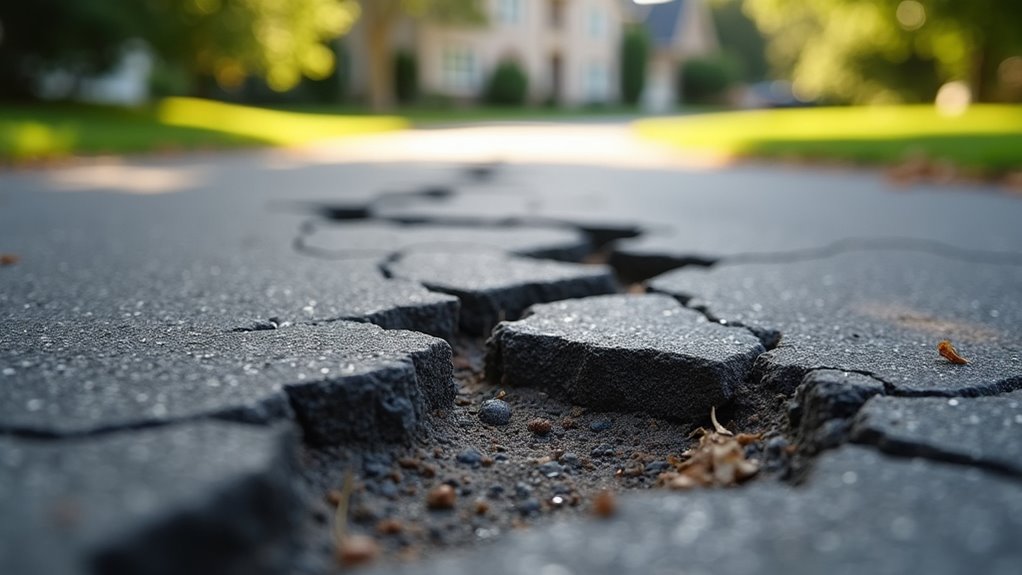
Resurfacing makes financial sense only if your foundation remains stable—but what happens when it doesn’t? When you’re facing full-depth driveway failure, repairs become a money pit rather than a solution. Patching costs $5 to $15 per square foot, while replacement runs $11 to $21—but replacement eliminates recurring expenses entirely.
When foundation failure turns repairs into a money pit, replacement becomes the smarter long-term investment.
Watch for these driveway rebuild necessity signs:
- Alligator cracks spreading across multiple sections indicate sub-layer collapse
- Potholes reappearing within months of repair signal foundational deterioration
- Cumulative repair costs approaching 50% of replacement value
- Water pooling in previously flat areas suggests base erosion
- Seasonal maintenance cycles becoming quarterly or monthly necessities
Your long-term cost analysis should compare total repair spending against replacement’s 20 to 30-year lifespan. When repairs address symptoms without correcting causes, replacement delivers superior value.
How Delaying Replacement Damages Your Foundation and Budget
Putting off driveway replacement doesn’t save money—it compounds damage exponentially. Every season you wait, water infiltrates existing cracks and erodes your sub-base materials. This moisture-compromised driveway base loses load distribution capacity, causing cracks to widen and potholes to multiply under normal traffic loads.
Structural integrity loss driveway issues accelerate rapidly once foundation erosion begins. Soft subsoil patches develop beneath the surface, triggering warping, buckling, and sinkhole formation. What started as a manageable repair transforms into complete foundation reconstruction.
You’ll face escalating costs as deterioration progresses through your pavement layers. Full-depth patching becomes unavoidable, and repeated ineffective repairs drain your budget without restoring stability. Timely replacement eliminates this cycle, delivering long-term savings and reliable structural performance that continuous patching simply cannot achieve.
Frequently Asked Questions
What Time of Year Is Best for Asphalt Driveway Replacement?
You’ll get the best results scheduling your asphalt driveway replacement between late spring and early fall. Aim for temperatures above 50°F—ideally 70°F or higher—so the hot mix asphalt compacts properly before cooling. Summer’s warm, dry conditions work well, though fall offers stable weather that lets your new surface cure before winter. Avoid winter entirely, as freezing temperatures cause rapid hardening and compromise long-term structural integrity.
How Long Does a Complete Driveway Replacement Take to Install?
A complete driveway replacement typically takes 3 to 7 days from start to finish. You’ll spend 1 to 2 days on demolition and removal, another day for grading and base preparation, and 1 day for actual asphalt installation. However, you can’t drive on your new surface immediately—you’ll need 24 to 48 hours before limited use and 3 to 7 days of curing before regular traffic.
Can I Drive on My New Asphalt Driveway Immediately After Replacement?
No, you shouldn’t drive on your new asphalt driveway immediately after replacement. You’ll need to wait 48-72 hours minimum before allowing passenger vehicles, and even then, keep speeds under 20 mph. Heavy vehicles like trucks and RVs require 14+ days before use. Watch for readiness signs: the surface should feel firm, appear charcoal gray with a matte finish, and show no tackiness. Hot weather above 90°F extends curing time.
Does Driveway Replacement Require Permits From Local Authorities?
Whether you need a permit depends on your project scope. Like-for-like replacements using the same materials and dimensions are often exempt from permit requirements. However, you’ll need permits if you’re changing the driveway’s size, shape, or materials—such as switching from asphalt to concrete. Adding drainage systems or retaining walls also triggers permit requirements. Check your local building department’s website and verify HOA rules if applicable.
How Much Does Full Asphalt Driveway Replacement Typically Cost?
You’ll typically pay $3,086 to $7,912 for full asphalt driveway replacement, with most homeowners spending around $5,000. Costs break down to $8 to $15 per square foot, covering labor ($5-$7), materials ($2-$6), and removal ($1-$2). Your final price depends on driveway size, asphalt thickness, site preparation needs, and regional labor rates. For a standard 600-square-foot driveway, expect labor alone to run $3,000 to $4,200.