


To remove old oil stains from asphalt, you’ll need to break down petroleum that’s already bonded with your driveway’s binder. Start by applying a commercial degreaser with surfactants directly to the stain, scrubbing in circular motions to penetrate the asphalt’s pores. For stubborn spots, try trisodium phosphate paste or even Coca-Cola’s phosphoric acid. Follow up with pressure washing between 1000-3000 PSI. Understanding proper techniques below will help you tackle even deep-set stains effectively. To remove old oil stains from asphalt, you’ll need to break down petroleum that’s already bonded with your driveway’s binder. If you’re trying to remove old oil stain from asphalt driveway, start by applying a commercial degreaser with surfactants directly to the stain, scrubbing in circular motions to penetrate the asphalt’s pores. For stubborn spots, try a trisodium phosphate paste or even Coca-Cola’s phosphoric acid. Follow up with pressure washing between 1000–3000 PSI. Understanding proper techniques below will help you tackle even deep-set stains effectively.
Check Your Asphalt for Oil Burn Damage First
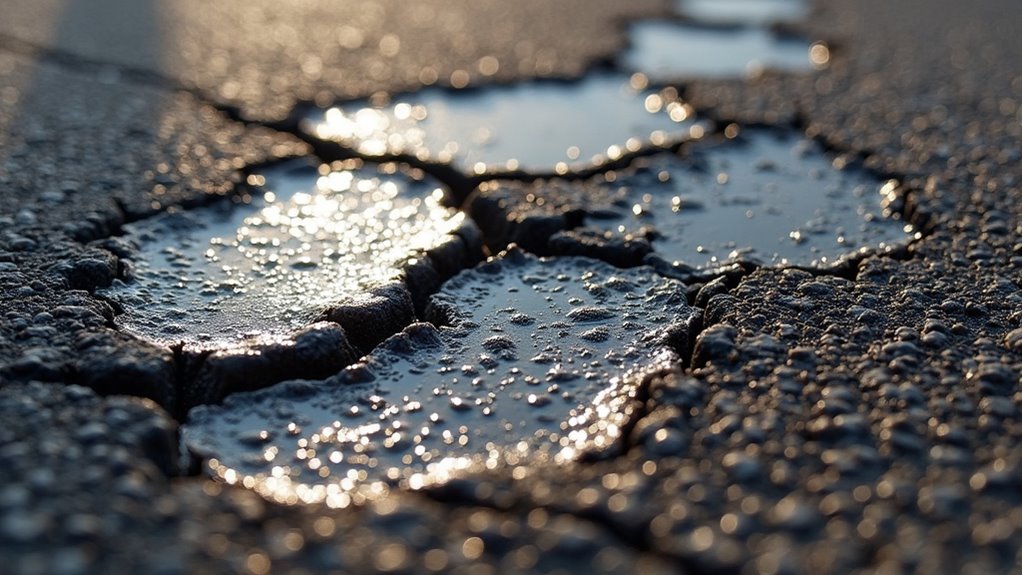
Before attempting any cleaning methods, you’ll need to assess whether your asphalt has progressed beyond a simple surface stain into actual oil burn damage—a critical distinction that determines your repair approach. Before attempting any cleaning methods, you’ll need to assess whether your asphalt has progressed beyond a simple surface stain into actual oil burn damage—a critical distinction that determines your repair approach. If you’re planning how to clean oil off asphalt driveway surfaces effectively, this initial evaluation will help you choose the safest and most successful treatment method.
When evaluating oil stains on asphalt driveway surfaces, perform a tactile test: press your finger or screwdriver into the stained area. If the asphalt feels soft or scoopable, oil has penetrated the binder, causing chemical degradation. Look for raveling, where aggregate separates from weakened binder, or early pitting that signals progressive damage. This pooling allows water to collect and carry additional contaminants, further degrading the area.
Surface-level stains—typically under twelve months old—respond well to standard cleaning. However, removing oil from asphalt driveway sections with binder softening requires structural repair, not just degreasing. Understanding how to get oil out of asphalt driveway effectively starts with this damage assessment. Exploring oil stain removal techniques for asphalt can reveal various methods, from simple degreasers to more advanced solutions tailored for tougher stains. It’s essential to match the technique with the severity of the stain to avoid causing further damage. Additionally, using the right equipment and following manufacturer guidelines will ensure the best outcome for maintaining the asphalt’s integrity.
Remove Old Oil Stains With Common Household Products
You can tackle stubborn old oil stains using two powerful household solutions: Coca-Cola and trisodium phosphate (TSP) paste. Coca-Cola’s phosphoric acid breaks down petroleum-based residues, while TSP creates an alkaline reaction that lifts embedded oil from asphalt pores. Both methods require proper application techniques to maximize stain extraction without damaging your pavement surface. For the cola method, pour the soda directly onto the dry stain and let it sit for 6 hours before scrubbing with a hard brush for best results.
Coca-Cola Stain Treatment
Why reach for expensive commercial degreasers when Coca-Cola’s phosphoric acid content can break down oil compounds on your asphalt surface? The carbonation aids penetration into embedded stains while surfactant-like properties emulsify oil for easier extraction. When learning how to remove old oil stains from asphalt driveway surfaces, this method delivers surprising results.
To remove old oil stains from driveway areas, first mop up excess residue. Pour one to two cans directly over the affected zone and allow overnight penetration. The acidic action degrades hardened grease molecules during this period. Scrub with a wire brush to lift the loosened film, then rinse thoroughly to prevent sticky residue. Addressing these stains quickly is essential because oil spills can disrupt the chemical balance in asphalt, leading to deterioration over time.
For enhanced effectiveness, combine Coca-Cola with Dawn dish soap—the surfactants complement the acidity for superior grease-cutting action.
TSP Paste Application
When commercial degreasers fall short on stubborn petroleum deposits, Tri-Sodium Phosphate (TSP) paste offers a proven solution for learning how to remove old oil stains from asphalt surfaces.
Mix TSP with water until you achieve a thick, adhesive consistency. Wear protective gloves during preparation. Apply the paste directly onto the stain, scrubbing with a stiff deck brush in circular motions to penetrate asphalt pores. Cover the entire affected area completely.
Allow the paste to dwell for 30 minutes, enabling it to break down embedded oil residues. Don’t disturb the application during this phase. Rinse thoroughly with a low-pressure garden hose to avoid driving contaminants deeper into the surface.
For deeply set stains, you’ll need multiple applications. Always test a small area first to verify asphalt compatibility.
Use Commercial Degreasers on Deep-Set Driveway Stains
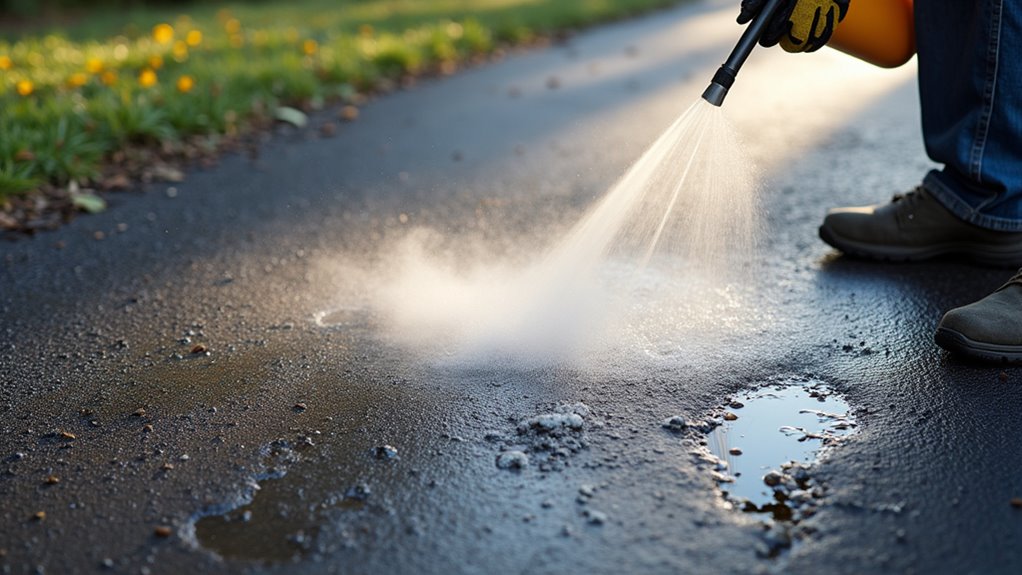
Deep-set oil stains require commercial degreasers formulated with surfactants, wetting agents, and molecular binding components that penetrate beneath the asphalt surface. These industrial-strength products break down oil into biodegradable substances while chemical detergents dissolve and emulsify trapped grease.
Adjust concentration ratios based on stain severity:
- Light stains: 6 oz cleaner per gallon of hot water
- Medium stains: 12 oz cleaner per gallon of hot water
- Heavy stains: 26 oz per gallon or 1:1 ratio
Apply degreasers directly using rags or brooms after removing surface debris. You’ll likely need multiple applications for older stains that have deeply bonded with asphalt. Avoid petroleum-based cleaners and paint thinner—they’ll cause asphalt degradation rather than effective removal.
Pressure Wash Oil Stains Without Damaging Asphalt
Before you fire up the pressure washer, sweep away loose debris and apply a degreaser to break down the oil’s grip on the asphalt surface. You’ll want to dial your pressure settings between 1,500 and 2,800 PSI using a 25- or 40-degree nozzle tip to avoid gouging the pavement. For lighter contamination, a Dawn soap solution applied at low pressure can effectively loosen residual oils before you begin the high-pressure rinse cycle.
Pre-Wash Surface Preparation
Oil stains that have penetrated asphalt require systematic pre-treatment before you introduce any pressure washing equipment. You’ll need to extract surface-level contaminants first, allowing subsequent cleaning methods to target deeper penetration effectively.
Apply dry absorbent materials—cat litter, sawdust, or commercial oil-absorbing products—directly onto the stain. Let the absorbent sit overnight for maximum extraction, then sweep and dispose of materials according to EPA guidelines.
Follow this three-step pre-wash protocol:
- Apply an asphalt-appropriate degreaser directly to the stain and allow adequate dwell time
- Scrub with a nylon bristle brush using firm circular motions to break down residual oil films
- Rinse thoroughly with hot water to remove loosened contaminants and degreaser residue
Allow the surface to dry completely before pressure washing to prevent asphalt damage.
Optimal Pressure Settings
Once your pre-treated asphalt surface has dried completely, selecting the correct pressure washer settings becomes your primary concern for effective stain removal without substrate damage.
Operate within the 1000-3000 PSI range, starting at the lowest setting that effectively lifts dirt and grime. For stubborn oil stains, apply light pressure combined with warm water rather than increasing PSI immediately. Reserve high-pressure settings exclusively for thick coating layers requiring aggressive treatment.
A steam pressure washer delivers ideal results for old oil stains. The extreme heat liquefies embedded oil while activating chemical detergents, and subsequent high pressure washes the emulsified residue away. This method proves both effective and environmentally responsible.
Install a swivel with a 45-degree angle cut ball valve to achieve perfect rinsing pressure while allowing free hose movement during operation.
Dawn Soap Application
Dawn dish soap serves as a powerful degreasing agent that breaks down petroleum-based stains without compromising your asphalt’s structural integrity. Pour a generous amount directly onto the affected area and add minimal water before agitating with a stiff-bristled brush.
Follow this application protocol for ideal results:
- Apply Dawn Platinum Powerwash directly to the stain and allow a 10-minute dwell time for maximum emulsification.
- Scrub vigorously using a hard bristle brush—avoid metal wire brushes that damage asphalt surfaces.
- Pre-treat with Dawn before pressure washing to enhance oil extraction from porous asphalt.
For aged stains that have penetrated deeper into the substrate, you’ll need multiple treatment cycles. Each application progressively lifts embedded petroleum residue, reducing visible discoloration with successive passes.
Why Old Oil Stains Are Harder to Clean
Unlike fresh spills that respond to simple absorbents like cat litter or sawdust, old oil stains present a considerably greater remediation challenge due to deep penetration and chemical bonding within the asphalt matrix. When oil contacts your asphalt surface, it seeps rapidly into the porous structure, binding with aggregates at multiple depth levels.
Over time, you’ll notice the oil forms chemical bonds with asphalt components through a curing process accelerated by sunlight and weather exposure. This bonding creates permanent discoloration that resists standard absorbent materials entirely.
The petroleum-based binder in your asphalt actually dissolves upon prolonged oil contact, causing aggregate separation and structural degradation. You’re dealing with softened surfaces vulnerable to pitting, crumbling, and rut formation. Years-old buildup typically demands aggressive degreasers, repeated treatments, or professional resurfacing rather than single-step cleaning solutions.
Repair Asphalt Burned by Long-Term Oil Exposure
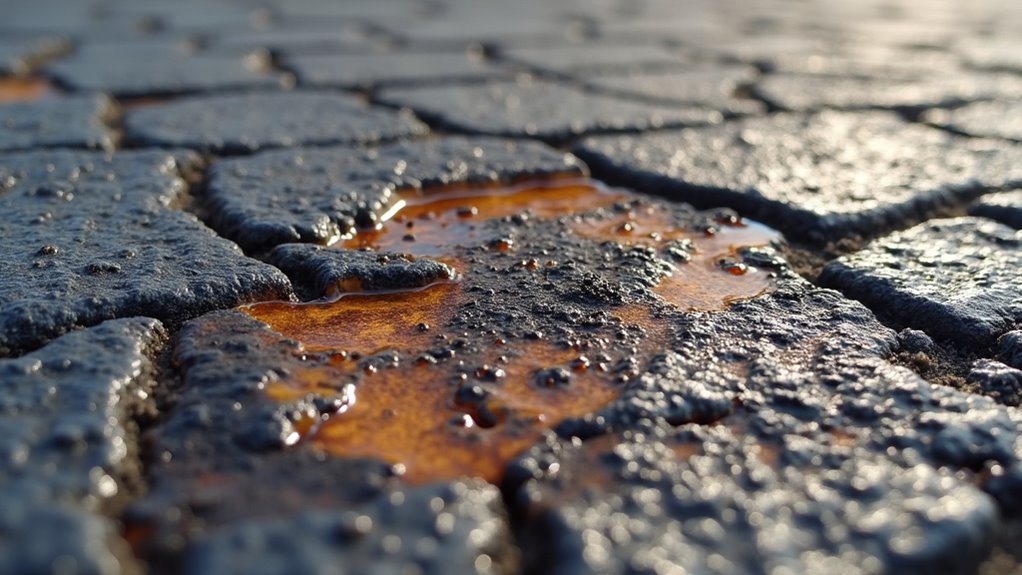
When oil exposure persists for six to twelve months, it fundamentally alters your asphalt’s binder chemistry, softening the surface and triggering a process called raveling—where aggregate particles loosen and break free from the pavement matrix.
Oil doesn’t just stain asphalt—it chemically dissolves the binder, causing your pavement to literally fall apart from within.
Three repair approaches based on damage severity:
- Stage Two (Surface Damage): Apply torch or heat lance to burn away excess oil, then install chip seal—sealcoat combined with compacted crushed gravel—for minor surface loss.
- Extensive Softening: Sawcut the damaged perimeter, remove the affected section entirely, apply tack coat, and patch with hot mixed asphalt leveled to surrounding pavement.
- Stage Three (Deep Penetration): Use a planer grinder or milling machine to remove one to two inches of compromised material before resurfacing with hot mix asphalt.
Standard patching compounds won’t address stage three severity.
When the Stain Won’t Budge: Sealcoat as a Last Resort
Not every oil stain responds to aggressive cleaning methods, even after repeated degreasing cycles and absorbent poultice applications. When standard remediation fails, sealcoating offers a cosmetic solution—but you’ll need proper preparation first.
You can’t apply sealcoat directly over oil-contaminated asphalt. Oil residue prevents proper adhesion between the sealant and pavement surface. Apply an oil stain primer to the affected area before sealcoating to guarantee bonding integrity.
Understand sealcoating’s limitations: it masks discoloration rather than eliminating underlying damage. If oil has penetrated the asphalt binder, structural deterioration continues beneath the sealcoat overlay. The stain pattern may eventually telegraph through as the coating wears.
Sealcoating restores your pavement’s dark appearance but doesn’t address compromised pavement integrity requiring professional patching.
Prevent Future Oil Stains With Driveway Sealant
Three categories of driveway sealants provide meaningful oil resistance: fluorocarbon-based penetrators, epoxy coatings, and polyurethane systems. Fluorocarbon sealers like Siloxa-Tek 8510 combine silane and siloxane compounds for deep substrate penetration, creating oleophobic surfaces that suspend oil for up to one hour—giving you critical cleanup time.
Consider these top-performing options:
- Fluorocarbon penetrating sealers – Bond molecularly with concrete, resisting abrasion beyond 500 cycles
- Epoxy coatings – Provide durable barriers for both indoor and outdoor applications
- Polyurethane systems – Resist oil, chemicals, and temperature fluctuations
You’ll need to reapply most sealants every 2-5 years depending on traffic and weather exposure. Always measure product quantities precisely for complete coverage, and follow manufacturer specifications for ideal chemical bonding. Clean spills immediately—even sealed surfaces aren’t stain-proof.
Frequently Asked Questions
Can I Use the Same Oil Stain Removal Methods on Concrete Driveways?
Yes, you can use most of the same methods on concrete driveways, and they’ll actually work better. Concrete’s porous but less penetrable surface responds well to degreasers, kitty litter absorption, and poultice treatments like Pour-N-Restore. You’ll get stronger results with pressure washing and commercial cleaners on concrete compared to asphalt. Follow up with a concrete sealer after 24 hours of drying to prevent future oil penetration.
How Long Should I Wait Between Repeated Degreaser Applications?
You should wait until the surface completely dries between repeated degreaser applications. After rinsing the previous treatment thoroughly, allow the asphalt to dry fully before applying the next round. This drying period improves the degreaser’s penetration effectiveness on subsequent treatments. For stubborn stains requiring 2-3 applications, don’t rush the process—each application needs its own 5-15 minute dwell time before scrubbing, followed by complete rinsing and drying.
Will Removing Old Oil Stains Void My Asphalt Warranty?
Removing old oil stains won’t void your warranty, but the oil damage itself likely already has. Most asphalt warranties exclude oil-related deterioration and sealer adhesion failures on contaminated surfaces. You’ll want to use commercial degreasers formulated for asphalt and stop immediately if you notice loose granules, which indicates raveling. For large stained areas, consider hiring professional services to minimize additional damage and preserve any remaining warranty coverage.
Is It Safe to Use These Cleaning Methods Near Grass and Plants?
Yes, you can safely use most cleaning methods near vegetation if you choose the right products. Opt for bio-enzymatic cleaners like Oil Spill Eater II or biodegradable options like CABENO Oil Stain Remover—they’re non-toxic and eco-friendly. Avoid solvent or acid-based degreasers, which can damage plant roots. When pressure washing, contain oil-infused runoff to prevent it from draining into scenic areas. You’ll also want to rinse adjacent grass after treatment.
How Often Should I Inspect My Driveway for New Oil Stains?
You should inspect your driveway monthly for new oil stains, especially if you park vehicles regularly. High-traffic driveways require more frequent checks—weekly visual assessments help you catch fresh drips before they penetrate the asphalt matrix. Conduct thorough inspections after heavy rainfall, as water can spread petroleum-based contaminants. If you’re near trees or in shaded areas, combine oil stain checks with your quarterly mold and algae monitoring for efficient preventive maintenance scheduling.