
Check your driveway’s base layer integrity first—it’s the deciding factor. If you’re seeing surface-level issues like hairline cracks under one-quarter inch, minor oxidation, or slight drainage pooling, resurfacing will work. However, alligator cracking, recurring potholes, chunks breaking away, or visible base material signal sub-base failure requiring full replacement. You’ll also need replacement if there’s foundation shifting, buckling, or deep rutting from heavy vehicles. Understanding these damage patterns helps you choose the most cost-effective solution.
How to Assess Your Driveway’s Condition
How accurately can you evaluate your driveway’s condition without professional equipment? You’ll need systematic documentation tools—a smartphone or notebook works well for recording pavement distress driveway issues and their locations.
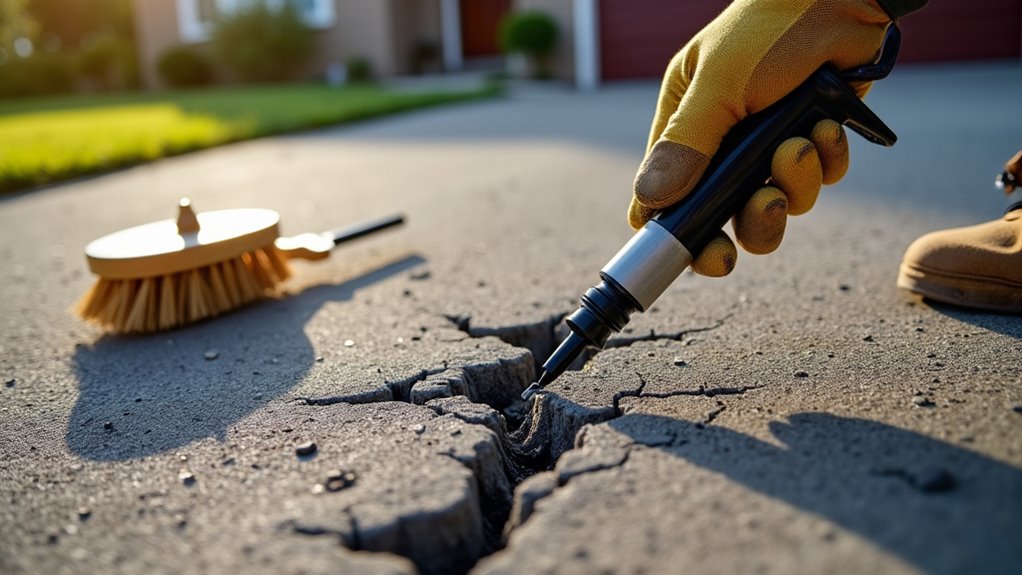
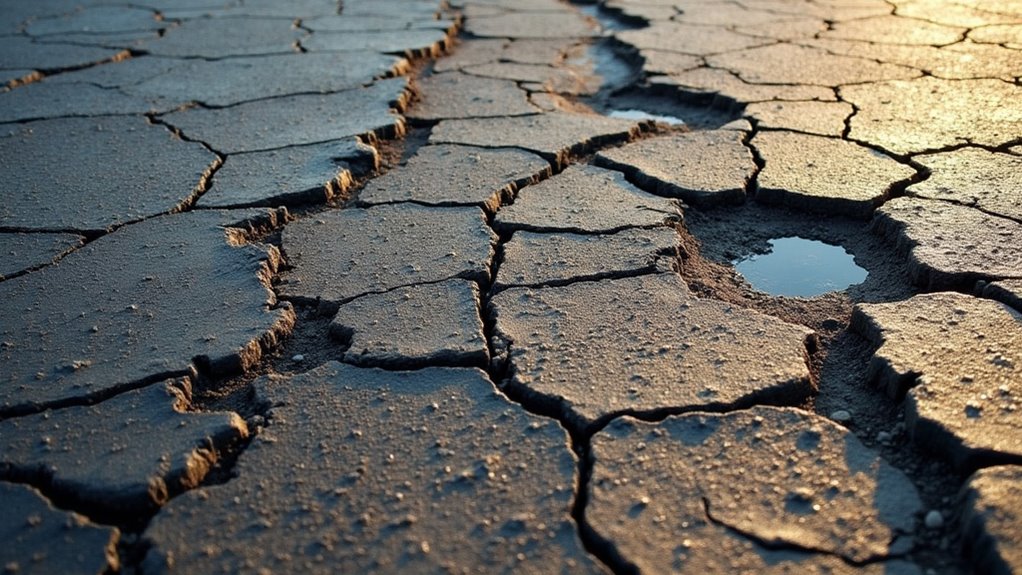
Start your driveway structural assessment by walking the entire surface. Document driveway crack density, noting whether you’re seeing isolated breaks or widespread alligator cracking patterns. Check for driveway surface distortion, including ruts along wheel paths and wavy lines indicating base problems.
Evaluate driveway settlement indicators like pooling water, which reveals moisture infiltration driveway concerns and potential subsurface failure. Look for driveway age deterioration signs: oxidation, loose gravel, and repeated potholes in the same areas. Potholes form when water infiltrates the pavement and traffic continues stressing the weakened surface.
The PASER rating system offers a free, standardized visual comparison method you can use without specialized training.
Signs That Point to Resurfacing
When your asphalt shows specific deterioration patterns, you can often restore it through resurfacing rather than full replacement. Driveway surface discoloration and oxidation fading asphalt indicate cosmetic aging that resurfacing addresses effectively. Perform crack width measurement driveway assessments—cracks under one-quarter inch typically qualify as driveway surface-only damage indicators.
Evaluate longitudinal crack evaluation and transverse crack severity carefully. Shallow, isolated cracks that haven’t penetrated the base layer respond well to overlay treatments. Minor driveway drainage pooling from slight surface irregularities can be corrected during resurfacing.
Watch for early-stage asphalt surface raveling where loose aggregate appears but hasn’t compromised structural integrity. If your driveway displays these conditions without widespread alligator cracking, base settlement, or repeated pothole formation, resurfacing remains your cost-effective solution for extending pavement life. This approach offers a cost-effective way to extend lifespan of your driveway while preventing future damage from developing.
Damage That Requires Full Replacement
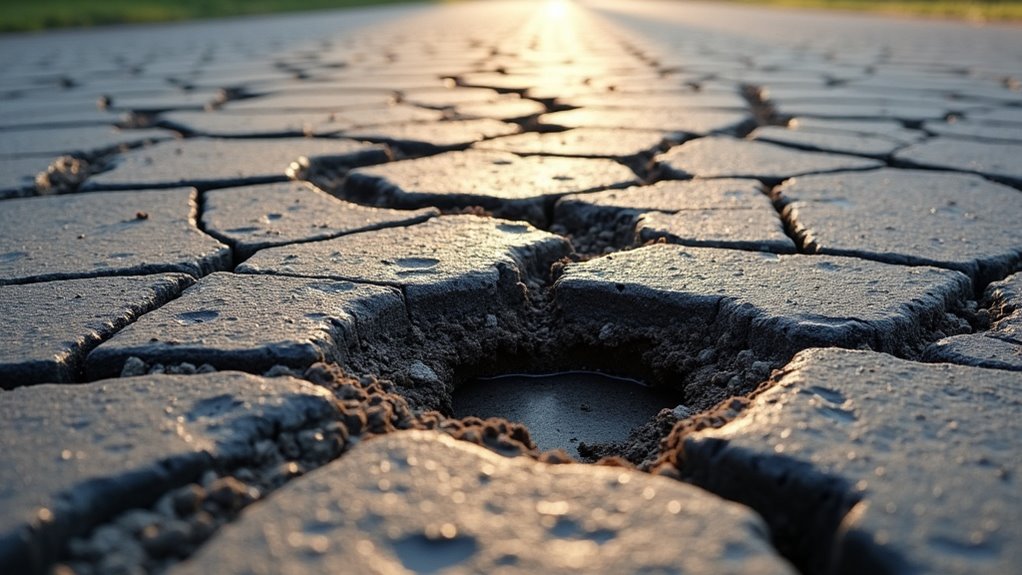
Certain damage patterns indicate your asphalt driveway has deteriorated beyond what resurfacing can address. When you notice alligator cracking spreading across the surface, you’re seeing evidence of structural crack depth driveway failure that extends into the sub-base. Fatigue cracking and pothole recurrence signal base layer compromise that overlay treatments won’t resolve.
Watch for these replacement indicators:
- Driveway asphalt separation with chunks breaking away from the main surface
- Foundation shift driveway conditions causing major distortions or buckling
- Heavy vehicle driveway strain resulting in rutting depressions asphalt damage
- Pooling water from drainage failures accelerating base erosion
- More than 25% surface area showing interconnected damage
If you’ve experienced multiple failed repairs or see widespread deterioration, full replacement restores proper structural integrity and drainage functionality. A properly installed replacement driveway can provide 15-20 years of service in South Carolina when maintained correctly.
Resurfacing vs. Replacement: Cost, Time, and Lifespan
Understanding whether your driveway needs resurfacing or full replacement directly impacts your budget, timeline, and long-term results.
Resurfacing costs £20–£35 per m² for tarmac, while replacement runs £45–£70 per m². You’ll complete resurfacing in 1–2 days versus 3–5 days for full replacement. However, resurfacing only lasts 5–10 years compared to 15–30 years for replacement.
Resurfacing saves 50% upfront but replacement lasts up to three times longer—your timeline and budget determine the smarter investment.
Choose resurfacing when you’ve identified minor driveway brittleness indicators or asphalt surface distortion without underlying damage. It’s unsuitable if you’re seeing driveway sub-base erosion, soft spots in asphalt, or subgrade instability signs. asphalt resurfacing benefits for homeowners include improved curb appeal and extended lifespan of driveways. By addressing surface issues early, homeowners can avoid more costly repairs down the line. Additionally, a freshly resurfaced driveway can enhance property value, making it a smart investment.
Full replacement addresses driveway load stress damage, asphalt heaving symptoms, and driveway instability warnings at their source. Though it costs 50–100% more upfront, you’ll avoid repeated repairs caused by persistent structural failure. When subgrade instability signs exist, replacement delivers better long-term value. Full replacement addresses driveway load stress damage, asphalt heaving symptoms, and driveway instability warnings at their source. Though it costs 50–100% more upfront, you’ll avoid repeated repairs caused by persistent structural failure. When weighing when to resurface asphalt driveway, the presence of subgrade instability signs typically signals that full replacement will deliver better long-term value.
Which Fix Makes Sense for Your Driveway?
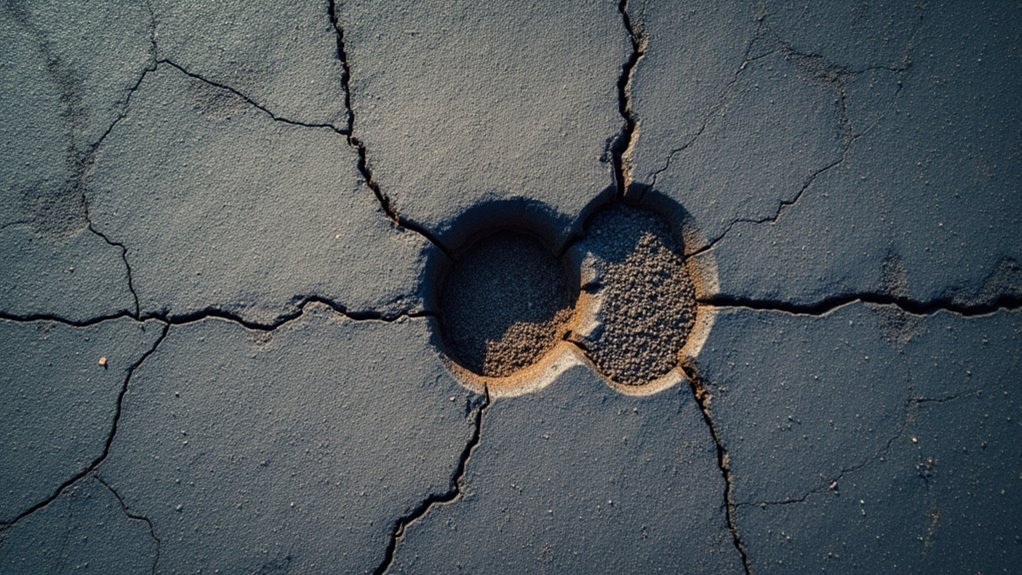
Three key factors determine whether resurfacing or replacement makes sense for your driveway: base layer integrity, damage extent, and traffic demands.
When conducting an asphalt driveway inspection signs like surface raveling driveway wear, asphalt surface flaking, or isolated cracks suggest resurfacing remains viable. However, frost heave driveway damage, soil shifting driveway base issues, or recurring patch breakdown indicate deeper structural problems requiring replacement.
Watch for these driveway resurfacing or replacement signs:
- Standing water driveway damage pooling after rain
- Alligator cracking covering more than 25-30% of the surface
- Base material visible through cracks
- Water pumping up through cracks under vehicle weight
- Settlement or depressions forming across the surface
If your base stays stable with only top-layer deterioration, resurfacing works. When sub-base failure occurs, full replacement becomes your only lasting solution.
Frequently Asked Questions
Can I Resurface My Driveway Myself or Should I Hire a Professional?
You can resurface your driveway yourself if you’re dealing with minor surface damage like shallow cracks and cosmetic wear. You’ll need a pressure washer, crack filler, drill mixer, and driveway squeegee to apply asphalt resurfacer evenly. However, you should hire a professional when you’re facing deep structural issues, widespread alligator cracking, or base instability. Professionals bring specialized compaction equipment and expertise that guarantees proper adhesion and long-lasting results.
What Time of Year Is Best for Asphalt Resurfacing or Replacement?
Late spring through summer offers the best conditions for asphalt resurfacing or replacement. You’ll need air and surface temperatures above 50°F for proper bonding, with 70°F or higher being ideal. Hot mix asphalt requires 175°F to 275°F to spread correctly. You should schedule work during dry weather and book contractors in winter to avoid the busy season rush—typically 6-8 weeks out for spring and summer projects.
How Long Should I Wait Before Driving on Newly Resurfaced Asphalt?
You should wait 48-72 hours before driving passenger vehicles on newly resurfaced asphalt. You can walk on it after 24 hours, but keep speeds below 20 mph during initial use. If you’re parking trucks or RVs, extend that wait to 14+ days. Check that the surface isn’t tacky, has shifted from deep black to charcoal gray, and feels firm before resuming normal traffic. You should wait 48–72 hours before driving passenger vehicles on newly resurfaced asphalt. Understanding asphalt resurfacing techniques explained helps clarify why proper curing time matters. You can walk on it after 24 hours, but keep speeds below 20 mph during initial use. If you’re parking trucks or RVs, extend that wait to 14+ days. Check that the surface isn’t tacky, has shifted from deep black to charcoal gray, and feels firm before resuming normal traffic.
Will Resurfacing or Replacement Affect My Property Value at Sale Time?
Both resurfacing and replacement boost your property value at sale time. A well-maintained resurfaced driveway can increase your home’s value by 5-10%, while full replacement adds upwards of $10,000. You’ll typically recoup 50-75% of resurfacing costs in added value. Replacement generally yields higher returns for severely deteriorated surfaces. Either option enhances curb appeal, signals proper maintenance to buyers, and creates move-in ready appeal in competitive markets.
How Do I Find a Reputable Asphalt Contractor in My Area?
You’ll find reputable asphalt contractors by checking your state contractor board for licensing and insurance verification. Request at least three written estimates that break down materials, labor, and timelines. Prioritize contractors with 10+ years of experience and portfolios showing driveway resurfacing and replacement projects. Verify their ratings on Google, BBB, and Angi, then contact past client references. Confirm they offer workmanship warranties and conduct free on-site inspections before quoting.