
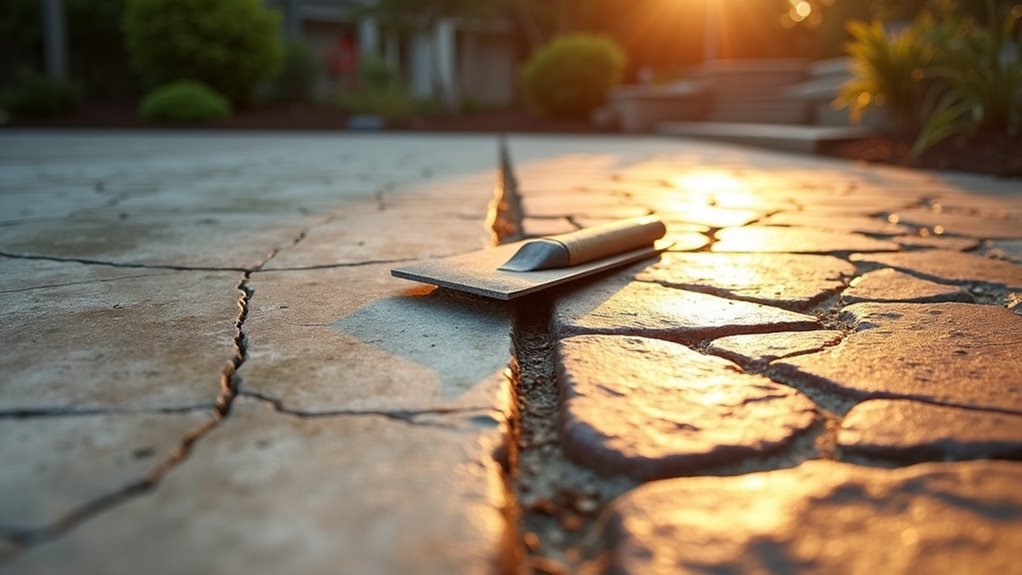
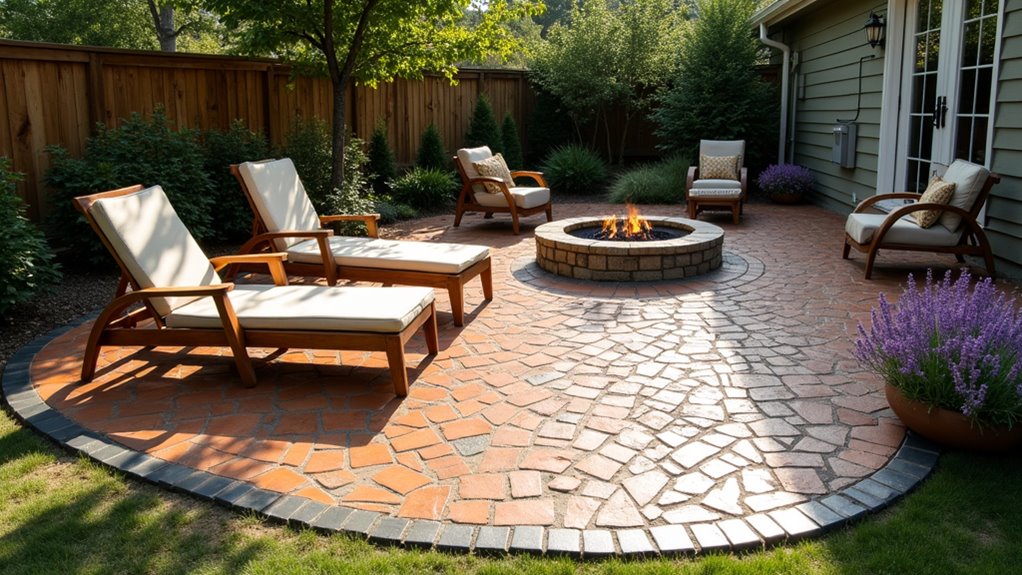
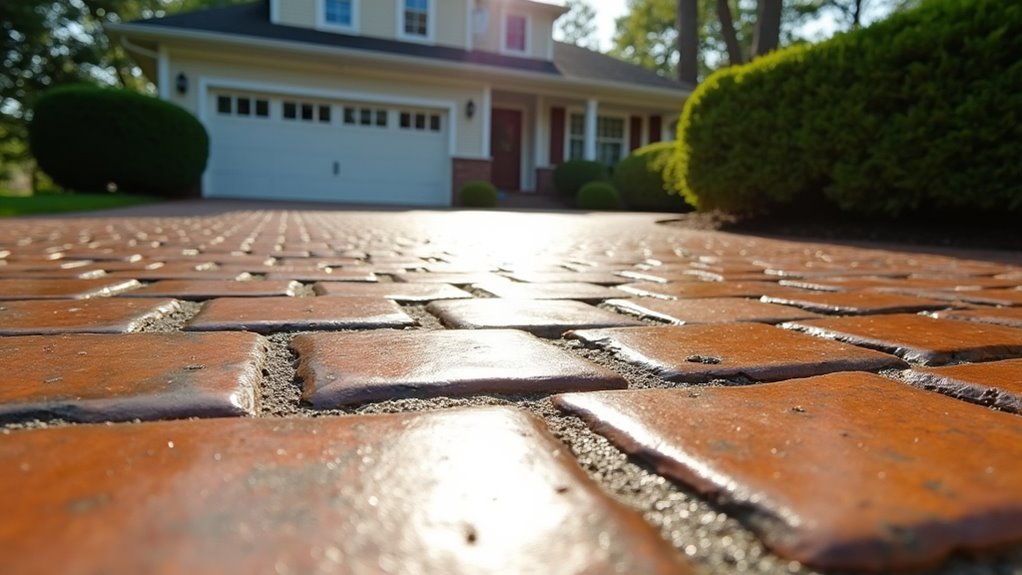
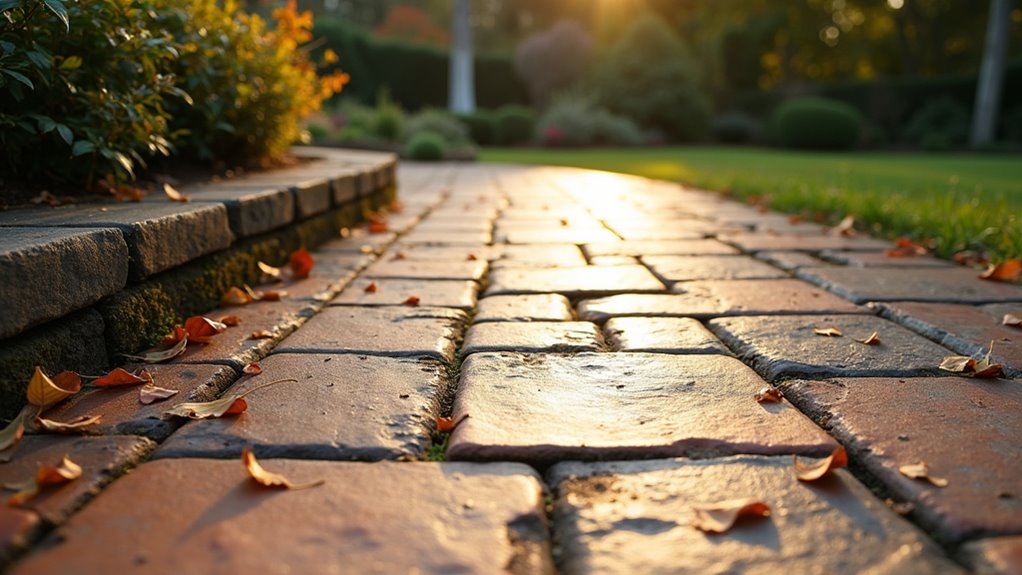
An asphalt driveway with a paver border frames your dark, continuous surface with a contrasting band of concrete pavers, natural stone, or Belgian block. You can run a single soldier course for a crisp outline or widen the band for basket-weave patterns. Add a paver apron to mark the street entrance. Edging runs roughly $20 to $40 per linear foot. The right material, width, and base prep determine whether your frame looks deliberate and lasts.
Key Takeaways
- A paver border frames dark asphalt with a contrasting band along one or both edges, often adding a decorative apron at the street.
- Concrete pavers offer the widest color and shape options, while natural stone or cobblestone creates a more formal, premium entry.
- A single soldier-course row gives a simple, narrow frame, while wider bands suit running-bond or basket-weave patterns.
- Paver edging typically costs about $20 to $40 per linear foot, and every added inch of width increases materials, excavation, and labor.
- Proper installation requires a compacted base, secure edge restraints, matched asphalt and paver heights, and a 1% to 2% slope away from buildings.
What does an asphalt driveway with a paver border look like
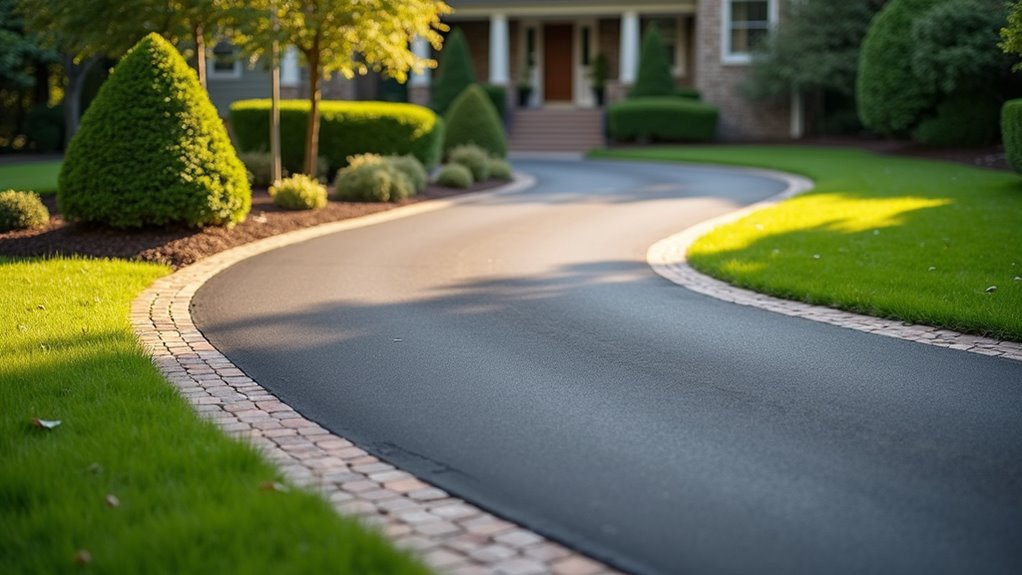
An asphalt driveway with a paver border looks like a dark, continuous asphalt surface framed by a band of pavers along one or more edges. You’ll typically see narrow paver bands running along both sides of a central lane, giving the asphalt driveway with paver border a clean, defined edge. Some designs add a paver apron at the street entrance, which highlights the approach and visually separates it from the road. On a blacktop driveway with paver border, wider bands create stronger contrast against dark asphalt and can echo nearby walkways or patios. You can sharpen the distinction with contrasting colors, shapes, or laying patterns. In any finished paver border driveway, the border’s width shapes how you read the whole surface.
Which paver border styles pair best with asphalt
Concrete pavers, natural stone or cobblestone, Belgian block, soldier course, and permeable pavers all pair well with asphalt, and the border’s material and pattern decide whether that frame looks deliberate or added on. The border’s width also shapes how you read the surface. Stone edging and borders can further enhance the aesthetics of your landscape design. They create a clean separation between different areas of your yard, emphasizing pathways and garden beds.
| Border Style | Best Use | Cost/Design Note |
|---|---|---|
| Concrete pavers | Matching walkways or patios | Wide color and shape range |
| Natural stone or cobblestone | Formal, premium entries | Higher edging cost |
| Belgian block | Defined street apron | About $20 to $40 per linear foot |
| Soldier course | Narrow, simple frame | Lowest pattern complexity |
| Permeable pavers | Edge infiltration zones | Doesn’t replace a drainage plan |
For a driveway with paver border, pick a color that contrasts with dark asphalt, then choose a pattern that suits the width. Running-bond and basket-weave patterns keep wider bands consistent, while a soldier course suits narrow edges. Remember that greater pattern complexity also increases material quantities, labor, and total cost.
What border materials can you choose from
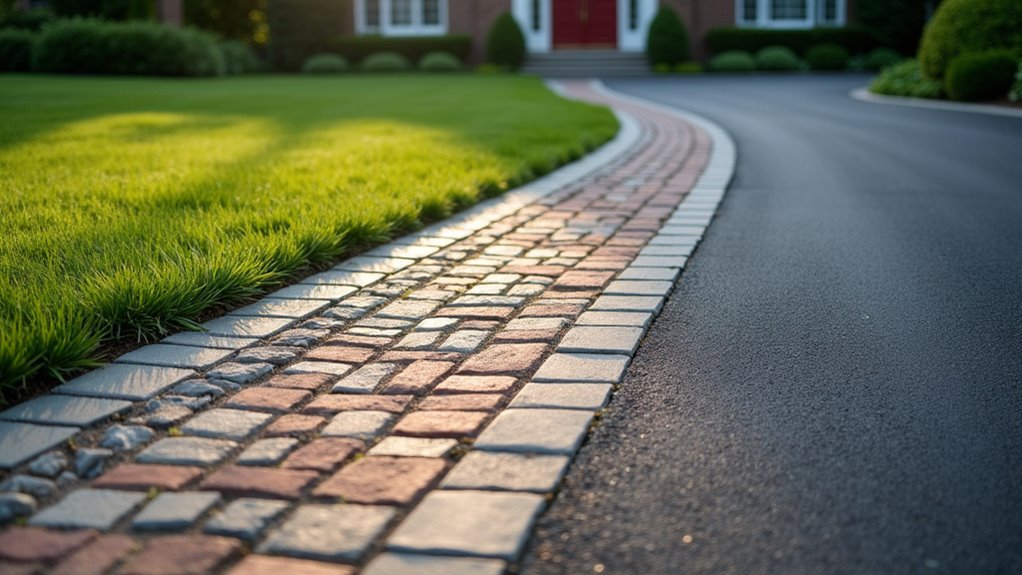
You can choose from concrete pavers, natural stone or cobblestone, Belgian block, and permeable pavers for an asphalt driveway border. Concrete pavers give you the widest range of colors and shapes, so you can customize the border or echo nearby walkways and patios. Natural stone and cobblestone create a more formal, premium look, but you’ll pay more; edging costs vary substantially by material. Belgian-block or paver edging runs roughly $20 to $40 per linear foot in one cost guide. Permeable pavers combine a decorative edge with a zone for water infiltration, though they don’t replace a complete drainage plan. Specify a contrasting color or laying pattern to define the edge. Whichever material you pick, border width and pattern complexity affect material quantities, labor, and total cost. Incorporating patio and walkway edging can enhance the overall aesthetic of your outdoor space. You can mix and match materials to ensure cohesion between your hardscaping elements.
How wide should the border be
Choose a border width that matches your design goals and budget, from a single soldier-course row for a narrow frame to a full-width band for strong contrast. A single soldier-course row creates a simple, narrow frame that defines the asphalt edge without dominating the design. Narrow paver bands along both sides of a central asphalt lane give you a clean, crisp outline at a modest cost.
For stronger contrast, choose a full-width border. Wider bands stand out against dark asphalt and can echo nearby walkways or patios. They also suit running-bond or basket-weave patterns that need more room to read clearly.
Every added inch increases material quantities, excavation, base preparation, and labor. Since edging is often priced per linear foot, measure your driveway’s perimeter and compare itemized quotes for several widths before you commit.
How do single and double border rows change the look
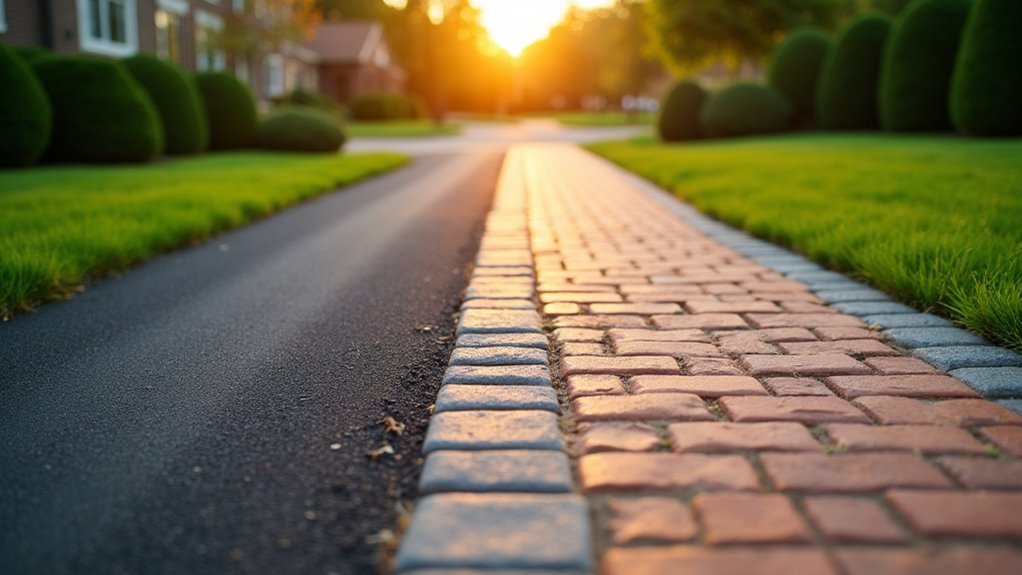
A single soldier-course row creates a simple, narrow frame, while a double row adds visual weight and a more finished, formal look. The single row defines the edge cleanly without competing with the driveway surface, so it suits modern homes and tighter budgets. Choose a contrasting color to make that thin line register against dark asphalt.
With a double row, you can pair two matching rows for a bold band, or combine a soldier course with a running-bond or basket-weave row for added texture. Contrasting shapes or colors between rows can echo nearby walkways or patios.
Remember that each added row increases material quantities, excavation, and labor. A wider border also needs a secure edge restraint to prevent spreading.
How does it add value and curb appeal
A paver border adds curb appeal by turning a plain asphalt driveway into a deliberate design element, and it adds value by doing so at a modest premium compared with full paver coverage. The defined edge frames the dark surface, and a paver apron at the street marks your entrance clearly. You can match border colors to nearby walkways or patios, so your hardscape reads as one cohesive plan rather than separate projects.
Value depends on smart spending. Paver edging runs roughly $20 to $40 per linear foot in one cost guide. Edge restraints also limit spreading and protect the link where asphalt meets pavers. Belgium block pricing can vary significantly based on the quality and supplier. Understanding these price ranges helps in making informed purchasing decisions.
To protect that investment, you’ll need a compacted base, secure restraints, and level transitions. Poor installation quickly creates shifting, lips, and pooling water that undercut both appearance and value.
How do you plan a paver border for your driveway
Plan a paver border for your driveway by choosing a configuration, selecting materials and patterns, planning the base and restraints, and mapping drainage and elevations. The configuration you choose sets the material quantities, labor, and budget for the rest of the project, so decide whether you want narrow bands framing the asphalt, a paver apron at the street, or full-width borders that echo nearby walkways.
- Choose your configuration. Measure the linear footage you’ll edge, since paver edging runs roughly $20 to $40 per linear foot.
- Select materials and patterns. Compare concrete pavers, natural stone, or cobblestone, and pick a soldier course, running bond, or basket weave.
- Plan the base and restraints. Budget for a 4 to 6-inch compacted gravel base and a rigid edge restraint or concrete curb.
- Map drainage and elevations. Target a 1% to 2% slope away from buildings, and match asphalt and paver heights to avoid lips.
Give Your Asphalt Driveway a Finished Paver Border
VF Paving provides asphalt paving and driveway services for homeowners looking to improve both the appearance and function of their driveways. An asphalt driveway with a paver border can add definition without replacing the entire surface with pavers, with options ranging from a simple single-row edge to a wider border and paver apron. Contact to discuss your driveway design and get a project estimate.
Frequently Asked Questions
How Long Does an Asphalt Driveway With a Paver Border Typically Last?
You can expect your asphalt surface to last about 15 to 25 years with maintenance, though climate, traffic, and base quality shift that range. You’ll extend it by sealcoating every 2 to 5 years and filling cracks early. Your paver border’s longevity depends on a compacted base and rigid edge restraints, so inspect joints for settlement or shifting, refresh joint sand, keep drainage paths clear, and avoid snow-removal equipment that’ll damage your paver edges.
How Often Should You Sealcoat an Asphalt Driveway With Paver Edging?
You’ll typically sealcoat the asphalt every 2 to 5 years, depending on sun exposure, traffic, product type, and local guidance. Mask or tape off the paver border so sealer doesn’t stain the joints or alter the pavers’ color. Before sealing, you should fill cracks and repair depressions in the asphalt. While you’re at it, inspect paver joints and restraints, and refresh joint sand where it’s washed out or settled to keep edges tight.
Can a Paver Border Help With Driveway Drainage and Runoff?
Yes, a paver border can help, especially if you choose permeable pavers that let runoff infiltrate along the edge. But it won’t replace a complete drainage plan. You’ll still need to grade the driveway at a 1% to 2% slope away from buildings and prevent pooling beside the edge. Where grading isn’t enough, add swales, edge drains, or French drains, and match every detail to your soil, slope, and local requirements.
How Do You Keep Paver Borders From Shifting Next to Asphalt?
You’ll keep paver borders from shifting by installing a rigid edge restraint or concrete curb where they meet the asphalt. Before laying pavers, excavate and compact a stable 4 to 6-inch gravel base in layers. Coordinate paver and asphalt elevations so you don’t create abrupt lips that catch tires or plows. Then inspect joints regularly, refresh lost joint sand, and fix settlement early to keep the border tight and stop spreading over time.
Will Snowplows or Snow Blowers Damage a Driveway’s Paver Border?
They can if you’re careless. Plow blades and steel-edged shovels can catch raised paver edges, chip corners, and pull out joint sand. To protect the border, set pavers flush with or slightly below the asphalt, and lock them with a rigid edge restraint. Use snow blowers with adjustable skid shoes, or plows with rubber or polyurethane cutting edges. After winter, inspect for shifting, settlement, and lost joint sand.