
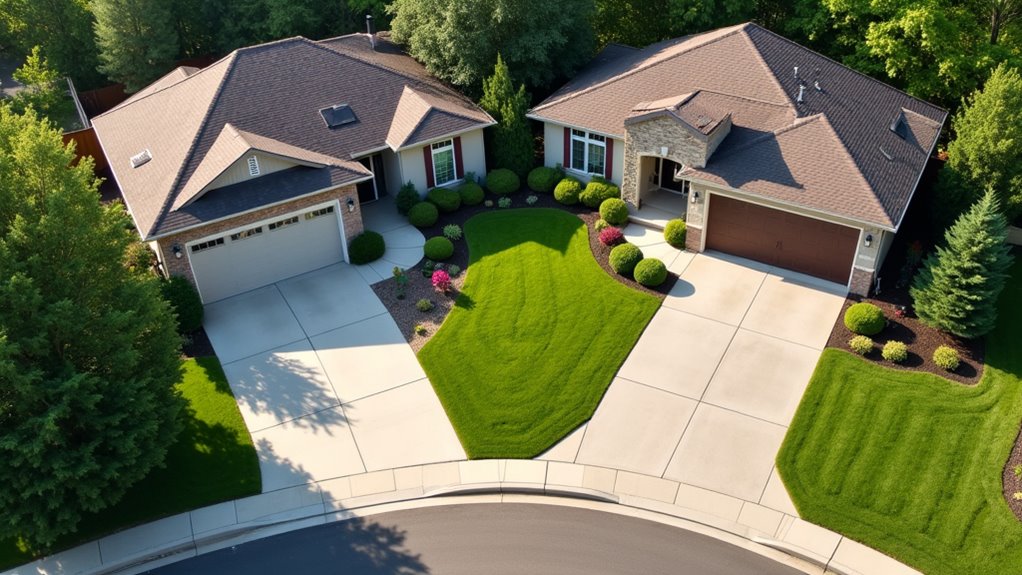
Tar and chip costs you $1.50 to $5.00 per square foot installed, running 50% to 70% less than asphalt’s $7 to $13. You’ll skip sealcoating and stick to occasional sweeping, though you’ll need a re-chip after several years. Asphalt needs crack filling and sealcoating every 3 to 5 years, but it lasts 15 to 30+ years versus tar and chip’s 7 to 15. Tar and chip suits long rural driveways; asphalt handles heavy traffic. The right choice depends on factors worth understanding first.
Key Takeaways
- Cost: Tar and chip runs $1.50 to $5.00 per square foot, roughly 50% to 70% cheaper than asphalt’s $7 to $13 per square foot.
- Maintenance: Tar and chip skips sealcoating and needs only occasional sweeping, while asphalt requires sealcoating every 3 to 5 years plus crack filling.
- Lifespan: Tar and chip lasts 7 to 10 years (12 to 15 with double chip), while maintained asphalt lasts 15 to 30+ years.
- Performance: Tar and chip offers rustic traction for low-traffic rural use, while asphalt’s smooth surface handles heavy, frequent daily traffic.
- Best fit: Choose tar and chip for long rural driveways and asphalt for suburban or urban ones, based on budget and maintenance willingness.
How do tar and chip and asphalt driveways compare
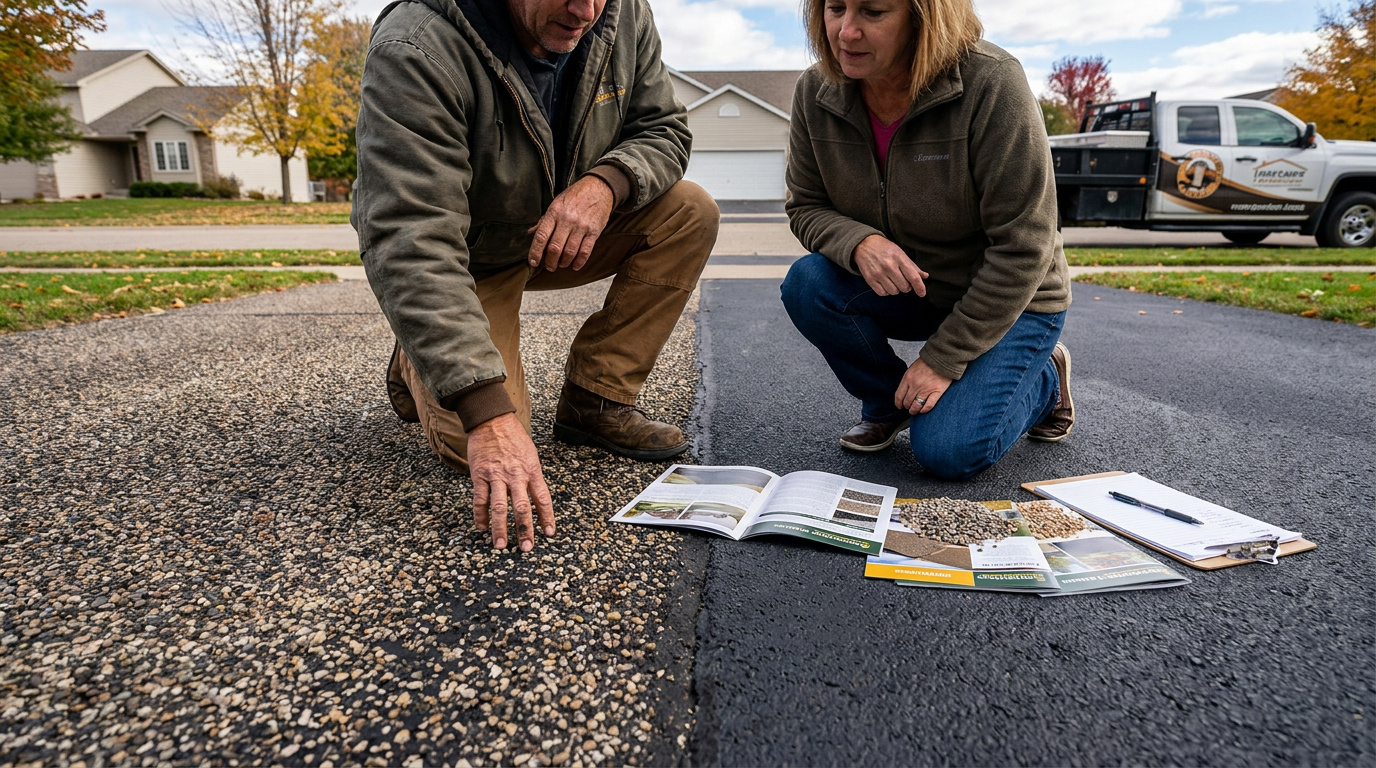
Tar and chip and asphalt driveways differ across four practical factors: cost, maintenance, lifespan, and surface performance. A tar and chip driveway runs about $1.50 to $5.00 per square foot, while asphalt driveway cost lands higher at $7 to $13 per square foot for hot-mix with proper base work. That makes chip seal 50% to 70% cheaper upfront. Maintenance splits them too: a chip seal driveway skips sealcoating, needing only occasional sweeping or re-chip renewal, while asphalt demands crack filling and sealcoating every 3 to 5 years. Lifespan favors asphalt at 15 to 20 years versus 7 to 10 for single chip seal, though double chip systems stretch to 12 to 15. On performance, tar and chip delivers rustic traction; asphalt gives you a smooth surface built for heavier traffic.
What is the cost difference between tar and chip and asphalt
Tar and chip costs roughly 50% to 70% less than asphalt upfront. Tar and chip runs $1.50 to $5.00 per square foot installed, while asphalt runs $7 to $13 per square foot for hot-mix with proper base work. On a large or rural driveway, those per-foot savings compound fast across thousands of square feet. Millings driveway options offer an affordable alternative for those seeking durability and aesthetic appeal. Additionally, they provide excellent drainage capabilities, reducing the risk of standing water.
Tar and chip lands below asphalt in initial price but above gravel. If you’re budgeting for a long run, watch cost-per-year estimates: tar and chip sits around $225 to $400 annually depending on build quality. Asphalt costs more to install, yet its longer service life can narrow that yearly gap over time.
How do maintenance needs differ between the two surfaces
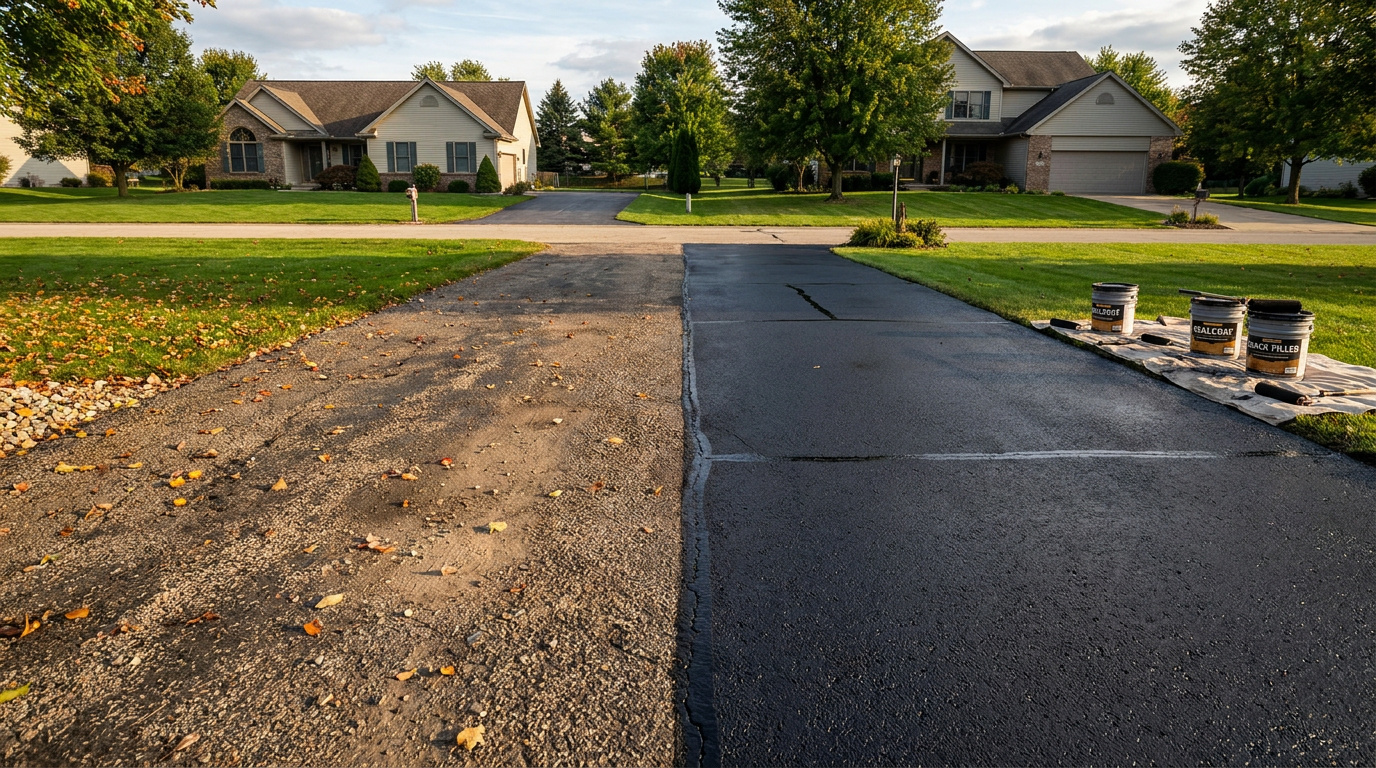
Maintenance needs differ significantly between the two surfaces. With tar and chip, you’ll do very little. It doesn’t require sealcoating, so your routine work drops to occasional sweeping and a re-chip renewal after several years to restore the surface. That low upkeep keeps recurring costs down over the driveway’s life.
Asphalt demands more attention. You’ll need to fill cracks as they appear and apply sealcoating every three to five years to protect the binder and preserve lifespan. Skip that schedule, and you’ll shorten service life materially. Quote review before paving is essential to ensure you are adhering to best practices. Understanding the nuances of asphalt maintenance can greatly impact longevity.
How do lifespan and durability compare
Asphalt outlasts tar and chip, offering longer lifespan and stronger durability under heavy use. Tar and chip typically lasts 7 to 10 years, though a double chip seal system can push that to 12 to 15 years with solid base prep. Asphalt outperforms it here, running 15 to 20 years under proper maintenance and 25 to 30 years or more when you stay on top of sealcoating and crack filling. Skip the upkeep, though, and asphalt drops to roughly 8 to 15 years.
| Surface | Typical Lifespan |
|---|---|
| Tar and chip (standard) | 7 to 10 years |
| Tar and chip (double seal) | 12 to 15 years |
| Asphalt (maintained) | 15 to 30+ years |
| Asphalt (neglected) | 8 to 15 years |
Durability depends heavily on traffic load. Asphalt handles heavy, frequent use better, and tar and chip suits lower-traffic, rural driveways.
Which surface works better for different driveway conditions
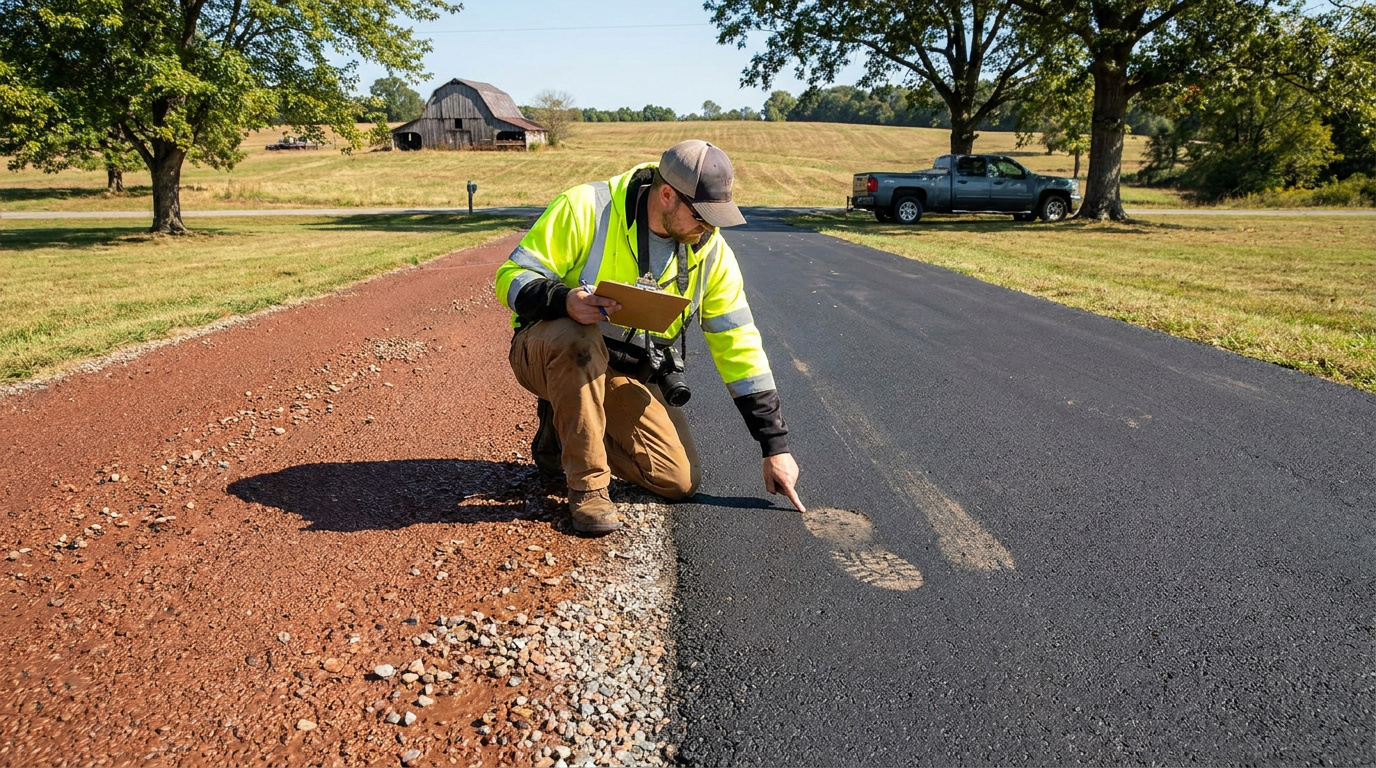
Tar and chip works better for long rural driveways and country-style properties, while asphalt works better for suburban and urban driveways. If you’ve got a long rural driveway or a country-style property, tar and chip earns its keep. The textured surface delivers strong traction, handles weather-related wear well early on, and keeps upfront costs manageable across large areas. It’s built for low-traffic conditions where a rustic look fits the setting.
Asphalt suits suburban and urban driveways where you need a smooth, uniform finish and consistent daily use. It stands up to higher traffic loads and frequent turning better than chip seal, which can shed stone under heavy wear. Driveway permeability plays a crucial role in managing stormwater and reducing runoff. Many homeowners are now considering options that allow water to flow through the surface, promoting better drainage.
Factor in your climate and base preparation too. Both surfaces depend heavily on proper base work, and poor drainage or freeze-thaw cycles will shorten either one’s service life.
How should you choose between tar and chip and asphalt
Choose tar and chip for lower upfront cost and less maintenance, or asphalt for longer life and better long-term value. The decision comes down to three factors: how long you plan to stay, your upfront budget, and how much routine maintenance you’re willing to handle. If you’re on a tight budget, tar and chip runs $1.50 to $5.00 per square foot, 50% to 70% cheaper than asphalt’s $7 to $13. That savings favors large or rural driveways where short-term ownership is the priority.
If you’re staying long-term, asphalt’s 15 to 20 year lifespan (up to 25 to 30 with upkeep) often delivers better value, despite the higher initial cost and periodic sealcoating every 3 to 5 years. Tar and chip lasts 7 to 10 years and skips sealcoating entirely.
Factor in traffic load and climate too. They’ll shift performance either way regardless of price.
Choose the Right Driveway Surface for Your Property
Choosing between tar and chip and asphalt depends on your budget, traffic needs, maintenance preferences, and long-term goals. V&F Paving can help you evaluate your options through its asphalt paving services, providing durable driveway solutions built around your property needs. Call (203) 624-2449 or request a free estimate to discuss the best surface option for your driveway.
Frequently Asked Questions
Can You Convert an Existing Gravel Driveway to Tar and Chip?
Yes, you can convert an existing gravel driveway to tar and chip, and it’s actually one of the most cost-effective options you’ll find. You’ll need a properly compacted, well-graded gravel base first, since the hot tar and stone bond directly to that foundation. If your base is stable and drains well, you’re set. Expect to pay around $1.50 to $5.00 per square foot for this rustic, low-maintenance surface.
Does Tar and Chip or Asphalt Increase Home Resale Value More?
Asphalt typically boosts your resale value more, thanks to its smooth, uniform finish and longer 15 to 20 year lifespan that buyers recognize as a durable, standard paved surface. You’ll appeal to suburban and urban buyers who expect that look. Tar and chip’s rustic, textured appearance suits country-style properties, but it won’t carry the same broad market appeal. If you’re prioritizing resale, choose asphalt for its polished finish and proven longevity.
How Long Does Each Driveway Take to Install and Cure?
You’ll find installation timelines differ, though your source doesn’t cover exact install-and-cure windows for either surface. What it does confirm shapes your expectations: both materials depend heavily on proper base preparation, climate, and traffic planning. Tar and chip’s a simpler, chip-seal application, while asphalt needs solid hot-mix base work. For precise cure times and drive-on readiness, you’ll want to check with your local contractor, since conditions vary appreciably by project.
Can You Customize the Color of Tar and Chip Surfaces?
You can customize tar and chip color by choosing different stone aggregates, since the chips form the visible surface. You’ll pick from natural stone tones, including tans, browns, grays, reds, or mixed blends, to match your home or outdoor area. This gives you more visual flexibility than standard asphalt’s uniform black finish. Just remember, your color options depend on locally available stone, so ask your contractor which aggregates they can source before committing.
Which Surface Performs Better in Snowy or Icy Winter Climates?
You’ll get better winter traction from tar and chip, since its textured, chip-embedded surface grips tires and reduces slipping on ice. Asphalt gives you a smoother finish that can turn slick when it glazes over, so you’ll depend more on sealcoating and crack repair to hold up against freeze-thaw cycles. If you’re plowing regularly, asphalt’s uniform surface clears easier, but tar and chip wins on raw traction.