
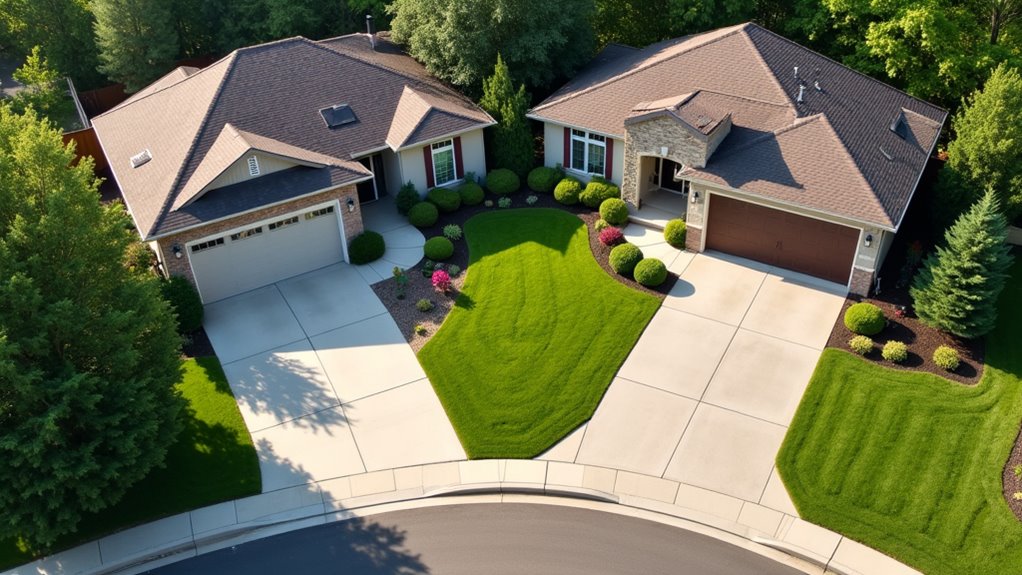
Before you accept an asphalt paving quote, request a written scope detailing exactly what’s included and excluded. Confirm it covers removal, grading, stone base installation, compaction, asphalt placement at a specified compacted thickness, edging, and cleanup, not just the surface. Verify measurements in square footage, tonnage, or cubic yards so you can compare bids accurately. Ask about warranty terms, licensing, insurance, and bonding. Understanding each phase helps you spot the warning signs ahead.
Key Takeaways
- What exactly does the scope include and exclude, covering removal, grading, base work, asphalt placement, edging, and cleanup?
- What are the compacted asphalt thickness, mix grade, sub-base depth in inches, and defined compaction standard?
- How are weak spots handled, including proof rolling to expose soft areas and subgrade remediation?
- What does the warranty cover, including surface defects, cracking, rutting, and delamination, and exactly how long does it last?
- Can you provide proof of licensing, insurance, bonding, recent local references, and a written weather contingency plan?
What should you ask before accepting an asphalt paving quote
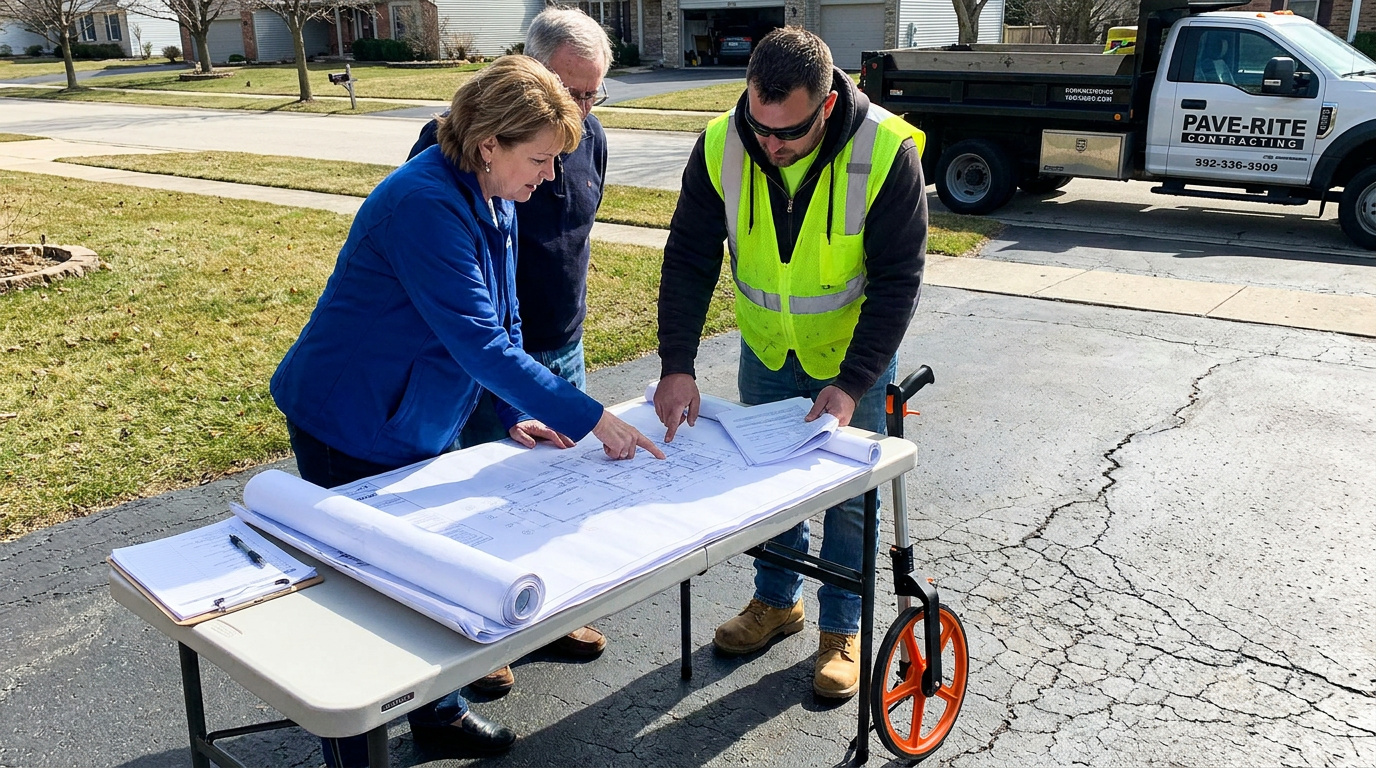
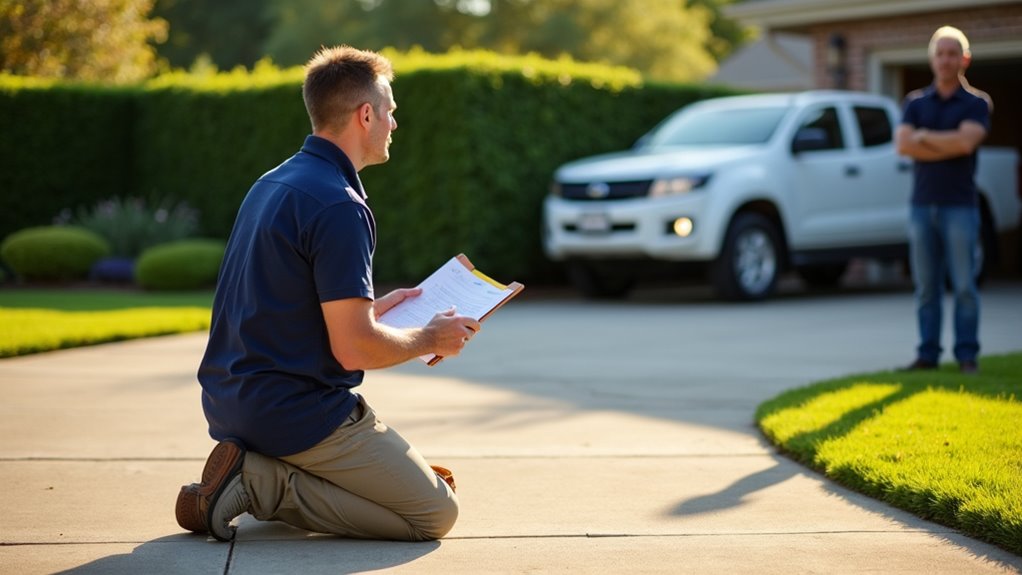
Ask for a written scope that spells out exactly what’s being paved and what’s excluded, because a vague quote invites disputes and hidden costs. Confirm your asphalt paving quote covers removal, grading, base work, asphalt placement, edging, and cleanup, not just surface application. Verify measurements in square footage, tonnage, or cubic yards so you can compare each paving contractor estimate accurately. Ask whether the price reflects repairs or full replacement, and request an on-site inspection with written notes on cracks, soft spots, and access limits. Your paving estimate questions should also address mix type, compacted thickness, and subgrade preparation. Don’t accept ambiguity, every line item must be defined. A precise scope protects you from change orders and ensures competing bids reflect identical specifications. When selecting a gravel paving contractor, it’s essential to evaluate their experience and previous projects to ensure quality work. A reputable gravel paving contractor will also provide a detailed timeline for project completion, helping you plan effectively.
What work should an asphalt paving quote include
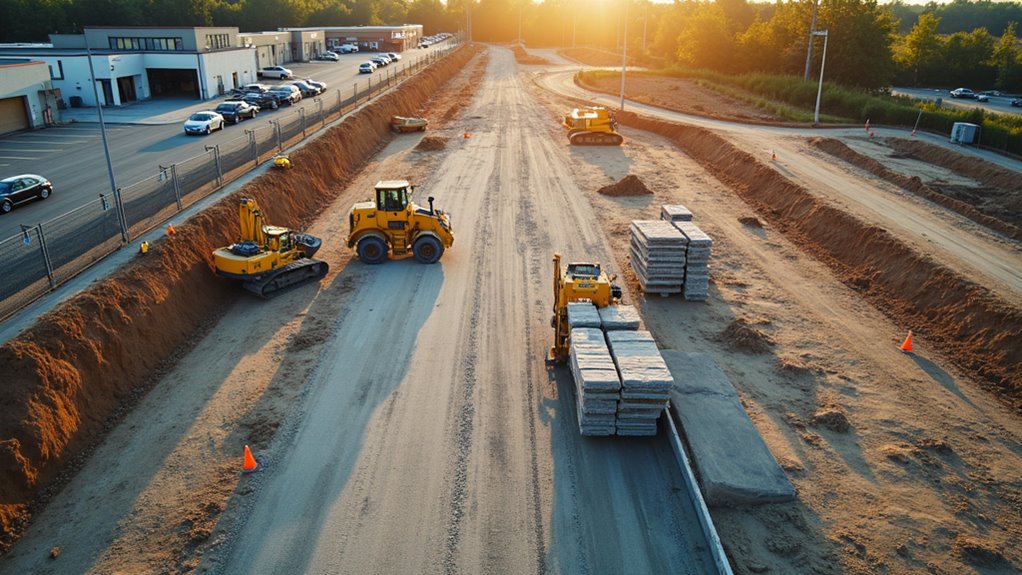
An asphalt paving quote should cover the full sequence of work, not just the final asphalt placement. A complete asphalt contractor quote specifies each phase so you can compare bids on identical terms. Ask for written scope that states exactly what’s paved and what’s excluded, and request measurements in square footage, tonnage, or cubic yards.
A thorough driveway paving quote should account for:
- Removal of existing surface or debris
- Grading and subgrade preparation
- Stone base installation and compaction
- Asphalt placement at specified compacted thickness
- Edging and final site cleanup
Verify whether you’re getting repairs or full replacement before accepting the price. Request an on-site inspection with written notes on cracks, soft spots, and access limits.
How should site preparation and base work be described
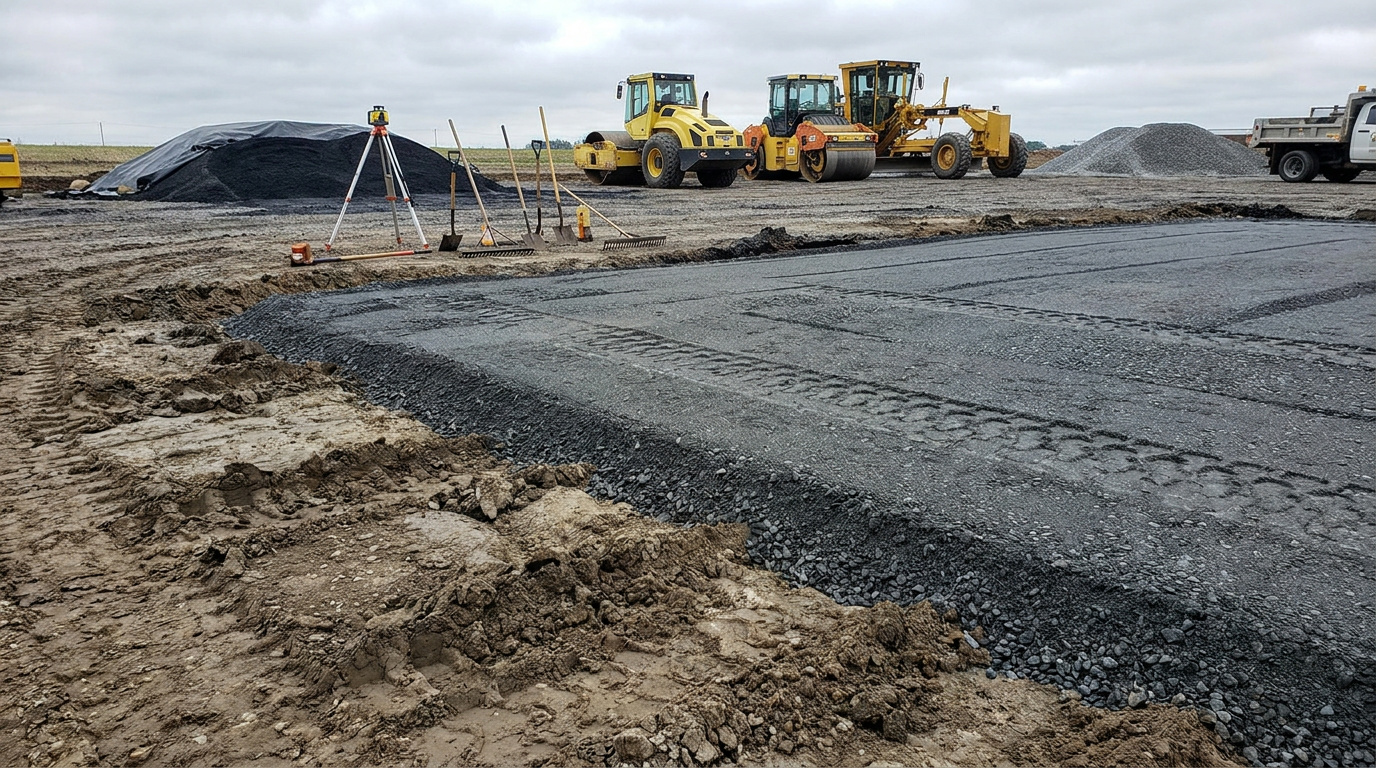
Site preparation and base work should be described in specifics rather than generalities, since it determines whether your asphalt lasts a decade or fails within two seasons. Ask exactly which surface preparation steps come before paving, and confirm whether excavation, grading, and stone base installation are included or excluded. You want the sub-base depth stated in inches and the compaction standard defined by an actual specification, not a vague promise of “proper compaction.” Request details on how the contractor handles weak spots, whether they’ll proof roll to expose soft areas, and what subgrade remediation they’ll perform when they find them. Verify whether base work falls under the warranty or sits outside it, since that distinction tells you who absorbs future failure costs. Permeable driveway paving lets water drain through the surface, reducing runoff and mitigating flooding, making it an eco-friendly choice for sustainability-minded homeowners.
Which quote details should you compare between contractors
Compare asphalt thickness, base work, and itemization between contractors. Because contractors rarely structure their quotes identically, you can’t compare bids until you’ve normalized them against the same scope and specifications. Line up each quote against identical measurements, compacted thickness, mix grade, and base depth before you weigh price. A lower bid often excludes excavation, drainage, or subgrade remediation that a competing quote includes.
| Comparison Point | What to Verify | Why It Matters |
|---|---|---|
| Asphalt thickness | Compacted, not loose | Affects durability |
| Base work | Depth and compaction | Prevents failure |
| Itemization | Prep, base, labor split | Reveals exclusions |
Confirm that permits, inspections, warranty terms, and cleanup appear in every quote. After you’ve matched scope, specifications, and inclusions across all bids, you’re comparing genuine value rather than mismatched numbers.
What warranty and scheduling questions should you ask
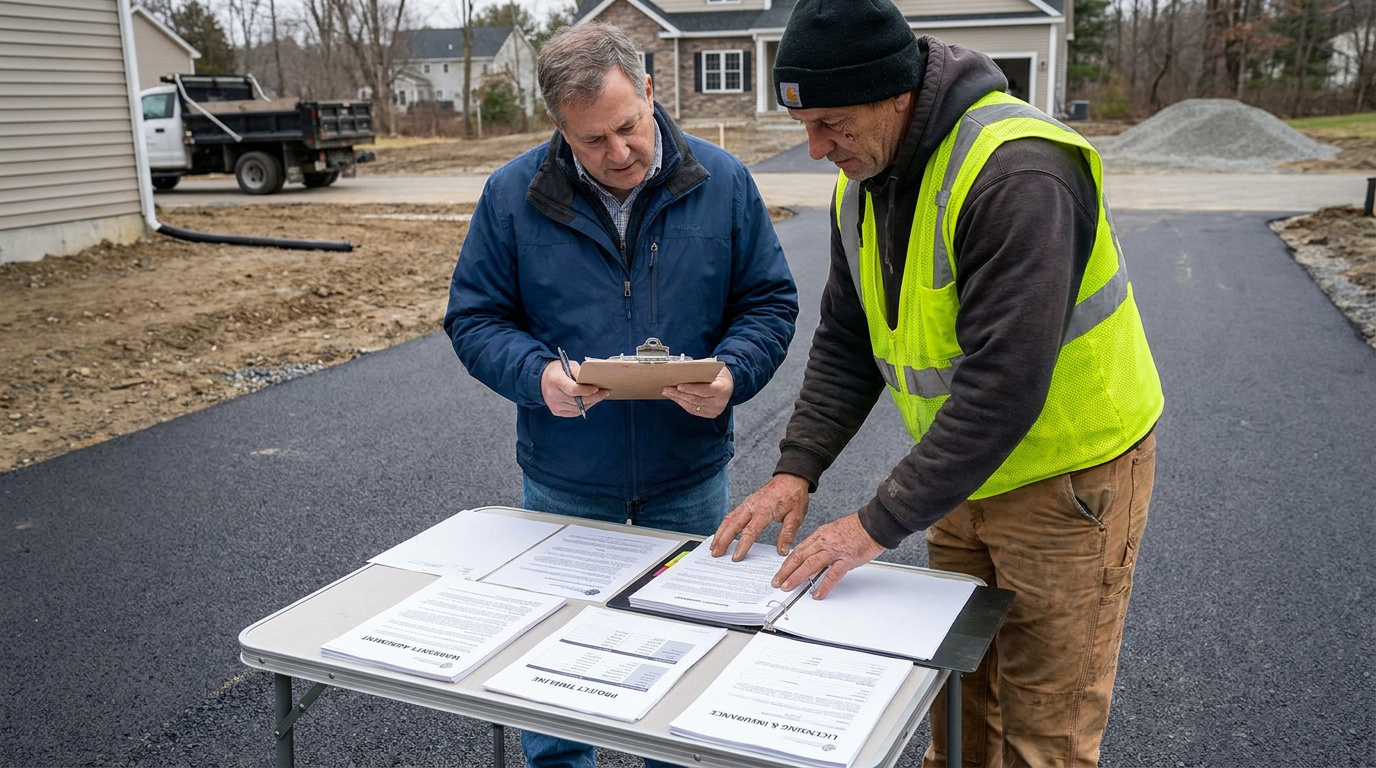
Ask each contractor what the warranty covers, how long it lasts, and what start-to-finish commitments they will make. A warranty defines your recourse when defects appear, and a firm timeline protects you from open-ended delays. Press each contractor for specifics on coverage, duration, and start-to-finish commitments before you sign.
- Ask what the warranty covers and exactly how long it lasts.
- Confirm whether coverage includes surface defects, cracking, rutting, and delamination.
- Request the project start date, completion date, and a written weather contingency plan.
- Require proof of licensing, insurance, and bonding before any work begins.
- Ask for recent local references and comparable completed projects you can verify.
Vague answers here signal risk, so demand written confirmation on every point.
Which warning signs should make you reconsider a paving quote
Several warning signs should make you reconsider a paving quote. Watch for vague scope language that doesn’t specify removal, grading, base work, or cleanup. If a contractor won’t confirm compacted thickness or minimum lift depth, they’re hiding installation shortcuts. Be wary when quotes lump site prep, base, and asphalt into a single line item, blocking accurate comparison. Missing proof of licensing, insurance, or bonding is a hard stop. Distrust any bid that skips an on-site inspection or ignores drainage and slope specifications. Pressure to pay large deposits upfront, refusal to provide written warranty terms, and unusually low pricing all point to substandard materials or thin lifts. If they can’t supply recent local references, reconsider before committing. Conducting a driveway paving comparison can help you identify the best contractor for your needs. It’s essential to consider not only the quotes but also the quality of materials and expertise offered.
Get a Clear Asphalt Paving Quote Before Work Begins
A detailed paving quote helps you understand what is included, compare contractors accurately, and avoid unexpected costs during your project. V&F Paving provides professional asphalt paving services with attention to site preparation, base work, and quality installation. Call (203) 624-2449 or request a free estimate to discuss your paving project and get a clear plan.
Frequently Asked Questions
How Long Should I Wait Before Driving on New Asphalt?
You should wait at least 24 to 72 hours before driving on new asphalt, though full curing takes 6 to 12 months. Don’t rush it. Fresh asphalt stays soft and vulnerable to scarring, indentations, and power steering marks. Hot weather extends the cure time, so you’ll want to allow extra days during summer. Avoid parking in the same spot repeatedly, and keep heavy vehicles off until the surface fully hardens.
How Often Should I Reseal My Asphalt Driveway?
You should reseal your asphalt driveway every two to three years, though local conditions dictate the exact interval. If you’re in a region with harsh freeze-thaw cycles, intense UV exposure, or heavy traffic loads, you’ll need to reseal more frequently. Watch for warning signs: fading color, surface cracking, raveling, or water no longer beading. Don’t reseal too soon, either. Wait at least 90 days after fresh installation before applying your first coat.
What Is the Typical Lifespan of an Asphalt Driveway?
You’ll typically get 15 to 20 years from an asphalt driveway, though proper installation and maintenance push it toward 25 or 30. Your lifespan depends on compacted thickness, base prep, subgrade quality, drainage, and local climate. If you skip regular resealing and crack repair, you’ll cut that timeline short. When you accept a quote, verify the mix grade, compacted lift thickness, and base compaction standards, since those directly determine longevity.
What Is the Best Season for Asphalt Paving?
You’ll get the best results paving during late spring through early fall, when ambient temperatures stay consistently above 50°F. Warm conditions let the asphalt mix cool slowly, giving crews enough time for proper compaction and lift bonding. Cold weather causes premature cooling, weak density, and delamination risk. Before you accept a quote, confirm the contractor’s start date, completion date, and weather contingency plan so temperature-sensitive work isn’t rushed or compromised.
How Should I Maintain My New Asphalt to Prevent Damage?
You’ll want to sealcoat your asphalt within the first year, then reapply every two to three years to protect against oxidation and water penetration. Keep the surface clean, and address cracks immediately with a quality crack filler before they widen. Don’t park heavy vehicles in the same spot repeatedly, since concentrated loads cause rutting. Direct water away from edges, and avoid turning your wheels while stationary to prevent scuffing and surface damage.