
The best oil stain remover for an asphalt driveway depends on how long the oil has been sitting. For a fresh drip, absorb what you can, then scrub with Dawn dish soap or a water-based degreaser labeled safe for asphalt. For a stain that has soaked in for weeks, an enzyme or microbial oil remover works better because it breaks the oil down instead of attacking the surface. Avoid gasoline, paint thinner, brake cleaner, and solvent degreasers. Asphalt is held together by a petroleum binder, so anything strong enough to dissolve motor oil can soften your driveway too. When selecting products to remove oil stains from asphalt driveway surfaces, match the cleaner strength to the stain age for best performance.
Key Takeaways
- Matching the remover to the stain’s age matters more than the brand, with dish soap for fresh drips and enzyme cleaners for stains that have set.
- Water-based, biodegradable formulas are the safest choice, because solvent and petroleum-based cleaners dissolve the asphalt binder along with the oil.
- Dawn dish soap removes light and fresh oil stains, though it rarely clears oil that has soaked below the surface.
- Reading the label before you buy prevents damage, since many “driveway” cleaners are made for concrete and are too aggressive for asphalt.
- Soft, crumbling, or gummy spots need repair rather than cleaning, and any stain must be primed before the driveway is sealcoated.
What Is the Best Oil Stain Remover for an Asphalt Driveway
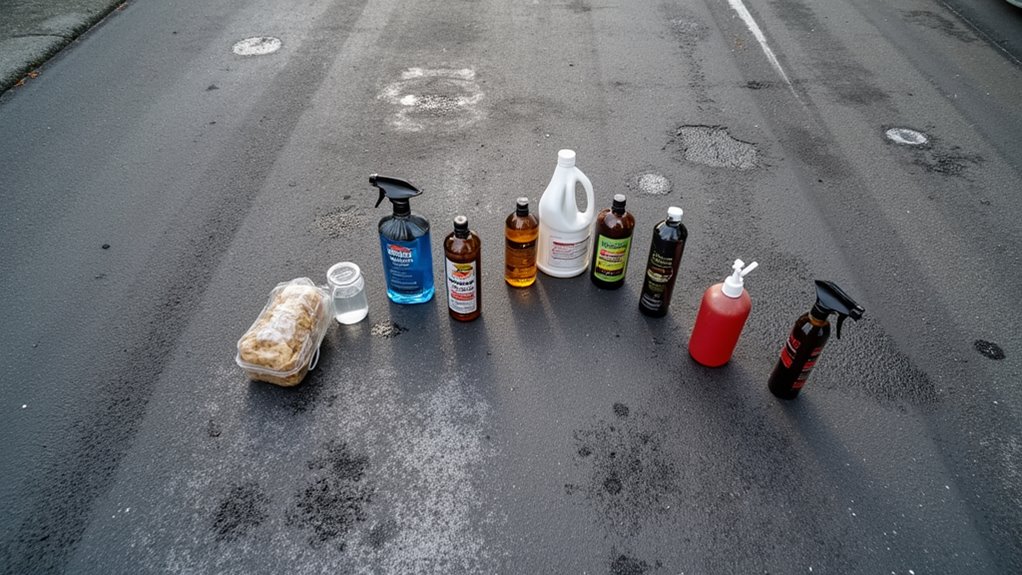
The best oil stain remover for an asphalt driveway is a water-based product that lifts or digests oil without dissolving the binder. Which type you reach for depends on the stain’s age and size. Our crews see the same pattern on driveways across New Haven County: a homeowner buys the strongest cleaner on the shelf, and the stain fades while the asphalt around it turns gray and rough. A gentler product used correctly gets a better result.
| Remover Type | How It Works on Asphalt | Best For |
|---|---|---|
| Dish soap (Dawn or similar) | Surfactants surround the oil so water can rinse it away | Fresh drips and light surface stains |
| Water-based degreaser | Alkaline cleaners emulsify oil for rinsing | Stains a few days to a few weeks old |
| Enzyme or microbial cleaner | Microbes digest hydrocarbons over several days | Set-in stains and repeat drip zones |
| Poultice-style remover | Draws oil up as it dries, then sweeps off | Large spots under parked cars |
| Clay absorbent | Soaks up liquid oil before it penetrates | Spills caught in the first hour |
The strongest cleaner isn’t the best one for asphalt. The best one removes the oil and leaves the binder intact.
Start with the mildest option that fits your stain, and step up only if it doesn’t respond.
Fresh vs. Old Asphalt Oil Stains: What Works Best?
Some oil stain removers damage asphalt because asphalt and motor oil are chemically related. The black binder that holds the stone together is a petroleum product, so solvents that cut grease also soften the binder and loosen the aggregate. That’s why a cleaner that works well on a concrete garage floor can leave a pitted, faded patch on a blacktop driveway.
Products to keep off asphalt:
- Gasoline, kerosene, and diesel, which dissolve the binder on contact
- Paint thinner, mineral spirits, and acetone, which strip the surface and release fumes
- Brake cleaner and carburetor cleaner, which are aggressive solvents built for metal parts
- Undiluted citrus solvents (d-limonene), which are strong enough to dissolve asphalt residue off tools
- Muriatic acid and bleach, which don’t break down oil and can etch stone and harm plants
If a spot feels soft or sticky, or crumbles when you scrape it, the oil or an earlier cleaner has already damaged the binder, and no amount of cleaning will restore it. Our guide to oil stains on asphalt vs concrete explains why the two surfaces need different products.
Will Dawn Dish Soap Remove Oil Stains From Asphalt
Dawn dish soap will remove fresh and light oil stains from asphalt, and it’s the safest first step because it contains no petroleum solvents. It breaks oil into small droplets that water can carry away. It’s less effective on stains older than a few weeks, because by then most of the oil has wicked below the surface where a brush can’t reach.
To use it, wet the stain and apply a generous layer of undiluted Dawn. Scrub with a stiff nylon brush for a few minutes, let it sit 20 to 30 minutes, then rinse with hot water. Repeat two or three times before switching products. For the full routine, including absorbents and a scrub that pulls oil up from the pores, follow our step-by-step household method using baking soda and dish soap.
Dish soap is the right first try. If the stain is still visible after three rounds, switch to a degreaser rather than scrubbing harder.
Which Commercial Asphalt Oil Stain Removers Work Best
The commercial asphalt oil stain removers that work best are water-based degreasers for recent stains and enzyme or microbial cleaners for older ones. The formula matters more than the brand. Most hardware stores carry products such as Simple Green, Oil Eater, Terminator-HSD, and heavy-duty purple degreasers. Formulas and labels change, so check every bottle against these points before using it on blacktop:
- The label lists asphalt or blacktop as a safe surface, not only concrete
- It’s water-based and biodegradable
- It contains no petroleum distillates, solvents, or acids
- It gives a dwell time and dilution rate you can follow
Heavy-duty alkaline degreasers work well but are strong. Dilute them as directed, keep them wet, and rinse within the label’s time limit so they don’t dull the surface. Enzyme cleaners are slower and gentler. They keep working for days as long as the area stays damp, which makes them the better pick for a drip zone that’s been there all summer. If you’re researching how to clean oil off asphalt, Dawn dish soap serves as an effective asphalt oil stain remover when you pour it directly on fresh stains, scrub with a stiff bristle brush, and let it sit for 20, 40 minutes before rinsing.
If a product’s label doesn’t name asphalt as a safe surface, treat it as a concrete cleaner and leave it on the shelf.
How Does Stain Age Change Which Remover You Should Use
Stain age changes which remover you should use because oil moves deeper into asphalt the longer it sits. A fresh spill stays on top. Within a few weeks the oil has soaked into the pores and started to soften the binder, so the remover has to reach it there.
| Stain Age | What’s Happening | Remover to Use |
|---|---|---|
| Under a day | Oil is still mostly liquid on the surface | Absorbent, then dish soap |
| A few days to a few weeks | Oil has soaked into surface pores | Water-based degreaser |
| Months or longer | Oil has penetrated and may have softened the binder | Enzyme cleaner over several rounds |
| Soft or crumbling spot | The binder is damaged | Patch or repair, not cleaning |
Older stains rarely clear in one session. Our guide on how to remove old oil stains from asphalt covers multi-round treatments and how to tell when a stain has turned into damage.
What Is the Right Way to Use an Asphalt Oil Stain Remover
The right way to use an asphalt oil stain remover is to follow the label, work in mild weather, and rinse thoroughly so no residue stays on the surface. A few habits make any product more effective:
- Test a small, hidden area first and wait a day before treating the whole stain
- Work when the pavement is between 50°F and 85°F, which in Connecticut usually means April through October
- Use a stiff nylon brush, never a wire brush, which tears loose stone from the surface
- Keep the product wet for its full dwell time, especially enzyme cleaners
- Rinse with a garden hose, or with a pressure washer at 1,500 to 2,800 PSI using a 25° or 40° tip held about a foot away
- Keep runoff out of storm drains and dispose of oily absorbent the way the EPA recommends for used motor oil
For pressure washer settings in more detail, see our guide on how to get oil off a driveway without damaging it.
Cold slows everything down. A remover that works in an hour in July can take all day in late October, so plan bigger cleanups before the weather turns.
When Should You Call a Paving Contractor Instead
You should call a paving contractor when the stain has damaged the asphalt, keeps coming back, or has to be dealt with before sealcoating. Cleaning can lift oil, but it can’t rebuild a binder that has already broken down. Call when:
- The surface is soft, gummy, or shedding stone where the oil sat
- The stained area has cracks or a low spot that holds water
- You plan to reseal and the stain is still visible, since sealer won’t bond to oily asphalt
- Oil keeps returning to the same spot after every cleaning
When we prep an oil-stained driveway for sealcoating, we clean the area, apply an oil spot primer so the sealer can bond, and patch any section where the binder has failed before sealing the whole surface. Damaged spots are cut out and replaced as part of our asphalt driveway repair work. If you’re thinking about resealing at the same time, our breakdown of driveway sealcoating cost shows what affects the price.
Get Oil-Damaged Asphalt Repaired or Resealed in Connecticut
Some oil stains clean up with a bottle of dish soap and an afternoon. Others mean the asphalt underneath needs attention. V&F Paving has repaired and resealed driveways across Connecticut since 1994, from Hamden and New Haven to Fairfield County. If a stain won’t lift or the surface around it is breaking down, our team can tell you whether it needs cleaning, priming, patching, or professional driveway sealcoating in Connecticut. Call (203) 624-2449 or request a free estimate.
Frequently Asked Questions
Does WD-40 Remove Oil Stains From an Asphalt Driveway?
WD-40 can loosen a fresh oil stain, but it’s a poor choice for asphalt. It’s petroleum-based, so it softens the same binder you’re trying to protect, and it leaves an oily film that you then have to scrub off with dish soap. People often use it on concrete. On blacktop, a water-based degreaser or Dawn will lift the oil without adding more petroleum to the surface.
Can You Sealcoat Over an Oil Stain on Asphalt?
You shouldn’t sealcoat directly over an oil stain. Sealer can’t bond to oily pavement, so it peels or stays discolored over the spot within a season. Clean the stain first, then apply an oil spot primer made for asphalt sealcoating and let it dry before sealing. If the oil has softened the asphalt, the spot needs patching before any sealer goes down.
Why Does an Oil Stain Come Back After Cleaning?
An oil stain comes back because oil that soaked below the surface keeps wicking upward as the pavement warms and dries. The top looks clean after a rinse, then the shadow returns a few days later. This is common with stains older than a few weeks. An enzyme cleaner keeps working below the surface, so repeat treatments with one usually clear the stain in two or three rounds.
How Long Should an Oil Stain Remover Sit on Asphalt?
Dish soap and degreasers usually need 15 to 30 minutes. Enzyme cleaners need several hours to a few days. Always follow the label, since some alkaline degreasers can dull asphalt if they dry on the surface. Keep the area damp during the dwell time and don’t let a strong degreaser bake in direct sun. In cool fall weather, expect every product to take longer.
Are Oil Stain Removers Safe Around Grass, Pets, and Storm Drains?
Water-based, biodegradable removers are the safest choice near grass and pets, but no cleaner should go into a storm drain. In most Connecticut towns, storm drains flow to local streams without treatment. Block runoff with absorbent or a towel, keep pets off the area until it’s rinsed and dry, and bag oily absorbent instead of sweeping it onto the lawn.