
The best paving solution for a steep driveway depends on how steep it is and how you’ll use it in winter. For most moderate slopes up to about 10 to 12 percent, asphalt or concrete with a textured finish works well when it sits on a deep, well-drained base. Steeper driveways benefit from broom-finished or grooved concrete, textured pavers, or a heated system that keeps the surface clear of ice. Whatever surface you choose, drainage, a level landing at the garage, and a smooth transition at the street matter as much as the material.
Key Takeaways
- Most residential driveways should stay under a 12 to 15 percent grade, and many towns set a maximum.
- Asphalt works well on moderate slopes when it’s compacted properly over a deep base, but very steep sections are harder to pave and can shove under braking.
- Broom-finished or grooved concrete and textured pavers give the most traction on steep grades.
- Gravel washes out on slopes unless it’s angular, well compacted, and paired with drainage or grid systems.
- Drainage, a flat landing at the top, and gentle transitions at both ends prevent washouts, scraping, and icy runoff.
What Is the Best Paving Solution for a Steep Driveway
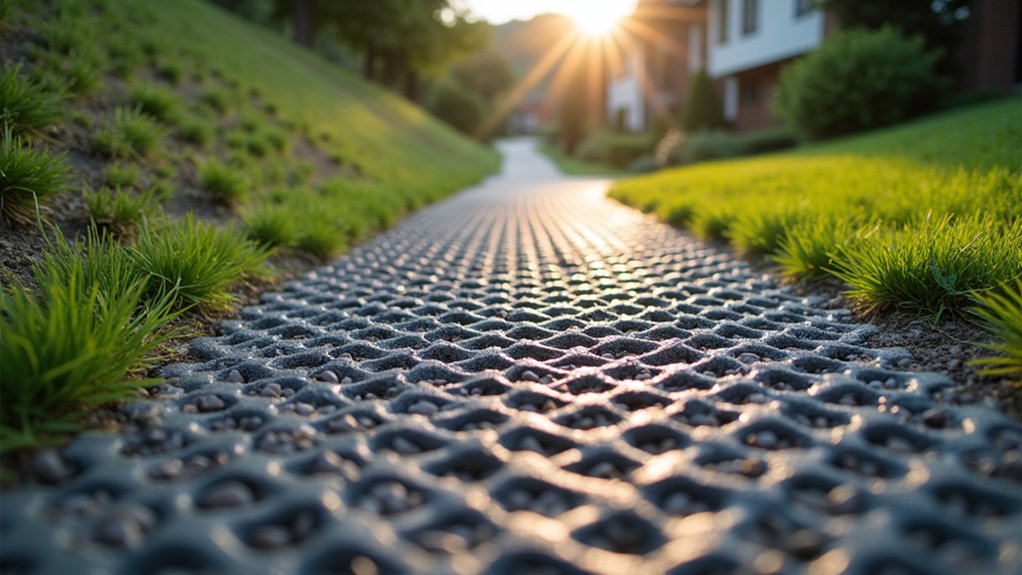
The best paving solution for a steep driveway is a durable surface with good traction, built on a solid base with drainage that moves water off the slope. There’s no single best material. The right choice depends on the grade, your budget, and how much you want to deal with snow and ice.
| Surface | Traction on a Slope | Best For |
|---|---|---|
| Asphalt | Good when compacted well, slicker when wet or icy | Moderate slopes and snow-plowed driveways |
| Broom-finished or grooved concrete | Very good, with texture cut across the slope | Steeper grades and long-term durability |
| Textured pavers or Belgian block | Very good, and joints add grip | Steep, high-end driveways and aprons |
| Compacted angular gravel | Fair, with loose stone on top | Long rural driveways on gentler slopes |
| Heated asphalt, concrete, or pavers | Best in winter, keeps snow and ice off | Very steep driveways in snowy climates |
On a steep driveway, the surface is only half the answer. Drainage and how the driveway meets the street and garage decide whether it works.
How Steep Can a Driveway Be
A residential driveway can typically be up to about 12 to 15 percent grade before it becomes hard to drive, plow, and walk safely. Many towns set a maximum in their zoning or driveway regulations. Grade is the rise divided by the run, times 100. A driveway that rises 2 feet over 20 feet has a 10 percent grade, and a 15 percent grade is about 8.5 degrees.
| Grade | What It Feels Like | What Works |
|---|---|---|
| Under 5 percent | Gentle, barely noticeable | Any surface |
| 5 to 10 percent | Noticeable, fine for most cars | Asphalt, concrete, pavers, compacted gravel |
| 10 to 15 percent | Steep, tricky in ice and snow | Textured concrete or pavers, well-built asphalt, possibly heated |
| Over 15 percent | Very steep, may exceed town limits | Grooved concrete, heated systems, or a redesigned layout |
Transitions matter too. A sudden change in grade at the street or garage can scrape bumpers and the undersides of cars. A short, flatter section at each end makes a steep driveway much easier to use. To work out your grade, follow our guide to measure your driveway accurately, and check your town’s driveway rules before planning a new one.
Is Asphalt a Good Choice for a Steep Driveway
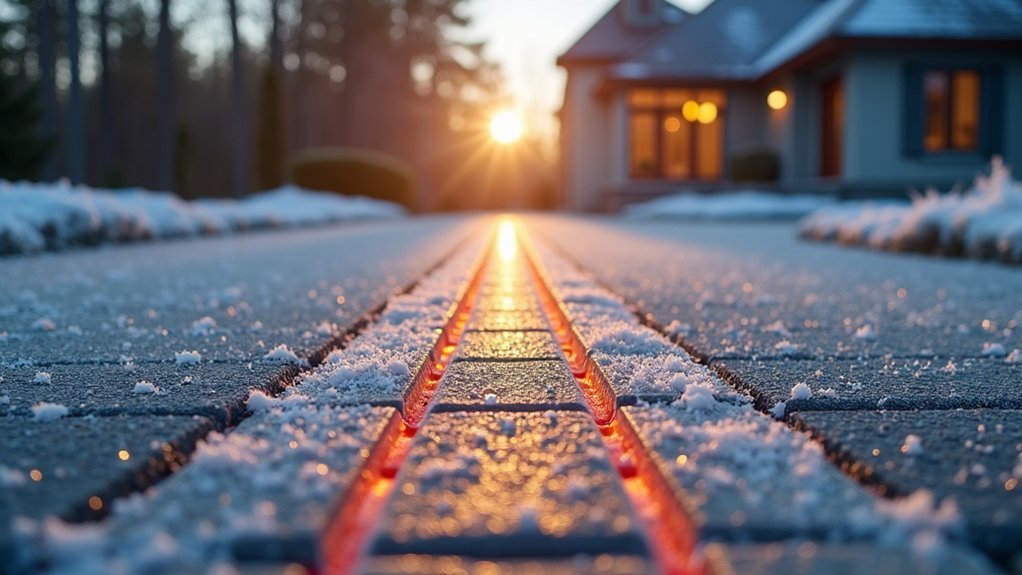
Asphalt is a good choice for most moderately steep driveways, especially in Connecticut, where it handles freeze-thaw cycles and snowplows well. It’s flexible, quick to install, and easy to repair. On a slope, the keys are compaction and base:
- A deep, compacted base keeps the asphalt from sliding or cracking as water moves downhill under it. Our guide on how thick an asphalt driveway should be covers base and surface depths.
- Careful rolling is harder on steep grades, where rollers lose grip, so experienced crews compact steep sections in shorter passes.
- A denser surface mix resists shoving, the rippling that happens where cars brake hard on hot days.
Above about 15 percent, asphalt gets harder to place and compact, and it can feel slick in ice. Many steep Connecticut driveways use asphalt on the main run with a textured concrete or Belgian block apron at the bottom, where cars brake and turn.
Is Concrete or Pavers Better for a Sloped Driveway
Concrete and pavers both give excellent traction on a sloped driveway, with concrete usually costing less and pavers offering more style and easier repairs. Both work better than smooth surfaces on steep grades because their texture can be designed for grip.
- Concrete: A broom finish or grooves cut across the slope, not up and down it, give tires and boots something to grip. Concrete is rigid, so it needs control joints and a well-compacted base. Avoid rock salt in the first winter, since it can damage new concrete.
- Pavers: Textured or tumbled pavers and Belgian block give grip at every joint. On slopes they need strong edge restraints and a solid base so they don’t creep downhill. Our guide to concrete pavers for driveways covers options and installation.
Can a Gravel Driveway Work on a Steep Slope
A gravel driveway can work on a gentle to moderate slope, but steep gravel driveways wash out, rut, and lose stone every time it storms or snows. To make gravel work on a hill:
- Use angular crushed stone or processed gravel that locks together, not round pea gravel
- Compact at least 4 inches of stone over a firm base
- Install geocell or plastic grid panels to hold stone in place on the steepest sections
- Add water bars or swales that turn runoff off the driveway before it gathers speed
- Plan on regular top-ups and grading after storms
Our gravel driveway cost guide covers pricing, and our gravel driveway maintenance guide explains how to keep a sloped gravel surface in shape. Many owners of steep driveways eventually pave the steepest section and keep gravel on the flatter parts.
Are Heated Driveways Worth It on a Steep Slope
Heated driveways are often worth it on very steep driveways in snowy climates, where ice makes the driveway hard to use for weeks each winter. Electric cables or hydronic tubing under asphalt, concrete, or pavers melt snow and ice automatically, so you don’t have to plow or salt a steep grade.
They’re also the most expensive option, running roughly $12 to $25 per square foot according to HomeAdvisor’s 2026 driveway cost data, plus operating costs each winter. To save money, many homeowners heat only the steepest section, the tire tracks, or the area near the garage. Our guide on whether heated driveways work covers how they perform and what they cost to run.
A heated driveway is a big investment. On a slope you can’t safely drive or walk in January, it may be the only real fix.
How Do You Fix Drainage and Washouts on a Steep Driveway
You fix drainage and washouts on a steep driveway by stopping water from running down the driveway’s full length. Water picks up speed on a slope, carries away gravel and soil, undermines edges, and freezes into ice sheets in winter.
- Cross-slope or crown: Shape the surface so water runs off the side instead of straight down.
- Swales or ditches: Carry water along the edges and away from the driveway.
- Trench drains: Catch water across the driveway at the bottom, or at the garage when the driveway slopes toward the house.
- Supported edges: Water running along unsupported edges eats away at them. Our guide on how to repair crumbling driveway edges explains how to rebuild them.
- Downspouts: Point them away from the driveway so roof water doesn’t add to the runoff.
When a driveway slopes down toward a garage, a trench drain in front of the door is essential to keep water and ice out.
How Do You Make a Steep Driveway Safer in Winter
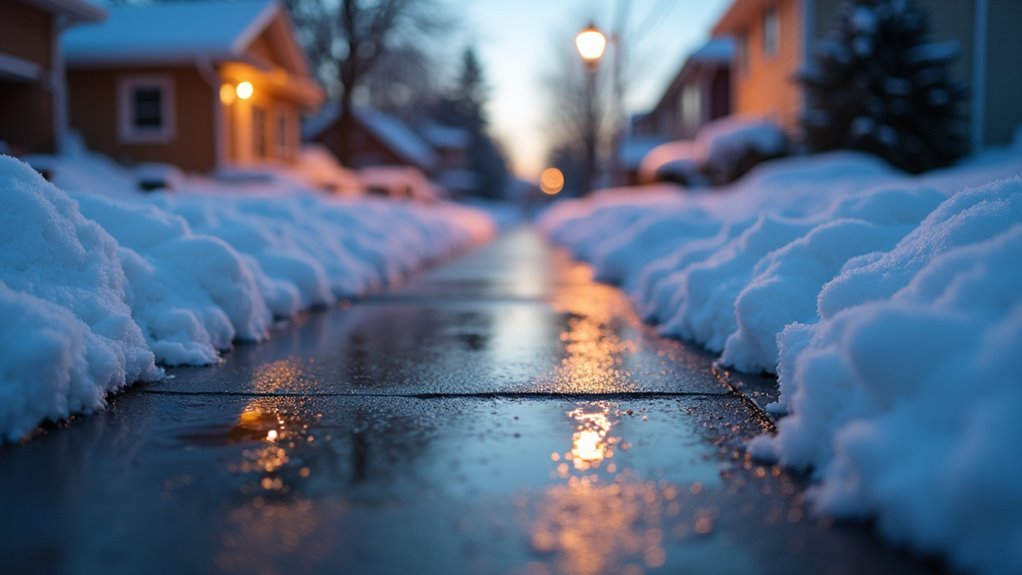
You make a steep driveway safer in winter by clearing snow early, using traction materials, and building in a flat landing where cars stop. Connecticut’s freeze-thaw cycles turn melting snow into ice overnight, and a slope makes that much more dangerous.
- Plow or shovel before snow packs down, especially on the steepest section
- Use sand or grit for traction, and use de-icer sparingly on new concrete and pavers
- Keep a flat landing at the top so cars aren’t stopping and starting on the slope
- Mark edges with stakes so plows don’t damage them
- Consider heating just the steepest section if ice is a regular problem
Find the Right Surface for Your Steep Driveway
Steep driveways need the right surface, base, and drainage working together to stay safe and last. V&F Paving can evaluate your slope and recommend the right combination of asphalt, concrete, Belgian block, and drainage through its driveway paving services. Call (203) 624-2449 or request a free estimate to discuss your driveway’s slope, drainage, and paving options.
Frequently Asked Questions
What Is the Best Gravel for a Steep Driveway?
The best gravel for a steep driveway is angular crushed stone or processed gravel that compacts into a firm surface. Round stones like pea gravel and river rock roll under tires and wash downhill. For the steepest sections, add a geocell grid to hold the stone in place, and build water bars to turn runoff off the driveway.
Can You Pave Over a Steep Gravel Driveway?
Yes. An existing gravel driveway often makes a good start for a paved base, though steep driveways usually need extra base work and drainage first. The gravel is regraded, more stone is added and compacted, and drainage is built in before asphalt or concrete goes down. Paving the steepest section first is a common way to spread out the cost.
Do Steep Driveways Cost More to Pave?
Usually, yes. Steep driveways often need more excavation, a deeper base, drainage features, and more careful compaction, all of which add labor. Very steep sections may also need concrete or pavers instead of asphalt. Our guide on how much it costs to pave a driveway explains how site conditions affect price.
Can You Add a Landing or Turnaround to a Steep Driveway?
Yes, and it’s one of the most useful upgrades for a steep driveway. A flat landing near the garage gives cars a safe place to stop, and a turnaround lets you pull out forward instead of backing down the slope. Both may need retaining walls or regrading, and a new turnaround may need a town permit.
Does a Steep Driveway Hurt Resale Value?
A steep driveway can make some buyers hesitate, especially in snowy areas, but a well-built one with good traction and drainage limits that concern. Textured surfaces, a heated section, or a landing at the top can turn a drawback into a selling point. Our guide on whether paving your driveway increases home value covers what buyers look for.