

An asphalt driveway should have 2.5 to 3 inches of compacted asphalt over 6 to 8 inches of compacted gravel base for everyday cars and SUVs. Three inches is the safer choice in Connecticut, where freeze-thaw winters punish thin pavement. If you park heavy pickups, RVs, or delivery trucks, go to 4 inches or more of asphalt with an 8 to 12-inch base. The gravel base matters as much as the asphalt: a thick top layer over a weak base will still crack and sink.
Key Takeaways
- Most residential asphalt driveways need 2.5 to 3 inches of compacted asphalt, with 2 inches as the bare minimum for light cars over an excellent base.
- The gravel base should be at least 6 inches of compacted stone, and 8 to 12 inches on clay, wet ground, or in cold climates.
- Heavy vehicles such as RVs, box trucks, and loaded pickups call for 4 inches or more of asphalt and a deeper base.
- Thickness in a quote should always be the compacted thickness, since asphalt compresses by about 20 to 25 percent when rolled.
- Most early driveway failures come from a thin or poorly compacted base, poor drainage, or skimping on asphalt thickness.
How Thick Should an Asphalt Driveway Be
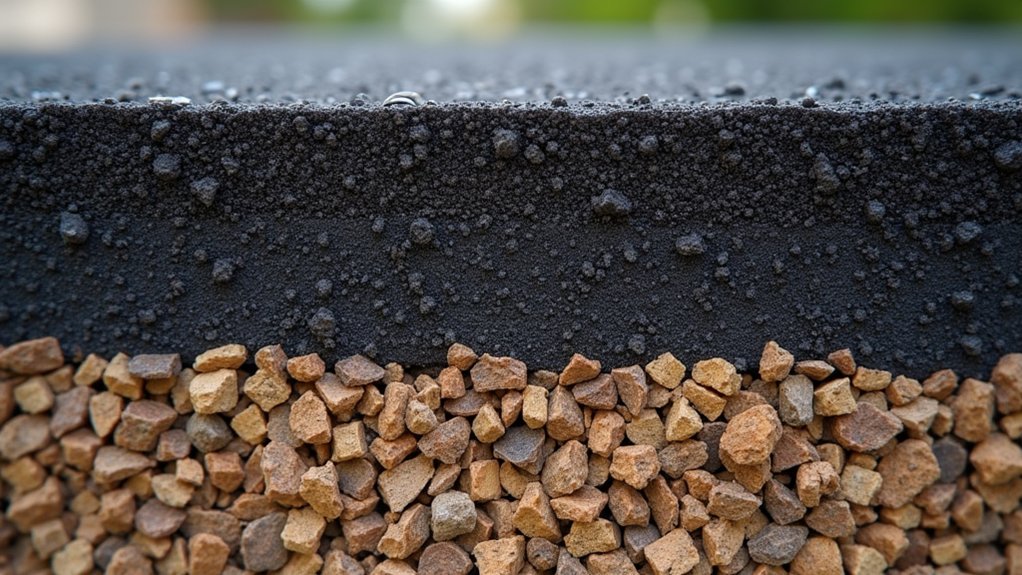
An asphalt driveway should be 2.5 to 3 inches thick after compaction for normal residential use. That’s enough to carry cars and SUVs for 15 to 25 years when it sits on a solid, well-drained gravel base and is sealcoated regularly. Thinner asphalt can work over an excellent base with light traffic, but it leaves no margin for soft soil, heavy loads, or hard winters.
On most Connecticut driveways, we pave 3 inches of compacted asphalt over 8 inches of compacted processed gravel. That combination handles plow trucks, delivery vans, and decades of freeze-thaw cycles without the cracking and settling we see on thinner driveways.
Asphalt is often laid in two passes, a binder layer and a smoother top layer, which adds strength without changing the total thickness. Our guide to binder and surface layers explains how those layers work together.
Is 2, 2.5, or 3 Inches of Asphalt Enough for a Driveway
Two inches is the minimum and suits only light cars over a strong base, 2.5 inches works for most driveways, and 3 inches is the best all-around choice for durability. The table shows how each thickness holds up.
| Compacted Asphalt Thickness | Best Suited For | How It Holds Up |
|---|---|---|
| 1.5 inches | Overlays on an existing sound driveway only | Too thin for a new driveway, cracks under load |
| 2 inches | Light cars over an excellent, well-drained base | Workable, but shorter life in cold climates |
| 2.5 inches | Cars and SUVs over a 6 to 8-inch base | Solid standard for most homes |
| 3 inches | Cars, SUVs, and occasional trucks, especially in cold climates | Best balance of cost and durability |
| 4 inches or more | RVs, box trucks, heavy pickups, soft soil | Built for heavy or frequent loads |
If a quote lists 2 inches or less for a new driveway, ask why. Sometimes the base is exceptional, but often the price is low because the asphalt is thin.
A thin driveway costs less on install day and more every year after. The extra half inch to inch of asphalt is the cheapest insurance a driveway can get.
How Thick Should the Gravel Base Be Under an Asphalt Driveway
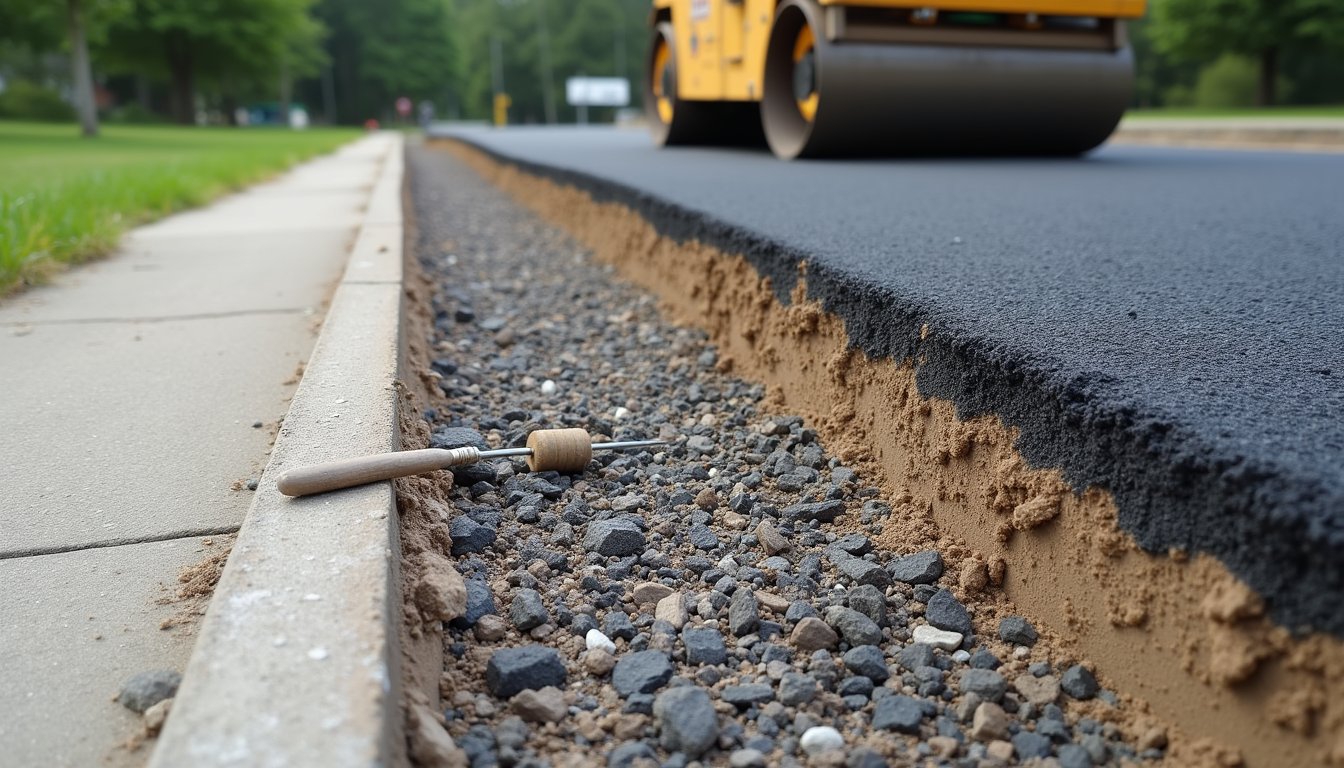
The gravel base under an asphalt driveway should be at least 6 inches of compacted crushed stone, and 8 to 12 inches when the soil is soft, wet, or clay-heavy. The base carries the weight of your car and spreads it into the ground. The asphalt on top mostly protects the base from water and wear.
A good base has three parts:
- Prepared subgrade: Topsoil, roots, and soft material are dug out, and the native soil is graded and compacted.
- Compacted gravel base: Crushed stone or processed gravel is spread in lifts and compacted with a vibratory roller or plate compactor until it’s firm and won’t move underfoot.
- Proper slope: The finished surface should slope about 2 percent, or 1/4 inch per foot, so water runs off instead of soaking in at the edges.
State paving associations publish similar guidance, including this Virginia Asphalt Association driveway guide. Whatever the depth, the base has to be compacted. Six inches of loose stone isn’t a 6-inch base.
How Does Vehicle Weight Change Asphalt Driveway Thickness
Vehicle weight changes asphalt driveway thickness because heavier axles bend the pavement more each time they pass. Thin asphalt eventually cracks from that repeated bending. The heavier and more frequent the load, the more asphalt and base you need.
| Typical Vehicles | Compacted Asphalt | Compacted Gravel Base |
|---|---|---|
| Cars, small SUVs | 2.5 to 3 inches | 6 to 8 inches |
| Full-size SUVs, pickups, occasional delivery trucks | 3 inches | 8 inches |
| RVs, boats on trailers, box trucks, oil delivery | 4 inches | 8 to 12 inches |
| Regular heavy equipment or commercial vehicles | 4 to 6 inches or more | 10 to 12 inches or more |
Think about the heaviest vehicle that will ever use the driveway, not just your daily car. Heating oil trucks, propane deliveries, moving trucks, and dumpsters all count. The apron near the street and any turning area take the most stress and benefit most from extra thickness.
Why Do Connecticut Driveways Need More Than the Minimum
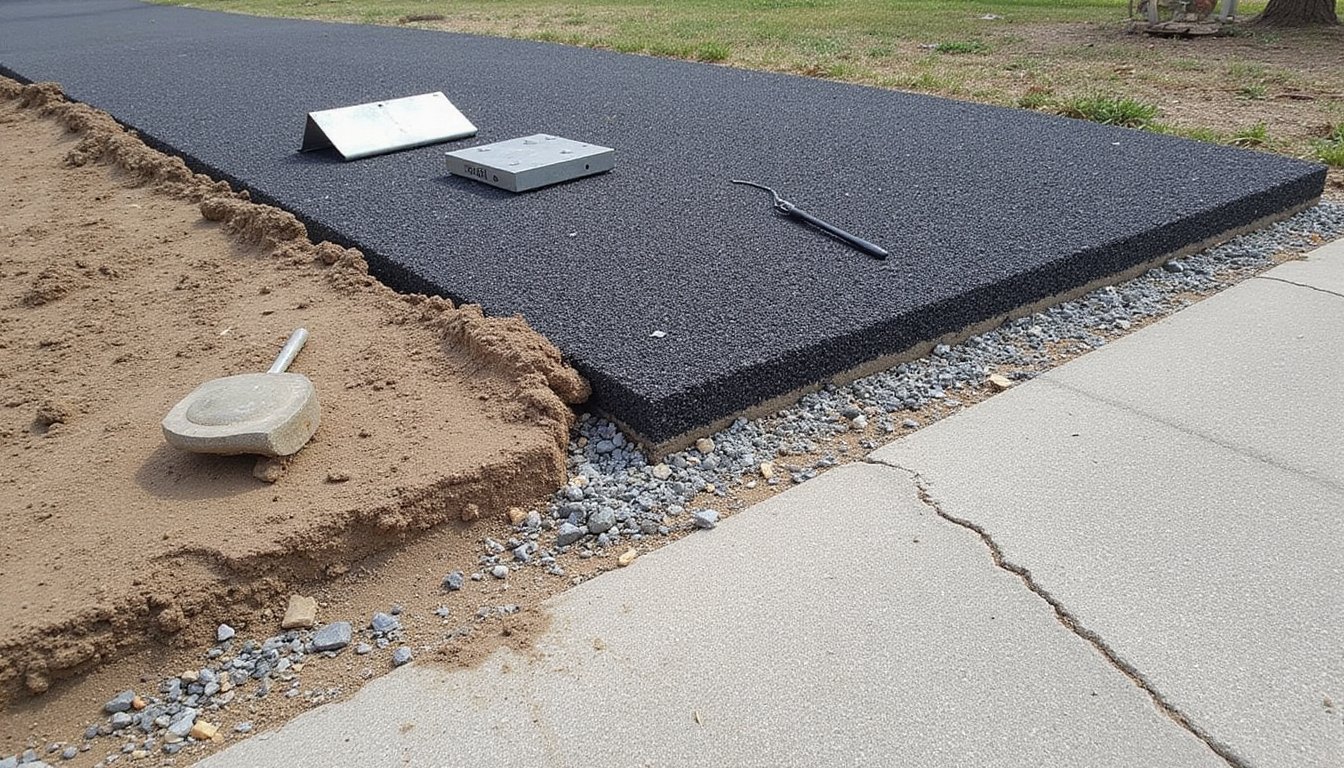
Connecticut driveways need more than the minimum because freeze-thaw cycles, snowplows, and wet spring soil put more stress on pavement than mild climates do. Water that gets into the base freezes, expands, and lifts the asphalt. When it thaws, the ground softens and the pavement sinks a little. Repeat that dozens of times each winter, and thin driveways crack and heave within a few years.
That’s why we recommend 3 inches of asphalt and an 8-inch or deeper base for most Connecticut homes:
- Frost can reach 3 feet or more into the ground in a Connecticut winter, so a deep, free-draining base limits heaving
- Plows, shovels, and salt wear the surface faster, so the extra thickness buys years of service
- Clay soils, common in parts of New Haven and Fairfield counties, hold water and need a deeper base to stay stable
- Spring thaw softens the ground under thin pavement, which is when ruts and sunken spots usually appear
Drainage matters as much as depth. Gutters and downspouts that empty onto the driveway, or a driveway lower than the lawn, will undermine even a thick base.
What Is the Difference Between Compacted and Loose Asphalt Thickness
Compacted thickness is the finished depth after rolling, and it’s the only number that matters. Hot asphalt is spread loose and then compressed by about 20 to 25 percent, so to finish at 3 inches, a crew lays down roughly 3.75 to 4 inches of loose material.
This difference shows up in quotes. “Three inches of asphalt” should mean 3 inches compacted. A contractor quoting loose thickness is effectively selling you a thinner driveway.
Asphalt is also sold by weight. Each inch of compacted asphalt weighs about 110 to 115 pounds per square yard, so one inch over a 600-square-foot driveway takes roughly 3.7 tons. That’s why every extra inch adds noticeably to the material cost. Our asphalt driveway cost guide covers what that means for price. Mix type matters too, which we cover in the best types of asphalt for residential driveways.
How Can You Check the Asphalt Thickness in a Paving Quote
You can check the asphalt thickness in a paving quote by making sure it lists compacted asphalt depth, base depth, base material, and the number of layers in writing. A vague line like “pave driveway” leaves room to cut corners. Before you sign, look for:
- Compacted asphalt thickness in inches, and whether it goes down in one layer or two
- Gravel base depth after compaction, and the type of stone
- How much excavation is included, and what happens if soft soil is found
- How drainage and slope will be handled
- Whether the edges will be tapered or supported so they don’t crumble
Start by measuring the area so you can compare quotes on the same basis, using our guide to measure your driveway accurately. Then work through our list of questions to ask before getting a paving quote.
What Thickness Mistakes Cause Driveways to Fail Early
The thickness mistakes that cause driveways to fail early are a thin or uncompacted base, asphalt under 2 inches on a new driveway, and paving over soft or wet ground. Each one shows up within a few seasons as cracks, ruts, or sunken areas.
- Skipping excavation: Paving over topsoil or an old, failing surface puts the new asphalt on a weak foundation.
- Thin base to save money: Less stone is the most common shortcut in low bids and the hardest one to see after paving.
- Poor compaction: Asphalt that isn’t rolled while hot stays porous and wears out faster.
- Unsupported edges: Thin, unsupported edges crumble when tires roll off them.
- Driving on it too soon: Heavy loads on fresh asphalt leave ruts. Follow our guide on how long to stay off a newly paved driveway.
If your current driveway is cracking across large areas or sinking, the base has likely failed and more asphalt on top won’t fix it. Our guide on when to replace an asphalt driveway explains the signs.
Build Your Driveway to the Right Thickness
The right asphalt and base thickness depends on your soil, drainage, and the vehicles that use your driveway, and getting it right the first time prevents years of repairs. V&F Paving can evaluate your property and recommend the right asphalt and base depth through its driveway paving services. Call (203) 624-2449 or request a free estimate to discuss your driveway, site conditions, and paving options.
Frequently Asked Questions
Is 1.5 Inches of Asphalt Enough for a Driveway?
No, 1.5 inches isn’t enough for a new driveway. It’s too thin to handle vehicle loads and cracks quickly, especially through Connecticut winters. That depth is used for overlays, where a new layer goes over an existing driveway with a sound base. Our guide on how thick an asphalt overlay should be explains when an overlay makes sense.
How Many Layers of Asphalt Does a Driveway Need?
Most residential driveways are paved in one or two layers. Two layers, a coarser binder course topped with a finer surface course, give a stronger, smoother result and are common for driveways 3 inches or thicker. A single layer can work for thinner driveways over a good base. Our guide to binder and surface layers covers the details.
Does a Thicker Asphalt Driveway Cost Much More?
A thicker driveway costs more in material, since each extra inch adds about 3.7 tons of asphalt to a 600-square-foot driveway. Labor and setup don’t change much, so going from 2.5 to 3 inches usually adds less than you’d expect to the total. Our guide to how much it costs to pave a driveway shows typical prices.
Does Asphalt Thickness Affect How Long a Driveway Lasts?
Yes. Thickness and base quality are the two biggest factors in lifespan. A 3-inch driveway on a compacted 8-inch base with good drainage often lasts 20 years or more with regular sealcoating, while a thin driveway on a weak base can fail in a few years. Learn more about how long asphalt driveways last.
How Thick Is Asphalt on a Parking Lot Compared to a Driveway?
Parking lots are usually thicker than driveways because they carry more vehicles and heavier trucks. Car parking areas commonly use 3 to 4 inches of asphalt over a deeper base, and truck lanes, loading areas, and dumpster pads often need 5 to 6 inches or more. The design depends on traffic and soil. Our commercial paving team handles these larger projects.