
Most asphalt driveways need two layers of asphalt: a coarser binder course on the bottom and a smoother surface course, or top coat, on top. Both sit on a compacted gravel base. A typical Connecticut driveway has about 2 inches of binder and 1 to 1.5 inches of top coat, for 3 inches or more of total asphalt. A single layer of 2 to 2.5 inches can work on a small driveway with light traffic and a solid base. Two layers are stronger, smoother, and better at handling freeze-thaw winters. For total thickness by vehicle weight, see our guide on how thick an asphalt driveway should be.
Key Takeaways
- Most residential asphalt driveways have two asphalt layers, a binder course and a surface course, over a compacted gravel base.
- The binder course uses larger stone for strength, and the surface course uses smaller stone for a smooth, tight, water-resistant finish.
- A single layer can work on small, lightly used driveways, while two layers suit driveways 3 inches or thicker and colder climates.
- Each layer should be at least about three times as thick as its largest stone, so it can be compacted properly.
- A tack coat between layers and careful rolling bond the layers together so they act as one pavement.
How Many Layers of Asphalt Does a Driveway Need
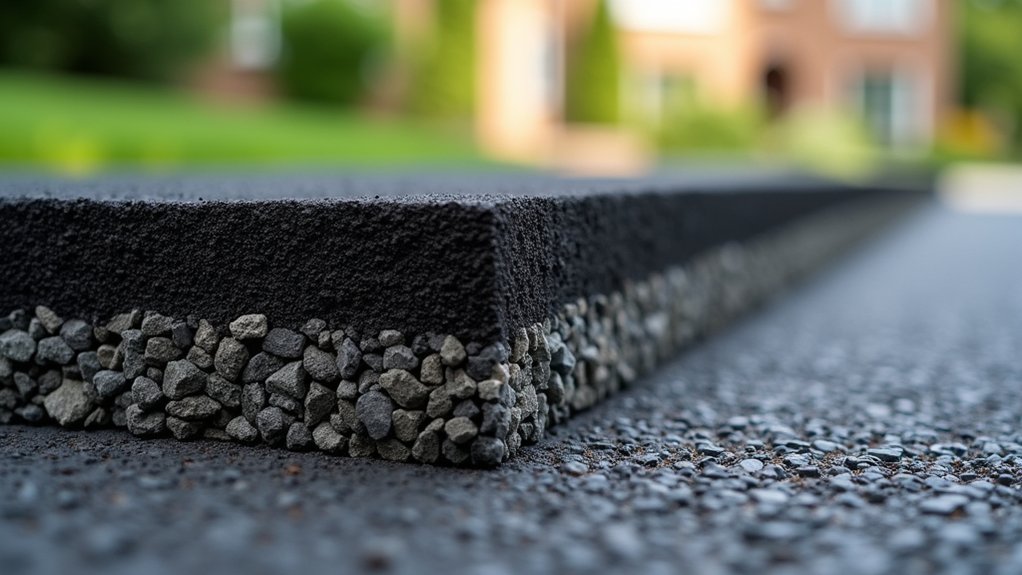
A driveway needs one or two layers of asphalt, and two is the standard for durable residential driveways. The full driveway structure has more than that, though. Underneath the asphalt are a prepared subgrade and a compacted gravel base, and each layer has a different job.
| Layer | Typical Material and Depth | What It Does |
|---|---|---|
| Surface course (top coat) | Fine asphalt mix, about 1 to 1.5 inches | Gives a smooth, tight surface that sheds water and resists wear |
| Binder course | Coarse asphalt mix, about 2 inches | Carries vehicle loads and adds structural strength |
| Gravel base | Compacted crushed stone or processed gravel, 6 to 12 inches | Spreads weight into the ground and drains water |
| Subgrade | Native soil, graded and compacted | Supports the whole driveway |
Two-layer driveways are common in Connecticut because the extra structure helps the pavement handle freeze-thaw cycles, plows, and heavy delivery trucks.
What Are the Layers Under an Asphalt Driveway
The layers under an asphalt driveway are the subgrade, the gravel base, and sometimes a geotextile fabric between them. These layers carry most of the load. The asphalt on top mainly protects them from water and wear.
- Subgrade: Topsoil and soft material are dug out, and the native soil is graded for drainage and compacted.
- Geotextile fabric (optional): On soft or clay soil, a fabric layer keeps the gravel from sinking into the ground.
- Gravel base: Crushed stone or processed gravel is spread in lifts and compacted until it’s firm. Most Connecticut driveways need 8 inches or more.
State paving associations publish similar layer guidance, such as this Virginia Asphalt Association driveway guide. Our overview of the professional driveway paving process shows how each layer is built on a real job.
A driveway is only as strong as its weakest layer. A thick top over a thin base will crack just as fast as a thin top.
What Is the Binder Course in an Asphalt Driveway
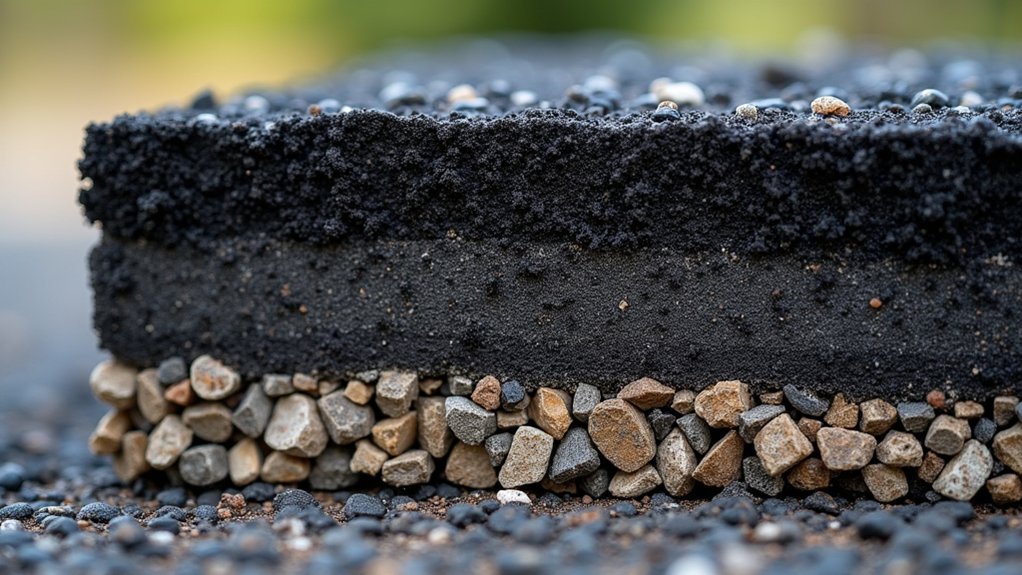
The binder course is the lower asphalt layer, made with larger stone that gives the driveway its strength. It’s laid directly on the compacted gravel base and is usually about 2 inches thick on a residential driveway.
Binder mixes typically use stone up to about 3/4 inch (19 mm) or 1/2 inch (12.5 mm). The larger stone locks together into a strong layer that spreads the weight of vehicles down into the base. Binder has a coarser, more open texture than the top layer, which is why it’s covered with a smoother surface course instead of being left exposed.
What Is the Surface Course or Top Coat on an Asphalt Driveway
The surface course, also called the top coat or wearing course, is the upper asphalt layer made with smaller stone for a smooth, tight finish. On driveways it’s usually 1 to 1.5 inches thick and uses stone up to about 3/8 inch (9.5 mm).
The finer mix gives the driveway its smooth, dark look. It also packs more tightly than binder, which helps keep water from soaking into the layers below. Because it takes the direct wear from tires, plows, and weather, it’s the layer that sealcoating protects. A top coat is a layer of new asphalt, not the same thing as sealcoat, which is a thin liquid coating applied every 2 to 3 years once the driveway has cured. Our driveway sealcoating cost guide covers that maintenance. For more on mix types, see the best types of asphalt for residential driveways.
Is a Two-Layer Asphalt Driveway Better Than a Single Layer
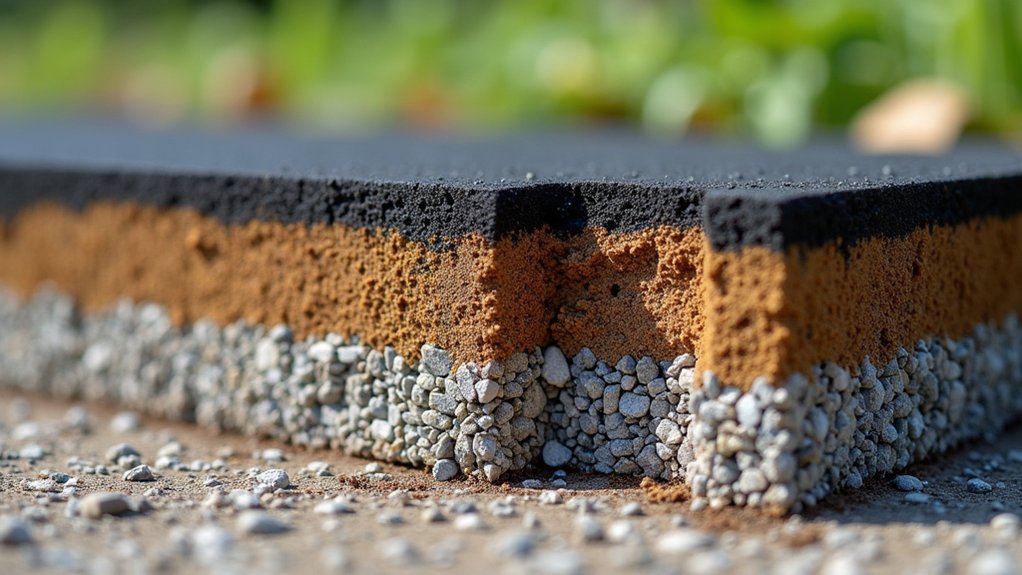
A two-layer asphalt driveway is better than a single layer for most homes, especially in cold climates and on driveways with heavier vehicles. A single layer can still work on a small, lightly used driveway with an excellent base.
| Feature | Single Layer | Two Layers |
|---|---|---|
| Typical total asphalt | 2 to 2.5 inches | 3 inches or more |
| Strength | Adequate for cars over a strong base | Higher, with a structural binder plus a wear layer |
| Surface finish | Good, depends on mix | Smoother, since the top coat covers binder irregularities |
| Freeze-thaw performance | Fair | Better, with more depth and fewer weak spots |
| Best for | Small driveways, light traffic, mild sites | Most Connecticut driveways, SUVs, trucks, and plows |
Two layers cost somewhat more because of the extra material, a tack coat, and a second paving and rolling pass. The difference is usually modest compared with the total project. See how much it costs to pave a driveway for typical prices.
How Thick Should Each Asphalt Layer Be
Each asphalt layer should be at least about three times as thick as the largest stone in its mix, so it can be compacted properly without the stones crushing or tearing. That rule of thumb sets practical minimums for each layer.
| Mix (Largest Stone) | Typical Use | Minimum Layer Thickness |
|---|---|---|
| 9.5 mm (3/8 inch) | Surface course or top coat | About 1 to 1.5 inches |
| 12.5 mm (1/2 inch) | Surface or binder course | About 1.5 inches |
| 19 mm (3/4 inch) | Binder course | About 2 to 2.25 inches |
Together, a 2-inch binder course and a 1 to 1.5-inch top coat give the 3 to 3.5 inches of total asphalt we recommend for most Connecticut driveways. For total thickness by vehicle weight, and why the base matters as much as the asphalt, see our guide on how thick an asphalt driveway should be.
How Are Asphalt Layers Bonded and Compacted
Asphalt layers are bonded with a tack coat and compacted with rollers while the asphalt is still hot. Without a good bond, the top coat can slip, crack, or peel away from the binder under turning tires.
- Tack coat: A thin spray of asphalt emulsion on the binder before the top coat goes down, acting as glue between the layers.
- Hot compaction: Each layer is rolled while hot enough to compact, since asphalt that cools too much can’t be packed tightly.
- Offset joints: Seams in the top coat are placed away from seams in the binder, so water can’t find a straight path down.
- Clean surface: If the binder sits for more than a day or two, it’s swept clean before tack coat and top coat go on.
Once the top layer is rolled and cooled, the driveway needs a few days before cars can use it. Our guide on how long to stay off a newly paved driveway covers the timeline.
How Many Layers of Asphalt Are on a Road
Roads usually have three or more asphalt layers, thicker than a driveway’s, because they carry heavy trucks and far more traffic. A typical road has a thick base course of asphalt or stone, one or more binder or intermediate courses, and a surface course on top. Total asphalt can range from 4 inches on a quiet residential street to well over 6 inches on busy roads and highways.
Parking lots fall in between, depending on traffic. Our commercial paving team designs layers for lots, roads, and loading areas.
Build Your Driveway With the Right Layers
The right combination of base, binder, and top coat is what makes an asphalt driveway last through decades of Connecticut winters. V&F Paving builds driveways with a properly compacted base and binder and surface layers matched to your property through its driveway paving services. Call (203) 624-2449 or request a free estimate to discuss your driveway, site conditions, and paving options.
Frequently Asked Questions
Can You Add Another Layer of Asphalt to an Existing Driveway?
Yes. Adding a new layer over an existing driveway is called an overlay or resurfacing. It works well when the driveway is worn on top but the base is still solid. Most residential overlays are 1.5 to 2 inches thick, with the edges milled so the driveway meets the garage and street flush. See our asphalt overlay cost guide and how thick an asphalt overlay should be.
How Long Should You Wait Between the Binder and Top Layers?
On most residential driveways, the top coat goes on the same day as the binder or within a few days. In new housing developments, builders sometimes lay only the binder course and add the top coat months later, after construction traffic is done. If the binder sits for a while, it has to be cleaned and tack-coated before the top layer goes on so they bond.
Is a Permeable Asphalt Driveway Built in Layers Too?
Yes, but the layers are different. Permeable asphalt uses an open-graded surface that lets water drain through to a deep stone reservoir underneath, which stores water and lets it soak into the ground. It needs good soil drainage and regular vacuuming to stay porous. Our permeable asphalt driveway guide explains when it’s a good fit.
Can Recycled Asphalt Be Used for Driveway Layers?
Yes. Many asphalt mixes include a share of recycled asphalt pavement and perform well when properly designed and compacted. Recycled asphalt millings are also used on their own as a low-cost driveway surface, though they don’t match the finish of a new hot mix top coat. Our asphalt millings driveway guide covers that option.
What Is the Difference Between a Top Coat and Sealcoat?
A top coat is a layer of new hot mix asphalt, usually 1 to 1.5 inches thick, that forms the driving surface. Sealcoat is a thin liquid coating brushed or sprayed onto cured asphalt to protect it from sun, water, and oil. A top coat is part of building or resurfacing a driveway. Sealcoat is routine maintenance every 2 to 3 years.